- English
- French
- German
- Portuguese
- Spanish
- Russian
- Japanese
- Korean
- Arabic
- Greek
- German
- Turkish
- Italian
- Danish
- Romanian
- Indonesian
- Czech
- Afrikaans
- Swedish
- Polish
- Basque
- Catalan
- Esperanto
- Hindi
- Lao
- Albanian
- Amharic
- Armenian
- Azerbaijani
- Belarusian
- Bengali
- Bosnian
- Bulgarian
- Cebuano
- Chichewa
- Corsican
- Croatian
- Dutch
- Estonian
- Filipino
- Finnish
- Frisian
- Galician
- Georgian
- Gujarati
- Haitian
- Hausa
- Hawaiian
- Hebrew
- Hmong
- Hungarian
- Icelandic
- Igbo
- Javanese
- Kannada
- Kazakh
- Khmer
- Kurdish
- Kyrgyz
- Latin
- Latvian
- Lithuanian
- Luxembou..
- Macedonian
- Malagasy
- Malay
- Malayalam
- Maltese
- Maori
- Marathi
- Mongolian
- Burmese
- Nepali
- Norwegian
- Pashto
- Persian
- Punjabi
- Serbian
- Sesotho
- Sinhala
- Slovak
- Slovenian
- Somali
- Samoan
- Scots Gaelic
- Shona
- Sindhi
- Sundanese
- Swahili
- Tajik
- Tamil
- Telugu
- Thai
- Ukrainian
- Urdu
- Uzbek
- Vietnamese
- Welsh
- Xhosa
- Yiddish
- Yoruba
- Zulu
Which material is best for self-lubricating bearings?
Bimetallic composite materials are often the best choice for heavy-duty industrial applications when selecting a Bimetallic self lubricating bearing, offering excellent load capacity, durability, and wear resistance. These engineered solutions have a high-strength low-carbon steel base and wear-resistant layers made of sintered copper alloys, like CuPb10Sn10, CuPb24Sn4, or CuSn8Ni. They can handle loads of up to 250 MPa and can work in temperatures from -40°C to 280°C. The steel substrate protects the structure from shock loads and impact forces, and the bronze lining reduces friction and stops seizure when the boundary lubrication conditions are right. This two-layer construction meets important performance needs in places like construction machinery, auto transmissions, and metallurgical equipment that are hard to reach for maintenance and where reliability has a direct effect on production uptime.
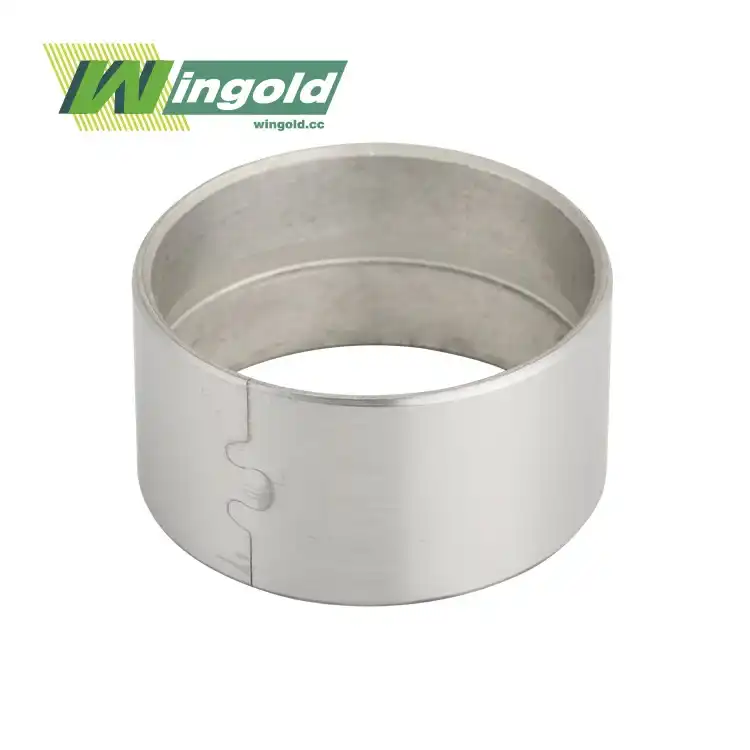
Understanding Self-Lubricating Bearings: Materials and Mechanisms
Industrial bearings usually need to be oiled from the outside all the time to keep the metals from touching and breaking. Bearings that don't need to be oiled changed this idea by building lubricating properties right into the material, so they don't need to be serviced as often or at all. This new idea is especially useful in places where regular greasing breaks up operations or where physical access problems make regular maintenance impossible.
What Makes Bearings Self-Lubricating?
Lubricating materials are built into the bearing matrix itself, which is the main idea behind these parts. Microparticles move from the bearing surface to the mating shaft as the machine works. They form a protective film that lowers the friction coefficient to between 0.02 and 0.08. This mechanism keeps working well even when external lubricants break down or aren't available.
With today's manufacturing methods, oil pockets, spherical depressions, and grooves can be precisely machined into the bearing surface. These reservoirs hold extra oil or grease, and they slowly release the lubricant under pressure and heat to keep hydrodynamic films strong during important start-stop cycles. You can change the shape and placement of these features depending on the load patterns, rotational speed, and level of contamination in the environment.
Primary Material Categories in Industrial Use
The market has a number of different families of materials, each of which is designed to work in a certain way. Polymer-based bearings are made of materials like PTFE or nylon and work best in clean environments with light loads. They can only handle temperatures below 150°C, though. Solid bronze bushings that are machined from castings are very good at transferring heat, but they don't have the structural support that is needed for shock loading. Ceramic composites have very high wear resistance, but they are very expensive, so they should only be used in specific aerospace or medical settings.
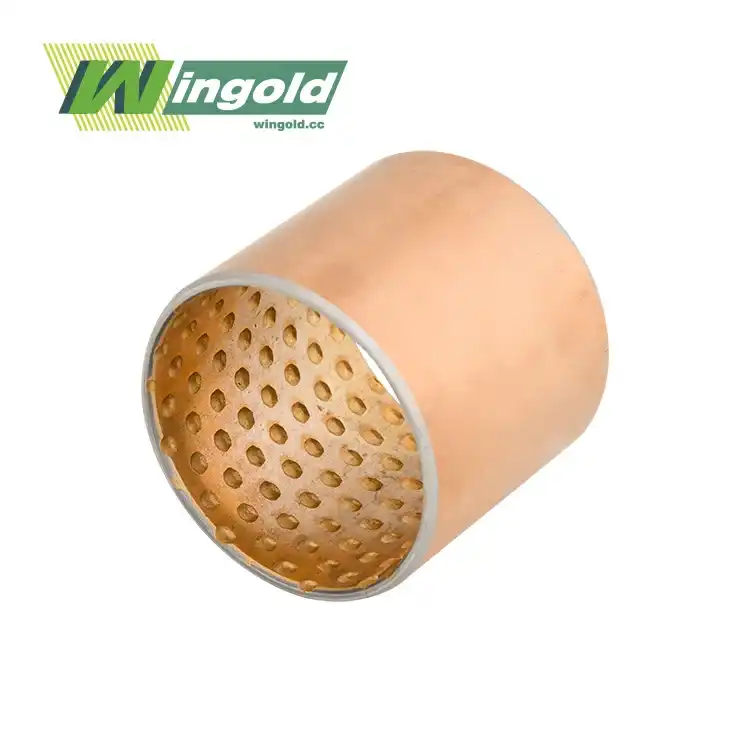
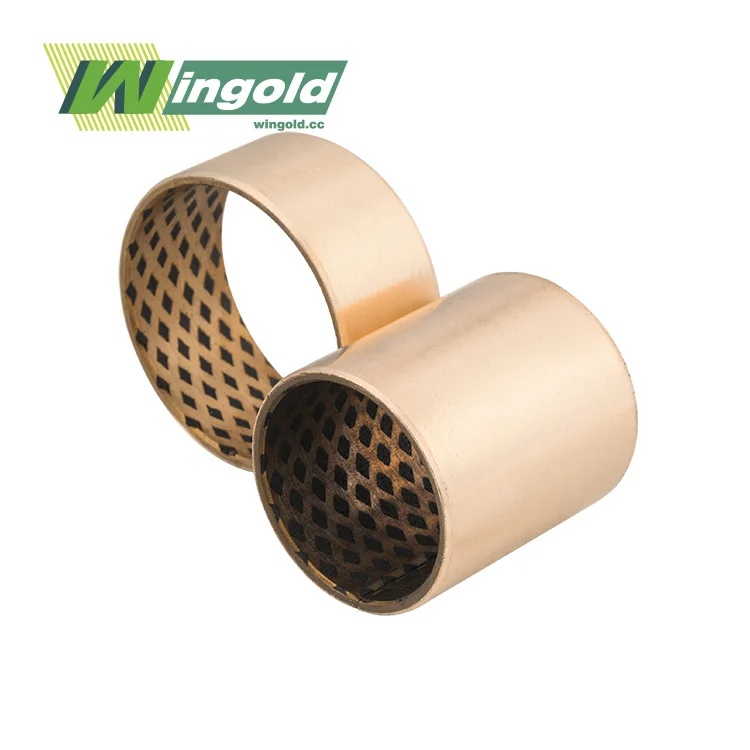
Bimetallic configurations are an engineering compromise that improves performance in a number of different areas at the same time. The WGB-800 series from Wingold is a good example of this method. It uses secondary sintering and secondary extrusion to bond the steel backing to the copper alloy lining. This way of making things makes interface bond strengths higher than 200 N/mm², which stops delamination failures that happen with mechanically bonded alternatives.
How Bimetallic Construction Works?
A structural steel shell, which is usually 1.5 to 5 mm thick depending on the bearing diameter, makes the structure rigid and stable under radial and axial loads. A bronze layer 0.3 to 1.5 mm thick is metallurgically attached to this base and acts as the wear surface. The most common parts of copper alloys are:
- CuPb10Sn10: has the right amount of lead and tin for medium speeds and heavy loads.
- CuPb24Sn4: has a lot of lead in it, which makes it easier to embed and shape.
- CuPb30: The highest amount of lead that can be used in extreme boundary lubrication situations
- AlSn20Cu: is a matrix made of aluminum and tin that can handle temperatures up to 280°C.
- CuSn8Ni: is a nickel-enhanced bronze that is resistant to corrosion in saltwater.
Precision stamping or rolling of steel strips is the first step in the manufacturing process. Next, the surface is prepared by shot blasting or chemical etching. The copper alloy powder is then spread out on the steel surface and heated to a controlled range of temperatures, between 750°C and 850°C. This causes atomic diffusion at the interface. After that, the bronze layer is densified by extrusion or rolling, which also makes the bond stronger.
Comparing Bimetallic Bearings with Other Common Materials
When making a purchase decision, it's important to carefully weigh performance factors against business needs and total cost of ownership. Each material type has distinct advantages and trade-offs that engineering teams must evaluate—especially when selecting a Bimetallic self lubricating bearing for optimal durability, efficiency, and long-term value.
Load Capacity and Structural Integrity
Bimetallic bearings are the best choice for situations where high specific loads are needed. They can handle static pressures of up to 250 N/mm² and dynamic loads of up to 150 N/mm² when the motion is oscillating. When the housing meets the steel backing, the stress is spread across the interface, which stops the crushing and extrusion failures that happen with solid bronze bushings when the load is the same. This structural benefit is very important in places where impact forces are high, like on excavator boom pivots, bulldozer track rollers, and hydraulic press frames.
On the other hand, polymer bearings can only handle loads below 50 N/mm² because of material creep and compression set. They can be used for idlers on conveyors and office equipment, but they can't be used for heavy machinery because they deform under long-term pressure. Ceramic-reinforced composites have high hardness values, but they are also brittle, which means they can break when they are shocked or when they are put under edge stresses that happen when installations aren't lined up correctly.
Thermal Performance and Temperature Ranges
The temperature at which something is being used directly affects the choice of material, especially in metallurgical equipment, turbines, and transmission parts for cars. Bimetallic bearings can work in a wide temperature range, from -40°C in Arctic construction equipment to 280°C in steam turbine bearings, and they keep their performance stable all the way through. The thermal conductivity of the bronze alloy is about 50 W/mK, which effectively gets rid of frictional heat and stops hot spots that speed up wear.
Above 150°C, standard polymer bearings start to lose their shape and become softer, while even high-performance PTFE composites can only handle temperatures up to 200°C. Solid bronze can still handle heat, but it doesn't have the reinforcements that keep it from warping when temperature differences cause it to expand unevenly. Bimetallic thermal management is especially useful for applications that have to deal with high temperatures and heavy radial loads, like marine propeller shaft bearings and kiln support rollers.
Wear Resistance and Service Life
Standardized tests show that good bimetallic bearings have wear rates below 20 micrometers per 1,000 operating hours when they are properly oiled and installed within the limits of their ratings. Bronze alloys contain lead, which acts as a solid lubricant, constantly replacing the transfer film even as the surface material wears away. This mechanism makes industrial machinery last tens of thousands of hours, which is much longer than polymer bearings, which may need to be replaced after 5,000 to 8,000 hours of use in harsh conditions.
The bimetallic surfaces with embedded oil reservoirs make them last longer by keeping the boundary lubricated when the oil film briefly collapses. Agricultural machines like combine harvesters and cotton pickers work in dirty, dusty places where rough particles speed up wear. The hard bronze surface is better at keeping particles from getting embedded than softer polymer materials. This means that there is less grinding action, which wears down parts faster.
Maintenance Requirements and Accessibility
Bimetallic bearings are sold as "self-lubricating," but they need to be oiled every so often, usually every few months instead of weeks. The oil grooves and pockets hold enough lubricant to last for long periods of time, which makes maintenance easier in wind turbine nacelles, equipment on offshore platforms, and mining equipment that is sent to remote areas. This longer service interval cuts down on both the direct costs of maintenance labor and the indirect costs of lost production during planned downtime.
Truly maintenance-free polymer bearings are useful in clean rooms, machines used to process food, and pharmaceuticals where lubricant contamination could affect the quality of the product. But their limitations on load and temperature make them less useful. Ceramic composites also work without lubrication, but they are more expensive, so they can only be used in specific situations where their unique properties justify the higher costs.
Key Advantages and Applications of Bimetallic Self-Lubricating Bearings
The engineering features of bimetallic construction make it easier to run a business. These features directly address problems that purchasing managers, maintenance engineers, and equipment designers in many different industries have found.
Extended Service Life Reduces Total Cost of Ownership
Breakdowns of equipment have a lot of financial effects, including direct repair costs, lost production output, faster shipping fees for replacement parts, and maintenance workers having to work extra hours. Compared to other types of bearings, bimetallic bearings have a much longer average time between failures. This is especially useful in industries with continuous processes, such as steel rolling mills, paper factories, and petrochemical plants, where unplanned shutdowns cause production losses of thousands of dollars per hour.
Bimetallic bearings often show better economic value when looking at their whole service lifecycles instead of just the initial purchase price. A company that makes construction equipment switched from solid bronze bushings to bimetallic bushings in hydraulic cylinder pivots and saw 40% longer replacement intervals. This was able to balance out the slightly higher component costs by cutting down on maintenance labor and the cost of keeping inventory.
Superior Performance Under Heavy Loads
The metal bond between the steel backing and bronze lining makes load transfer more efficient than with bearings that are put together mechanically. Extreme radial forces would crush parts that aren't properly reinforced by mining draglines, ship-to-shore cranes, and forging press connections. These stresses are spread out evenly across the whole structure of bimetallic bearings. This keeps the dimensions stable and stops the gradual deformation that causes faster wear and, eventually, seizure.
When used in oscillating situations, full hydrodynamic oil films can't form because of the slow, back-and-forth motion of things like excavator arms, bulldozer ripper mechanisms, and industrial robot joints. The solid lubricant properties of the bronze layer keep metals from touching during these boundary lubrication conditions. This keeps parts lasting longer in situations where polymer bearings would break down quickly.
Operational Efficiency in Harsh Environments
Abrasive dust in cement plants, corrosive chemicals in processing equipment, thermal cycling in furnace charging mechanisms, and water getting into marine applications are all conditions that make it hard for industrial machinery to last a long time. The strong steel backing doesn't rust when properly plated or coated, and the bronze wear surface is better at resisting chemical attack than polymer materials, which swell or break down when they come in contact with oil, hydraulic fluids, or industrial solvents.
Agricultural equipment makers use bimetallic bearings in the feeder houses of combine harvesters, the plunger pivots of balers, and the steering linkages of tractors because these machines have to deal with mud, crop residue, extreme temperatures, and not always following the recommended maintenance schedules. Even though there is contamination that would damage normally lubricated bearings or speed up polymer wear, the parts keep working reliably.
Industry Applications and Real-World Performance
Heavy construction equipment may be the most difficult environment for bearing technology to work in. Undercarriage parts of track-type bulldozers and hydraulic excavators are constantly being shocked, scratched, and neglected when maintenance isn't done. Leading OEMs use bimetal bushings in track roller assemblies, idler wheels, and boom pivot connections. If one of these parts fails, it can lead to expensive repairs in the field and unhappy customers.
These bearings are used in suspension control arms, steering knuckle pivots, and transmission shift mechanisms by companies that make cars and commercial vehicles. Wingold's manufacturing systems regularly meet the requirements for statistical process control and full traceability set by automotive quality standards, especially IATF 16949 certification. Wear performance testing confirms a service life equivalent of 150,000 kilometers, which meets warranty requirements and keeps warranty claim costs as low as possible.
The renewable energy industry is increasingly deploying wind turbines in harsh offshore and remote locations where maintenance is difficult and costly. Bimetallic bushing sleeve components used in pitch adjustment mechanisms and yaw drive systems help extend service intervals, reducing the need for expensive crane mobilizations and technician deployments. Their ability to perform reliably across a wide temperature range is especially critical for installations in environments ranging from arctic to desert climates.
How to Choose the Best Material for Your Self-Lubricating Bearing Needs?
To make the best choice of materials, you need to carefully compare operational parameters to what the materials can do, while also keeping budget and supply chain issues in mind.
Defining Load and Speed Requirements
First, figure out what the bearing's maximum radial and axial loads are. These should include both steady-state operational forces and transient shock loads that happen when the machine starts up, stops, or hits something. When specific loads are higher than 100 N/mm² or when impact forces cause stress spikes that would damage polymer parts, bimetallic bearings are the best choice. On the other hand, polymer alternatives may be better for uses with specific loads below 20 N/mm² if the temperature and environment allow it.
Sliding speed affects the choice of material by changing how much frictional heat is made and how stable the lubrication film is. In continuous operation, bimetal configurations usually limit top speeds to 2.5 m/s. However, higher speeds are possible when motion is intermittent or oscillating. Find the PV factor, which is pressure times speed, and make sure it stays within the limits set by the material. During the process of choosing a component, Wingold's engineering team gives advice on PV limits that are specific to the application.
Evaluating Operating Environment
Extreme temperatures make it hard to choose materials. Standard polymer bearings can't be used in situations above 200°C, and temperatures below -20°C may make some alloy compositions less strong. Bronze alloys that are made of two metals work well in this temperature range. CuPb10Sn10 mixtures are good for general-purpose uses, while AlSn20Cu mixtures are good for high temperatures up to 280°C.
Chemical exposure means that both the bearing material and any lubricants that are still on the outside need to be thought about. Bronze is very resistant to most hydraulic fluids, petroleum oils, and water-based coolants. However, strong acids or ammonia solutions may cause corrosion over time. The steel backing is protected by a coating, usually copper, tin, or zinc-nickel, to keep it from rusting while it is being stored or used. The coating chosen depends on how it will be exposed to the environment.
Customization and Non-Standard Dimensions
Catalog bearings usually have standard shaft diameters and housing bores, but equipment designers often need non-standard sizes, special flange configurations, or oil groove patterns that aren't found in standard bearings. Wingold still has CNC machining and flexible manufacturing methods that can meet specific needs without the long lead times or low minimum order quantities that big bearing companies have to deal with.
Supply drawings should include important measurements with the right amount of room for error, the type of copper alloy that is preferred, the shape of the oil reservoir that is wanted, and any other specific needs, like axial grooves for grease distribution or radial holes for pressure lubrication systems. Before committing to production volumes, prototype samples let you check the fit and functionality, which lowers the risk of specification mistakes that cause projects to run behind schedule.
Installation and Maintenance Best Practices
Proper installation has a direct effect on how well and how long a bearing lasts. The steel backing needs to be press-fitted into the housing bores. Depending on the material of the housing and the operational loads, interference fits are usually between 0.5% and 1.5% of the nominal diameter. If there isn't enough interference, fretting corrosion and rotation can happen inside the housing. If there is too much interference, the bronze lining could become thinner or the housing could become distorted.
Roughness values between 0.4 and 0.8 micrometers are recommended for the shaft surface finish because they have a big effect on wear rates. Harder shaft materials—usually heat-treated to HRC 50 or higher—ensure that the bearing wears out faster because it's much cheaper to replace a bushing than to refinish or replace a shaft. Initial lubrication before the first operation lets oil move into surface pockets and forms a protective transfer film before the full operational loads are put on.
Technical Specifications and Industry Standards for Bimetallic Bearings
For engineering procurement, detailed technical data is essential to ensure system designs and components integrate seamlessly—especially when specifying a Bimetallic bushing sleeve for reliable performance and compatibility.
Standard Dimensions and Manufacturing Tolerances
According to ISO 3547 and DIN 1494 standards, bimetallic bearings are made in both metric and imperial sizes. This makes them compatible with supply chains around the world. Wingold's standard range includes inner diameters from 8 mm to 300 mm, and wall thicknesses that are just the right size to support the rated loads. Custom sizes outside of these ranges can be made to fit the needs of specific machines, and production can go up to 500 mm diameters for big industrial equipment.
Manufacturing tolerances have a direct effect on how well things fit and work. When room-temperature bearings are pressed into place, housing bore tolerances usually follow H7 or H8 grades. This limits interference. The outer diameter of the bearing stays within the f7 or g6 tolerance ranges. This makes sure that interference values are stable across the size range. Tolerances for the inner diameter depend on whether the bearing is machined after installation. Oversized bores allow final honing or boring to get exact shaft clearances and alignment.
Load Ratings and Performance Parameters
For standard CuPb10Sn10 bimetallic construction, the static load capacity (the most force a stationary bearing can take without permanently deforming) is 250 N/mm². When something is oscillating or rotating, its dynamic load capacity is usually limited to 150 N/mm². This is because of the wear and tear and heat production that come with continuous use. These ratings are based on the assumption that the parts are installed correctly, oiled properly, and have surfaces that meet certain hardness and finish standards.
It depends on how well the surface is oiled, how fast the sliding is going, and how much pressure is on it. Values should be between 0.05 and 0.08 for good boundary lubrication, but they should go up to 0.15 as lubricant films get thinner or abrasive particles get introduced. Less than 20 micrometers of wear were recorded every 1,000 hours of operation in a controlled laboratory setting. However, performance in the real world depends a lot on things like the quality of maintenance, the amount of contamination, and the way the load is cycled.
Compliance with International Standards
Quality control and following the rules are important parts of industrial procurement, especially for original equipment manufacturers (OEMs) that work with regulated industries or export markets. Wingold has quality management systems that are certified by ISO 9001, and their manufacturing processes are spelled out in detail in work instructions and inspection protocols. Material certifications link the parts of copper alloys to mill test reports that confirm the amount of elements in the alloys is within the limits set by specifications.
IATF 16949 compliance is needed to meet the needs of customers in the automotive industry. Statistical process control and failure mode analysis are used to show that the process is capable. Coordinate measuring machines and optical comparators are used to record important features in dimensional inspection reports, and data retention meets the needs for traceability. This infrastructure for documentation reassures purchasing managers that parts match the requirements of the drawings and work reliably in equipment that has been put together.
Safety and environmental certifications talk about limits on dangerous materials, especially the amount of lead in bronze alloys. For optimal lubricity, older compositions had lead percentages of up to 30%. However, regulatory trends in some markets favor alternatives with less or no lead. Wingold has both traditional leaded bronzes that work very well and compliant alternatives that can be used when rules say that a different material must be used.
Conclusion
To choose the best material for self-lubricating bearings, you need to carefully compare the performance characteristics of different material systems based on the load requirements, operating temperatures, environmental conditions, and maintenance needs. For heavy-duty industrial applications that need high load capacity, thermal stability, and long service intervals, Bimetallic self lubricating bearing are the best option. The metal bond between the steel backing and the copper alloy lining makes a strong composite structure that is stronger than solid bronze bushings and better at withstanding high temperatures and wear than polymer bearings. When equipment designers and purchasing managers work with experienced manufacturers, they can get technical help, make changes as needed, and be sure that the supply chain will work well to meet tight deadlines and high quality standards.
FAQ
How long do bimetallic self-lubricating bearings typically last?
Service life depends a lot on how the machine is used, but when installed correctly, bimetallic bearings in industrial machinery usually last between 10,000 and 30,000 hours of use. Heavy construction equipment may need to be serviced less often because of the high loads and dirt that it is exposed to, but controlled factory environments make it last longer. Regularly regreasing as directed by the manufacturer extends the life of the product.
Can these bearings operate at high temperatures?
Standard compositions of bronze alloys work reliably up to 200°C, while special formulations like AlSn20Cu can work up to 280°C. The thermal conductivity of the copper alloy effectively gets rid of frictional heat, keeping performance stable in places like turbine bearings and kiln supports where high temperatures would damage polymer alternatives.
How can I verify bearing quality before large-scale procurement?
Ask for material certifications that list the alloy's composition, dimensional inspection reports that show the alloy meets tolerances, and samples that can be physically checked. Reliable manufacturers give test data that includes measurements of wear rate and load capacity. Before committing to large orders, visiting manufacturing facilities is a good way to get a feel for how they handle quality control and production.
Partner with Wingold for Premium Bimetallic Self Lubricating Bearing Solutions
Wingold Bearing is ready to help you with your industrial bearing needs with its wide range of technical knowledge and manufacturing options. As an established Bimetallic self lubricating bearing manufacturer, we can make solutions that are tailored to the needs of your equipment and the environment in which it works. Our engineering team works with your technical staff to find the best alloy combinations, shape specifications, and lubrication features for each part so that it works well and lasts as long as possible.
We invite purchasing managers, engineering teams, and equipment designers to contact our application specialists at info@wingold.cc to discuss your bearing requirements. Whether sourcing standard catalog components or developing custom solutions for specialized machinery, Wingold provides the technical support, manufacturing quality, and supply chain reliability that industrial operations demand.
References
1. Khonsari, M.M. and Booser, E.R. (2017). Applied Tribology: Bearing Design and Lubrication, 3rd Edition. John Wiley & Sons, Chichester, UK.
2. Neale, M.J. (2001). The Tribology Handbook, 2nd Edition. Butterworth-Heinemann, Oxford, UK.
3. American Society for Testing and Materials (2020). ASTM B22-20: Standard Specification for Bronze Castings for Bridges and Turntables. ASTM International, West Conshohocken, PA.
4. International Organization for Standardization (2017). ISO 3547: Plain Bearings - Wrapped Bushes - Parts 1-7. ISO, Geneva, Switzerland.
5. German Institute for Standardization (2010). DIN 1494: Dimensions for Sintered Metal Plain Bearing Bushes. Beuth Verlag, Berlin, Germany.
6. Hutchings, I.M. and Shipway, P. (2017). Tribology: Friction and Wear of Engineering Materials, 2nd Edition. Butterworth-Heinemann, Oxford, UK.

Learn about our latest products and discounts through SMS or email