- English
- French
- German
- Portuguese
- Spanish
- Russian
- Japanese
- Korean
- Arabic
- Greek
- German
- Turkish
- Italian
- Danish
- Romanian
- Indonesian
- Czech
- Afrikaans
- Swedish
- Polish
- Basque
- Catalan
- Esperanto
- Hindi
- Lao
- Albanian
- Amharic
- Armenian
- Azerbaijani
- Belarusian
- Bengali
- Bosnian
- Bulgarian
- Cebuano
- Chichewa
- Corsican
- Croatian
- Dutch
- Estonian
- Filipino
- Finnish
- Frisian
- Galician
- Georgian
- Gujarati
- Haitian
- Hausa
- Hawaiian
- Hebrew
- Hmong
- Hungarian
- Icelandic
- Igbo
- Javanese
- Kannada
- Kazakh
- Khmer
- Kurdish
- Kyrgyz
- Latin
- Latvian
- Lithuanian
- Luxembou..
- Macedonian
- Malagasy
- Malay
- Malayalam
- Maltese
- Maori
- Marathi
- Mongolian
- Burmese
- Nepali
- Norwegian
- Pashto
- Persian
- Punjabi
- Serbian
- Sesotho
- Sinhala
- Slovak
- Slovenian
- Somali
- Samoan
- Scots Gaelic
- Shona
- Sindhi
- Sundanese
- Swahili
- Tajik
- Tamil
- Telugu
- Thai
- Ukrainian
- Urdu
- Uzbek
- Vietnamese
- Welsh
- Xhosa
- Yiddish
- Yoruba
- Zulu
What is the compression strength of PTFE plain bearings?
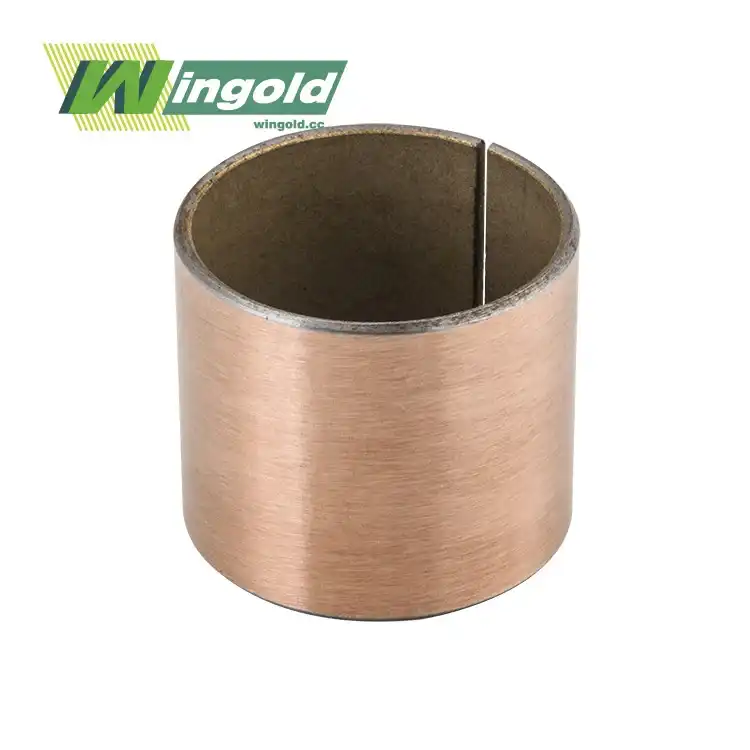
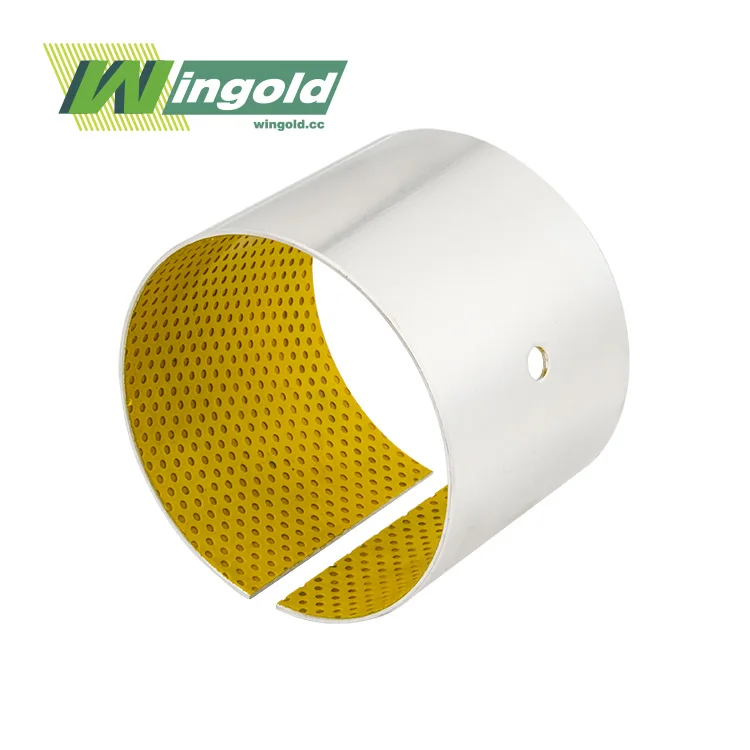
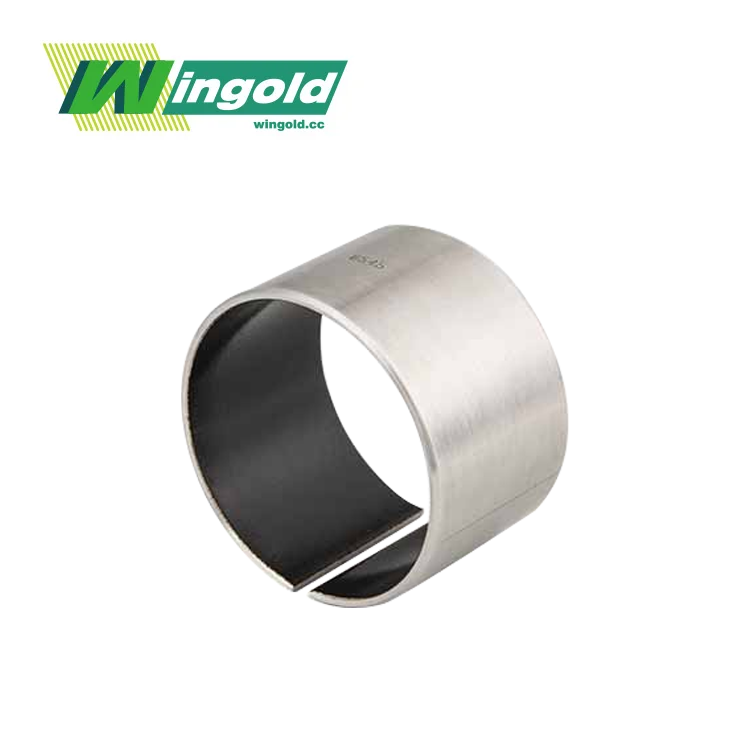
When looking for bearings for heavy machinery or important equipment, knowing the compression strength isn't just a technical matter; it's a choice that impacts the uptime of your equipment, the frequency of its maintenance, and your bottom line. The ability of a PTFE plain bearing to withstand compressive forces without permanent deformation or structural failure is referred to as its compression strength. Most of the time, these bearings can handle static loads of up to 250 N/mm², and they can safely handle dynamic loads of up to 140 N/mm². This three-layer structure, which includes a steel backing, a porous bronze interlayer, and a PTFE surface, works well to spread loads while keeping the self-lubricating properties that make these parts so useful in harsh industrial settings.
Understanding Compression Strength in PTFE Plain Bearings
What Compression Strength Actually Means for Your Operations?
The amount of axial load a bearing can handle before the material starts to break down is called its compression strength. Compression strength is more important in bearing situations where weight, hydraulic pressure, or operational forces push directly down on the bearing surface. Tensile strength measures forces that pull. Wingold has seen a lot of cases where people don't understand this specification, which causes bearings to fail early and expensive equipment to be shut down.
Self-lubricating bearings don't have a single compression strength. It changes depending on the temperature, the length of the load, and whether the conditions are static or dynamic. The static load capacity tells you how much weight the PTFE plain bearing can hold when the machine is not in use, while the dynamic load capacity shows how well the bearing works when it is in use and sliding motion adds extra stress.
How Material Structure Influences Load Capacity?
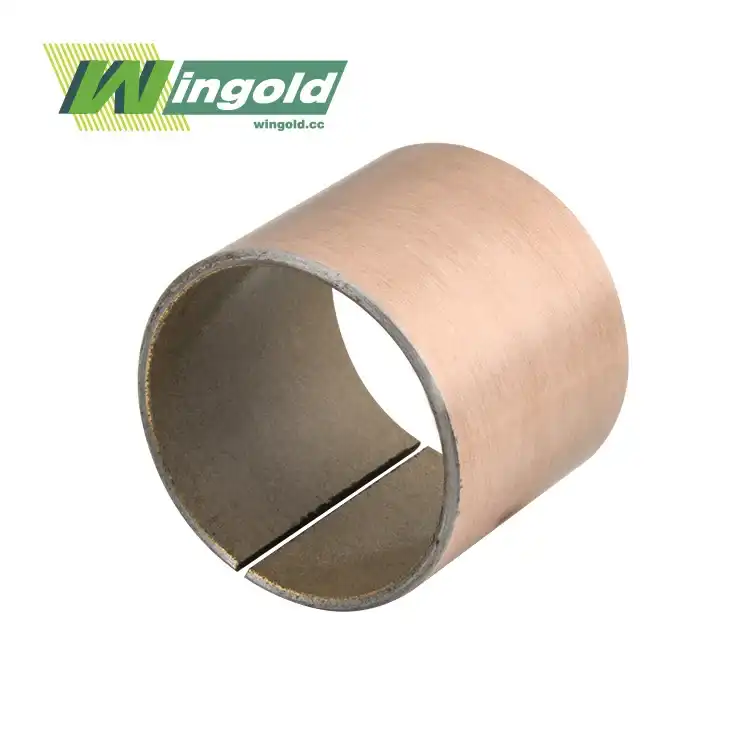
Modern self-lubricating bearings have a tri-layer design that makes them very good at compression. The steel backing, which is usually between 0.5 mm and 3 mm thick depending on the application, is what holds the structure together. This layer does more than just keep its shape; it also holds the bearing in place in the housing and keeps it from warping when heavy radial loads are applied.
A porous bronze layer, which is usually sintered to make controlled porosity, sits between the steel and the sliding surface. Between the hard steel and the soft PTFE layer, this bronze forms a rigid bond. The pores also do something useful: they let the PTFE mechanically interlock while it's being made, and they create tiny reservoirs that help the transfer film form while it's being used.
The bearing surface is made up of the topmost PTFE layer, which is often mixed with fillers like lead, molybdenum disulfide, or glass fiber. Pure PTFE has a fairly low compression strength of about 10 to 15 MPa. The bronze backing and steel support make the assembly's effective compression resistance much higher, to a level that makes it suitable for hydraulic cylinders, construction equipment pivots, and other industrial machinery.
PV Factor and Compression Performance
Engineers often use the PV factor to figure out if a bearing is right for a job. In this math problem, the sliding speed (V) is multiplied by the specific pressure (P, which is given in N/mm²). The PV value that is found cannot go over the limits of the material without causing thermal failure or faster wear.
Knowing the compression strength will help you get the "P" component right. If you need a 50 mm diameter shaft to hold 15,000 N of load, your specific pressure will be found by calculating the projected bearing area. If the bearing doesn't have enough compression strength, it will bend under this load, making the actual contact area bigger than expected and possibly going over the safe PV limits even at moderate speeds.
PTFE Plain Bearings: Technical Specifications and Standards
Typical Compression Strength Ranges Across Product Lines
At Wingold, our standard PTFE plain bearing product line meets the compression strength needs of the industrial world. Most heavy machinery uses, from excavator pivot points to press machine slide guides, can handle a dynamic load of up to 140 N/mm². This specification is based on the idea that the shaft should be at least HRC 45 hard and have a surface finish of Ra 0.3 to 0.5 µm.
Temperature has a big effect on how well compression works. Bearings work at their full rated capacity when they are at room temperature (20–25°C). As the temperature of operation rises to 150°C, the compression strength may drop by 15 to 20%. When temperatures rise, the PTFE layer gets a little softer, making it less resistant to deformation. This relationship is very important in situations where friction makes a lot of heat, like in brake systems or high-speed conveyor systems.
Our product specifications allow for a wide range of sizes to meet the needs of different types of equipment. From small automation equipment to large marine propulsion systems, inner diameters range from 3 mm to 300 mm. Engineers can find the best balance between strength and space by choosing wall thicknesses between 0.5mm and 3mm. This is especially useful in hydraulic cylinders where bore space is limited.
International Standards Governing Testing Methods
Standardized testing protocols are used to make sure the quality of bearings. The International Standard ISO 3547 sets the size limits and testing methods for plain bearings, which includes ways to test them under compression. When a supplier gives you a compression strength value, this standard makes sure that all manufacturers use the same testing conditions and measurement methods.
ASTM B22 gives more specific advice for bronze materials that are often used to build bearings. Since the porous bronze layer makes a big difference in overall compression resistance, checking the material properties of this part makes sure it always works right. According to these standards, Wingold's quality control lab tests adhesion by putting compressive loads on sample bearings and measuring how much they deform at certain force levels.
When it comes to metal-backed plain bearing materials, the ISO 4383 standard sets quality standards for the bonding between layers. When the PTFE layer separates from the bronze backing under pressure, bearing life drops by a huge amount. This is called delamination under compression loads. As part of our manufacturing process, we use chisel testing to make sure the bond is strong. This makes sure that the layers stay attached even when they are loaded suddenly.
Compliance Documentation for Procurement Confidence
As you look at different suppliers during the sourcing process, make sure that the certification paperwork backs up claims about compression strength. Material certificates should show the steel grade, bronze composition, and PTFE formulation that were used in your specific bearing batch. They should be able to be traced back to the suppliers of the raw materials. This level of traceability is very important when you're getting parts ready for regulated industries like aerospace or medical equipment manufacturing.
Not only should test reports say "pass" or "fail," but they should also include the actual values that were measured at the right temperatures. A full quality certificate shows the results of compression tests done at room temperature and in the temperature range you choose for use. Your engineering team can use this information to accurately figure out safety factors instead of just using values from a generic datasheet.
Comparing PTFE Plain Bearings Compression Strength with Other Bearing Materials
Bronze Bearings: Traditional Strength with Lubrication Dependencies
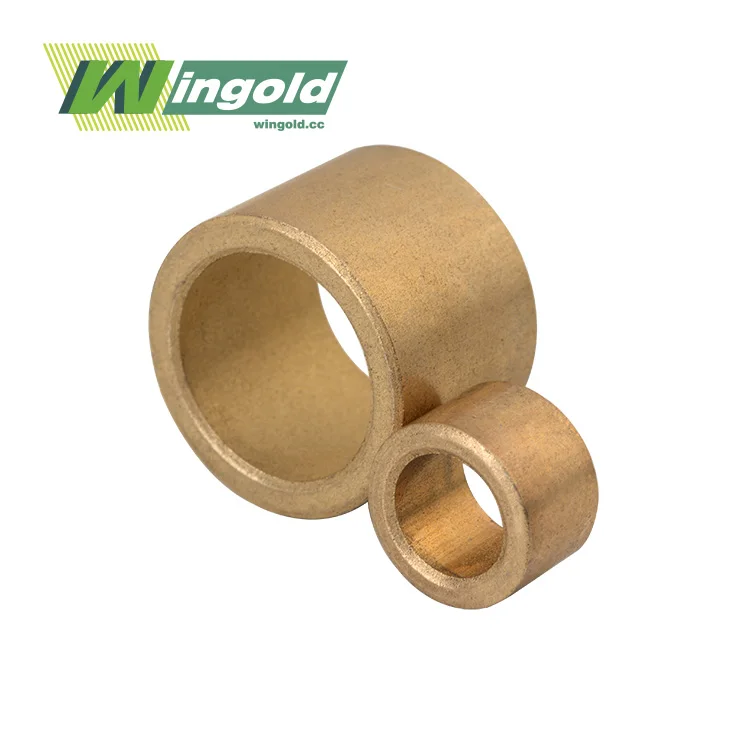
Solid bronze bushings have been used in industry for many years because they can withstand compression strengths of more than 200 N/mm² in many alloys. Because it can hold more weight, bronze is a good choice for heavy-duty uses. The trade-off is that bronze bearings need to be oiled or greased all the time to keep metal from touching metal and galling.
This reliance on lubrication creates ongoing costs in places that need a lot of maintenance. Traditional bronze solutions have problems when used in pump bearings that are far away, joints in construction equipment that are dirty and wet, and food processing equipment where lubricants could get dirty. Self-lubricating alternatives like the PTFE plain bearing give up some ultimate compression strength but don't have these problems.
Nylon and Polymer Bearings: Lightweight Limitations
Because they are very resistant to chemicals and don't rust, injection-molded nylon bearings are popular in harsh chemical environments. But even in grades with glass fibers, the compression strength rarely goes above 50 to 60 N/mm². Because of this, nylon bearings can only be used in lighter-duty systems, such as conveyor rollers, office equipment, and low-load automation systems.
Nylon's ability to soak up water makes its effective compression strength even lower over time. When installed in damp places, bearings can take in several percent of their own weight in water, which makes them swell and lose strength. When engineers choose nylon, they have to guess how it will behave based on the load they want to put on it.
Graphite-Impregnated Bronze: High-Temperature Alternatives
Graphite-bronze bearings work very well at high temperatures because they keep their compression strength at temperatures where PTFE starts to break down a lot. PTFE molecules break down above 280°C, but materials that are filled with graphite keep working properly.
The problem shows up in the initial friction coefficients and the time needed to break them in. When they are first turned on, graphite bearings usually have friction values between 0.15 and 0.25, while PTFE-based systems have friction values between 0.04-0.08. More friction means more heat, which means the shaft needs to be hardened more strongly. This trade-off is fine for things like kiln rollers or furnace door hinges, but PTFE composites work better overall for equipment that works at moderate temperatures.
Composite Materials: Application-Specific Engineering
New developments in material science have led to the creation of composite bearing materials that are made up of fibers, resins, and solid lubricants mixed together in specially designed ways. These can have compression strengths that are close to or higher than those of PTFE-bronze-steel composites. They also have unique properties, such as being very resistant to chemicals or very tolerant of high temperatures.
Because they are more expensive, composite bearings are usually only used in certain situations. Unit prices are much higher than for standard PTFE solutions because of the costs of developing custom formulations and making smaller batches. When standard materials can't meet certain performance or environmental needs that justify the higher price, procurement teams should look at composites.
Optimizing PTFE Plain Bearing Performance: Installation, Lubrication, and Load Considerations
Proper Press-Fit Installation Techniques
How a bearing is installed has a direct effect on how well it achieves its rated compression strength. Interference fit keeps these bearings in the housing bore—usually between 0.2% and 0.8% interference, depending on the material of the housing and the size of the bearing. If there isn't enough interference, the bearing can spin in the housing when it's loaded, which makes heat and speeds up wear. Too much interference can squeeze the PTFE plain bearing so hard that the inner diameter shrinks too much, causing it to become stuck on the shaft.
When putting in bigger bearings, we suggest using controlled hydraulic presses instead of hammers or manual arbor presses. When installation force isn't spread out evenly, it can change the shape of the bearing cross-section, creating high spots where compressive stress builds up instead of being spread out evenly around the circumference. Even though the material itself stays the same, this stress concentration lowers its effective compression capacity.
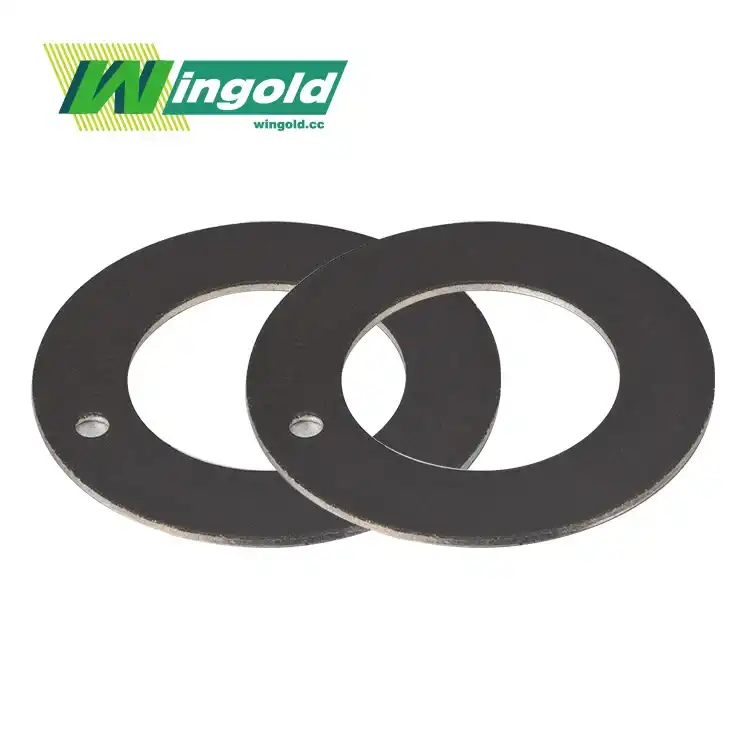
When installing bigger parts, temperature-assisted installation can help. Putting the bearing in dry ice to cool it down and slightly warming the housing lowers the force needed to install it and reduces the risk of deformation. In assemblies where alignment and surface protection are important, PTFE shim washers can also be used to help reduce friction and improve load distribution during fitting. To ensure the interference fit works as intended, the bearing should return to room temperature before the machine is put into use.
Initial Lubrication Benefits Despite Self-Lubricating Design
Even though they are advertised as maintenance-free, putting on some lubricant during installation often makes them last a lot longer. During the important break-in period, when the PTFE transfer film sets itself on the mating shaft surface, a thin film of compatible oil or grease helps. This extra lubrication lowers friction peaks during the first cycles and helps heat escape more quickly than dry running alone.
The lubricant needs to be chemically compatible with PTFE. Stay away from petroleum products that contain strong solvents that could break down the polymer. For the first layer of lubrication, synthetic oils or greases made from silicone work well. The amount should be very small; too much lubricant attracts rough particles that speed up wear instead of stopping it.
Environmental Factors Affecting Compression Performance
The most important environmental factor that affects compression strength is the operating temperature. As the PTFE gets stiffer, the equipment that works in cold storage facilities (-40°C) actually has better compression resistance. As a trade-off, friction coefficients are slightly higher at very low temperatures until surfaces warm up from friction and reach their normal operating temperature.
Vibration and shock loading should be taken into account in addition to static compression calculations. If a bearing is the right size for steady-state loads, it may fail too soon when it hits something. For hydraulic cylinders that have sudden changes in pressure or construction equipment joints that can be shocked when they hit something, the compression strength ratings need to include an extra safety margin. Wingold engineering support can help figure out dynamic load factors for uses that have a lot of shocks.
Indirectly, the performance of compression is affected by the presence of abrasive particles. The contaminants don't weaken the material itself, but they do get stuck on the PTFE surface and cause wear spots. These wear patterns make the load more unevenly distributed, which raises the peak stress in the contact areas that are still there. This could be more than the local compression limits, even if the average bearing pressure stays within the limits.
Procurement Insights: Selecting and Buying PTFE Plain Bearings Based on Compression Strength
Evaluating Supplier Technical Capabilities
When comparing suppliers during the sourcing process, the level of technical support shows how skilled the company is in making things. If a supplier can figure out PV factors for your application, suggest the right safety factors based on load patterns, and suggest changes to the geometry of the bearing to improve the distribution of compression stress, including the appropriate use of ptfe shim washers to reduce friction and wear, that’s a sign of real engineering skill, not just catalog sales.
Request that a sample be tested in conditions that are similar to those of your real application. The standard way to do a compression test is at room temperature and in a lab with strict rules. Your equipment may work at high temperatures, be exposed to contamination, or be loaded in ways that aren't normal. If a supplier is willing to do application-specific testing, you can be sure that the compression strength ratings for the PTFE plain bearing are based on real-world conditions and not idealized ones.
Certification and Material Verification Requirements
When installing bigger parts, temperature-assisted installation can help. Putting the bearing in dry ice to cool it down and slightly warming the housing lowers the force needed to install it and lowers the risk of deformation. In some assemblies, ptfe coated washers can also be used to reduce friction and improve surface separation during fitting. To make sure the interference fit works as planned, the bearing should cool to room temperature before the machine is put to use.
The composition of the bronze layer affects how well steel and PTFE stick together. How well compressive loads move through the assembly without delamination depends on the copper-tin ratio, the controlled porosity, and the sintering parameters. Suppliers who give detailed bronze specifications show a level of quality control that is linked to consistent compression performance.
PTFE formulation changes performance characteristics in a big way. Pure PTFE doesn't have much compression strength, but mixtures with 15–40% bronze filler make them much stronger. Molybdenum disulfide alternatives do not compress the same way as lead-filled PTFE. Knowing the exact PTFE formulation that a supplier uses can help you guess how well it will work in your application in the long term.
Minimum Order Quantities and Volume Pricing Structures
Wingold has set a minimum order quantity of 100 pieces to strike a balance between customer flexibility and production efficiency. This level lets procurement teams test bearings in real equipment without having to commit to huge amounts of inventory. Depending on the need for tools and where the materials come from, different minimums may be needed for custom sizes or special materials.
There are usually big price cuts at 500, 1000, and 5000 pieces in a volume order. Even better prices and a stable supply chain are provided by annual purchase agreements with scheduled releases. When negotiating these deals, procurement managers should make sure that the specifications for compression strength stay the same across all production batches. Lower costs won't help if the performance of the bearings changes in ways that aren't expected.
Compression strength needs are directly linked to lead time concerns. Standard catalog sizes in common formulations ship quickly from stock that is already on hand. Custom bearings designed to withstand high compression loads might need special materials and tools to be made, which could add 6 to 8 weeks to the delivery time. By planning maintenance and equipment builds around these dates, you can avoid having to pay extra for urgent work.
Balancing Compression Strength with Total Cost of Ownership
It's not always the case that the bearing with the highest compression strength rating is also the cheapest. Oversized bearings cost more at first, and they might not last as long if other problems, like contamination or shaft wear, get in the way. To figure out the total cost of ownership, you need to estimate the service life that will actually work in your situation, compare the costs of replacement labor, and look at the costs of downtime.
When it's hard to get to the bearings, they need to be high-quality ones that are designed to last as long as possible and handle the most compression. For example, replacing bearings in hydraulic cylinders on mobile equipment requires a lot of disassembly. Choosing bearings with a 50% higher compression rating than what calculations show could double the cost of the parts, but it could also triple the number of service intervals, which would greatly lower the total cost of ownership.
On the other hand, premium specifications might not help bearings that are easy to access, work in clean environments, and aren't being used at full capacity. Standard compression ratings with the right amount of safety margins give reliable service at a lower cost. When you work with experienced suppliers, you can tell the difference between situations where higher compression capacity really adds value and those where standard specifications are enough.
Conclusion
Compression strength isn't just a number on a datasheet; it's an important property that affects which bearings to use, how they're installed, and how reliable they are in demanding industrial settings over time. We've seen how the three-layer design of self-lubricating PTFE plain bearings evenly distributes compressive loads while keeping the friction-reducing properties needed for long-term use without any maintenance. Whether bearings reach their rated compression capacity in real life depends on how the material is made, the temperature, and how precisely it was installed.
FAQ
What is the typical compression strength of PTFE plain bearings?
Standard composite self-lubricating PTFE plain bearings can handle up to 250 N/mm² of static compression and 140 N/mm² of dynamic operational loads. Assuming proper installation, the right finish on the shaft surface, and operation within the recommended temperature ranges, these values are accurate. The actual performance depends on the type of material used and the conditions under which it is used.
How does temperature affect compression strength?
As the temperature goes up, the compression capacity goes down. When the temperature gets close to 150°C, the PTFE layer will soften, causing the load capacity to drop by 15 to 20 percent. When it's below freezing, compression resistance goes up, but friction may go up a little until the surfaces are heated to their normal working temperature.
Can compression strength be improved through installation techniques?
When installed correctly, the rated compression performance is maximized, but it can't go beyond what the material can handle. To get the most out of your bearings, make sure they are installed correctly, that the forces are kept under control, and that they are lined up perpendicularly. Deformation and uneven load distribution caused by bad installation lower the effective strength.
What makes PTFE bearings fail under compression?
Compression failure usually shows up as the bearing permanently deforming, which makes more space between the bearings and the shaft, allowing it to move too much. Some reasons are choosing bearings that are too small, making sure the shaft isn't too hard, which can cause the surface to deform, contamination that causes uneven loading, or using the machine at temperatures that are too high for the material.
Partner with Experienced PTFE Plain Bearing Specialists at Wingold
Selecting bearings with the right compression strength for your application requires balancing technical specs, operating conditions, and cost. Working with an experienced PTFE plain bearing supplier can make these decisions easier. Wingold brings more than 20 years of experience with sliding bearings to every interaction with a customer. They can help you reach your goals for equipment reliability with engineered solutions instead of just catalog products.
Contact our technical team at info@wingold.cc to talk about your compression strength needs and get recommendations based on testing data and decades of field experience. Wingold can help you improve the performance of your bearings, make your equipment last longer, and lower the total cost of ownership across all of your operations.
References
1. Bhushan, B. (2013). Principles and Applications of Tribology, 2nd Edition. John Wiley & Sons, New York.
2. Khonsari, M.M. & Booser, E.R. (2017). Applied Tribology: Bearing Design and Lubrication, 3rd Edition. John Wiley & Sons, Chichester.
3. Stachowiak, G.W. & Batchelor, A.W. (2014). Engineering Tribology, 4th Edition. Butterworth-Heinemann, Oxford.
4. ISO 3547-1:2020. Plain bearings — Wrapped bushes — Part 1: Dimensions. International Organization for Standardization, Geneva.
5. Friedrich, K., Lu, Z. & Hager, A.M. (1995). Recent advances in polymer composites' tribology. Wear, 190(2), pp. 139-144.
6. Blanchet, T.A. & Kennedy, F.E. (1992). Sliding wear mechanism of polytetrafluoroethylene (PTFE) and PTFE composites. Wear, 153(1), pp. 229-243.
Learn about our latest products and discounts through SMS or email