- English
- French
- German
- Portuguese
- Spanish
- Russian
- Japanese
- Korean
- Arabic
- Greek
- German
- Turkish
- Italian
- Danish
- Romanian
- Indonesian
- Czech
- Afrikaans
- Swedish
- Polish
- Basque
- Catalan
- Esperanto
- Hindi
- Lao
- Albanian
- Amharic
- Armenian
- Azerbaijani
- Belarusian
- Bengali
- Bosnian
- Bulgarian
- Cebuano
- Chichewa
- Corsican
- Croatian
- Dutch
- Estonian
- Filipino
- Finnish
- Frisian
- Galician
- Georgian
- Gujarati
- Haitian
- Hausa
- Hawaiian
- Hebrew
- Hmong
- Hungarian
- Icelandic
- Igbo
- Javanese
- Kannada
- Kazakh
- Khmer
- Kurdish
- Kyrgyz
- Latin
- Latvian
- Lithuanian
- Luxembou..
- Macedonian
- Malagasy
- Malay
- Malayalam
- Maltese
- Maori
- Marathi
- Mongolian
- Burmese
- Nepali
- Norwegian
- Pashto
- Persian
- Punjabi
- Serbian
- Sesotho
- Sinhala
- Slovak
- Slovenian
- Somali
- Samoan
- Scots Gaelic
- Shona
- Sindhi
- Sundanese
- Swahili
- Tajik
- Tamil
- Telugu
- Thai
- Ukrainian
- Urdu
- Uzbek
- Vietnamese
- Welsh
- Xhosa
- Yiddish
- Yoruba
- Zulu
Bimetal self lubricating Bearings: Introduction And Overview
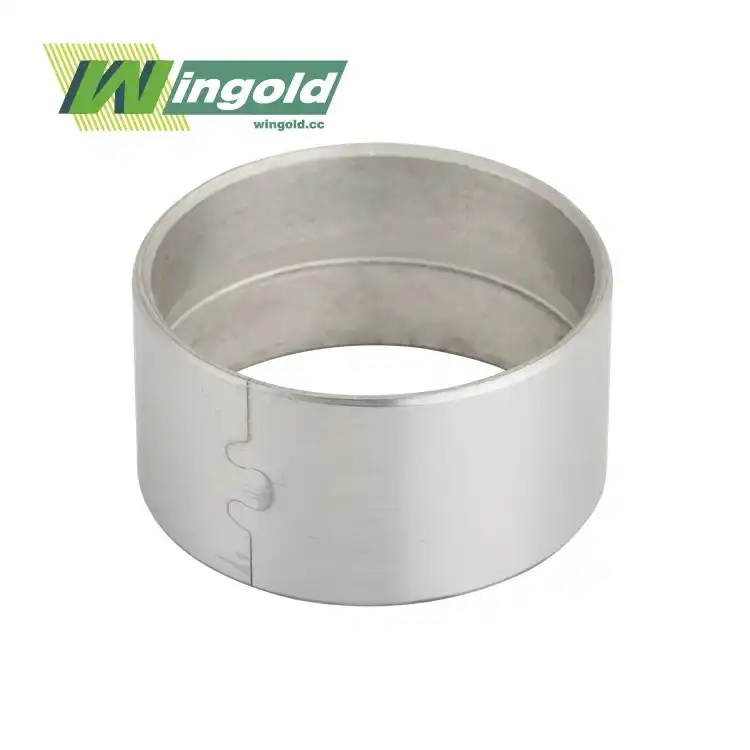
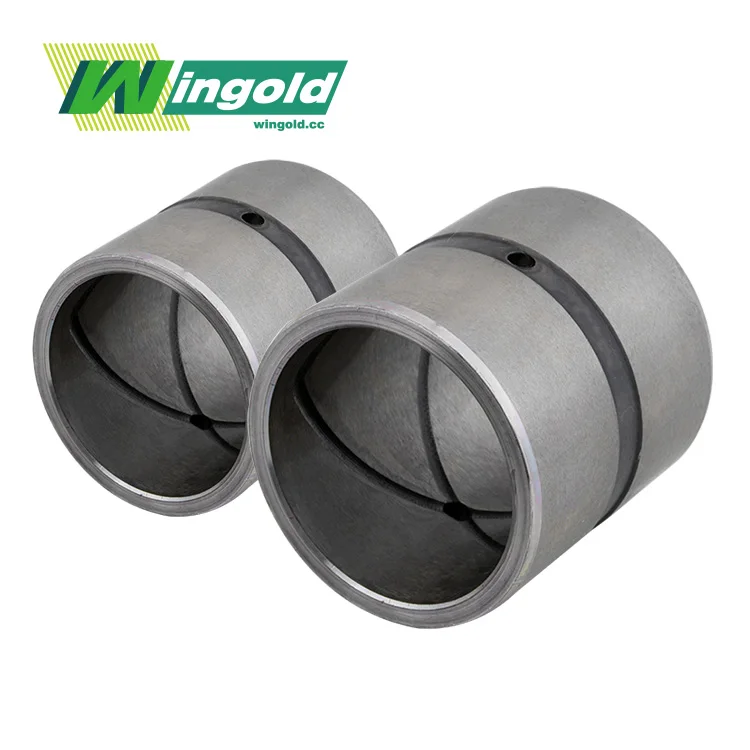
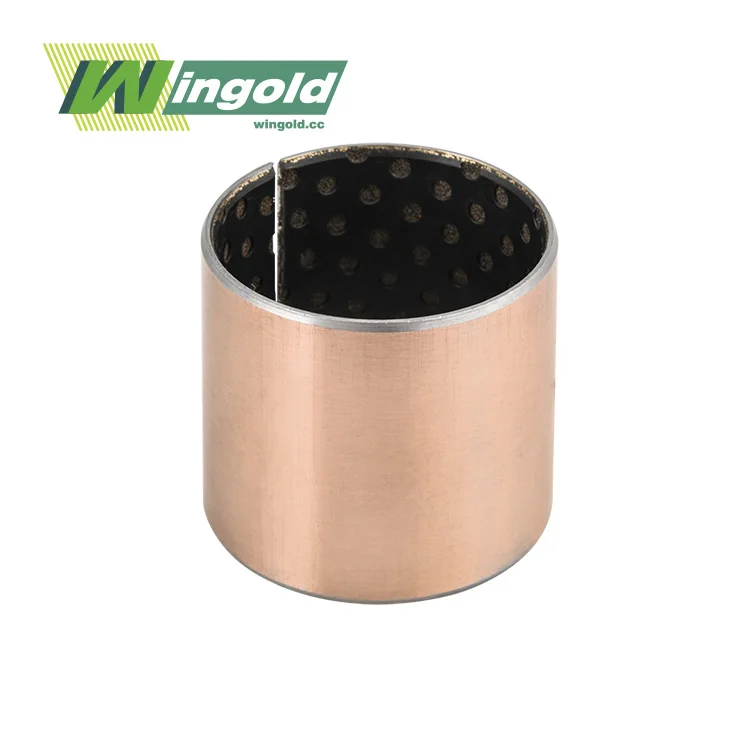
Looking at the current industrial world, there is one part that is always important in many areas: the Bimetallic self lubricating bearing. This cutting-edge tribological solution combines a high-strength steel base with a sintered copper alloy top layer, making a hybrid structure that solves important problems in the operation of heavy machinery. These bearings are different from traditional ones that need to be serviced often. Instead, they are designed to keep oil in, so they can keep working in places where regular greasing isn't possible or realistic. The designed oil grooves and pockets in the copper alloy layer hold lubricant and slowly release it during operation to keep the border lubrication working well, even when conditions are tough.
Understanding Bimetal Self Lubricating Bearings
The basic structure of bimetal composite bearings is different from other bearing options because they are built with two layers. Our WGB-800 line at Wingold is a great example of this way of thinking about engineering.
Construction and Material Composition
The structure base of these bearings is made of high-quality low-carbon steel, which gives them great steadiness and load-bearing capacity. A perfectly sintered copper alloy layer with ingredients like CuPb10Sn10, CuPb24Sn4, CuPb30, AlSn20Cu, or CuSn8Ni is put on the top. Each type of alloy is made to meet particular needs in terms of load capacity, temperature range, and protection to the climate. Secondary sintering and secondary extrusion are used to link the layers together. This creates metallurgical ties that keep the layers from coming apart, even when they are subjected to high shock loads and temperature changes.
The way we make things makes sure that the copper alloy layer stays the same thickness all over the bearing surface, which is usually between 0.25mm and 0.35mm. Because too thin of a layer can speed up wear-through and too thick of a layer can weaken the bonding, this accuracy is very important.
Lubrication Mechanism and Oil Retention
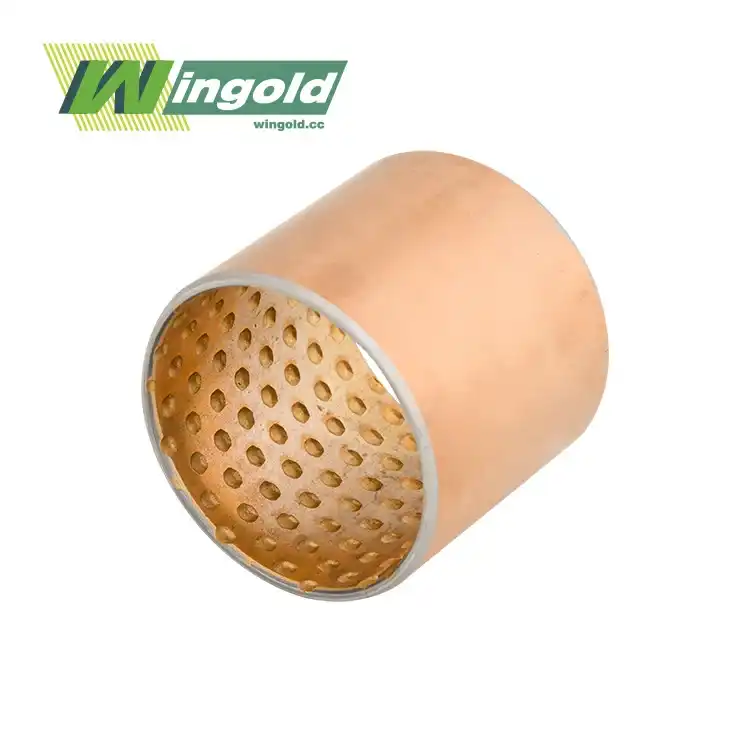
Depending on the way the device moves, the copper alloy surface can have different machined designs etched into it, such as spherical oil pockets, axial lines, spiral channels, or radial holes, especially in a Bimetallic bushing sleeve.
These parts make small containers that catch and hold oil or grease during fitting. As the bearing works, the sliding motion causes localized temperature rises that lower the viscosity of the lubricant. This makes it easier for the lubricant to run from the storage pockets to the sliding surface. Compared to plain bushings, which need external lubrication systems, this device greatly increases the time between repair visits.
The lead in metals like CuPb24Sn4 works as a solid lubricant when they are in boundary lubrication conditions, like when they are first started up or when they are moving back and forth. Lead particles spread out over the contact area, creating a protective layer that stops metal from metal contact and the following seizure.
Differentiation from Alternative Bearing Types
Bimetallic designs use less material than solid bronze bearings and are better at handling shocks thanks to the steel backing. Traditional oil-impregnated sintered bronze bearings can handle lighter loads, but they can't match the specific load capacity of our bimetallic options, which can hit 250 MPa when the load is static. Polymer-lined bearings can really run in dry conditions, but they break down quickly when they are put under heavy loads and high temperatures, which is common in building and metalworking equipment.
Key Benefits and Advantages of Bimetallic Self Lubricating Bearings
Bimetallic solutions are becoming more and more popular in industrial buying because they solve multiple practical problems at the same time. The performance benefits go beyond just lowering costs; they also include better dependability and easier upkeep. Our Bimetallic self lubricating bearing products provide consistent reliability across various industries.
Superior Load Capacity and Durability
The structural stiffness of the steel base keeps the bearing from collapsing under heavy radial loads or impact forces. Our WGB-800 bearings can handle dynamic loads of up to 150 MPa when they are moving back and forth, which is common in bulldozer track systems or digger boom pivots. While the copper alloy layer protects expensive steel shafts from wear, it can handle small misalignments in the shaft and edge loading without cutting.
Our lab tests show that wear rates are less than 20 μm per 1000 hours of operation when the parts are properly oiled. When compared to regular bushings, this performance means that they last 40 to 60 percent longer in situations like textile machinery cams or printing press bearings.
Extended Maintenance Intervals
When equipment breaks down in a work setting, big money bills are incurred. Machinery that needs to be greased every day requires more repair work and runs the risk of oil gaps that lead to failure too soon. When properly built, bimetallic bearings that keep oil in work consistently with quarterly or even semi-annual greasing schedules. This feature is very useful for farming equipment that needs to work during busy harvest times or for mining equipment that is located far away and hard to get to for repair.
Temperature and Environmental Resistance
The metal design means it can work in temperatures ranging from -40°C to 280°C, making it suitable for both high-temperature building projects in the Arctic and high-temperature power producing equipment. Because the copper metals we choose don't rust in seawater, weak acids, or hydraulic fluids, these bearings can be used in marine rudder systems and offshore platform equipment.
Chemical protection is especially useful in machines that process food and medicines, where pollution from oil-based lubricants is still not acceptable. If you choose the right bimetallic bearings, they can work with food-grade greases or very little oil without losing any performance.
Cost-Effectiveness and Total Ownership Value
Even though they cost more per unit at first, the total cost changes a lot when you think about how long they last, how much less repair work is needed, how much less equipment is idle, and how they don't need external lubrication systems. When procurement managers look at lifetime costs, they always find that bimetallic solutions save 25 to 40 percent over five years of use in heavy-duty uses.
Choosing the Right Bimetallic Self Lubricating Bearing for Your Industrial Needs
To choose the right Bimetallic self lubricating bearing, you need to carefully compare the operational factors with the material's powers and the bearing's design features. Technical engineering teams and buying departments should both be involved in the design process so that performance needs and cost concerns can be balanced.
Critical Selection Parameters
The main decision factor is the load parameters. Find both the maximum static load when the equipment is first turned on and the maximum dynamic load when it is running normally. Include safety factors that take into account shock loads in forging tools and impact forces in building equipment. Our research team makes selection charts that show how the sizes of bearings relate to the safe load limits for different alloys.
Material choice is greatly affected by sliding speed. For uses that need constant spinning at speeds over 1.5 m/s, alloys with more tin, like CuPb10Sn10, may be needed because they make better hydrodynamic films. For oscillating tasks with limited angular movement, metals with more lead, like CuPb30, work better because they provide better border lubrication.
Material specifications are based on things like extreme temperatures, chemical exposure, and amounts of pollution in the environment. Aluminum bronze alloys (AlSn20Cu) work best at temperatures above 200°C, while standard leaded bronzes are good for most commercial uses. When steel backing is exposed to acids that eat away at metal, protective coatings may need to be added or corrosion-resistant base materials may need to be specified.
Customization and OEM Integration
Here at Wingold, we know that normal stock bearings can't meet all of your needs. Our technical skills allow us to make unique dimensions for shafts that aren't the standard size, housings that aren't the standard shape, or projects that replace old bearing designs with newer ones. We keep CNC machining tools that can make prototypes in 7–10 business days. This lets us test the design before committing to production numbers.
Customized oil groove designs that are best for certain motions can be put on the copper metal surface. We work with equipment makers to use computational fluid dynamics to model the distribution of lubricant. This makes sure that important wear zones get enough lubrication. This feedback process is especially helpful in high-performance settings where a broken bearing can do a lot of damage to the equipment.
Supplier Evaluation and Quality Assurance
Quality bearings have a direct effect on how reliable equipment is. Teams in charge of buying things should make sure that suppliers follow international rules, like ISO 4383 for wrapped bushings and ASTM B22 for the makeup of bronze alloys. At Wingold, we can do all kinds of tests, such as measuring the friction coefficient, testing for increased life under controlled conditions, and metallurgical analysis to make sure the material is the right mix and the layers are bonded together well.
For production orders, you should ask for material certificates, dimensional inspection records, and confirmation of the surface finish. To keep bearings from wearing out faster, the matching shaft should keep its hardness above HRC 50 and its surface roughness between Ra 0.4 and 0.8 μm. With every sale, we include detailed scientific information about how to install, what the tolerances are, and how to keep the product in good shape.
Maintenance and Common Challenges of Bimetallic Self Lubricating Bearings
Even though they don't need as much care, a Bimetallic self lubricating bearing still benefits from systematic inspection procedures and the right way to install them. Knowing the most common ways that things go wrong lets you plan repairs ahead of time and keep your tools from breaking down when you least expect it.
Installation Best Practices
Controlled interference fits, usually 0.1% to 0.3% of the standard bearing diameter, are needed for proper press-fitting into housings. This depends on the material of the housing. Too much interference can cause leftover stresses that can break layers of brittle copper alloy, while not enough interference lets the bearing spin inside the case, which leads to fretting rust. To make sure the quality of the work is always the same, we suggest hydraulic pressing tools with force monitoring.
After press-fitting, many jobs need finish-boring or reaming to get the exact internal measurements and best shaft clearance. During this secondary cutting, the copper alloy thickness must be kept at a minimum of 0.25 mm to keep the steel backing from wearing through too quickly. It's important to lubricate the bearings well before the first use; cover the bearing surface and oil pockets with a thick layer of the recommended grease to create protection films before rolling contact starts.
Scheduled Inspection Protocols
Set how often inspections should happen based on the number of hours worked and the amount of load. Heavy building equipment that works in dirty places might need to be checked every month, while clean industrial equipment can go three months between checks. Inspection methods should check for radial clearance rise, surface damage like scoring or darkening that could mean overheating, and oil contamination or degradation.
Measuring radial space gives you a numeric way to judge wear, especially in systems using a Bimetallic bushing sleeve. Set minimum limits during launching and keep track of how high they go over time. If the clearance grows by more than 50% of its original value, it's probably getting close to the end of its useful life. However, this threshold can change depending on how important the application is and how much load it's under.
Common Failure Modes and Prevention
Lack of lubrication is the most common reason for failure. This happens when the first lubrication isn't good enough, when it's been too long since the last relubrication, or when the oil pocket designs don't spread the lube well. To avoid problems, you need to follow upkeep plans and choose the right kind of grease. For most uses, lithium-based greases with NLGI Grade 2 consistency work well.
Having rough bits on something speeds up wear by a huge amount. Usually, dirt gets in because the seals aren't good enough or because of repair work. To keep toxins out, specify lip seals or labyrinth seal designs on housings. When regreasing, make sure the area around the machine is very clean, and use sealed grease valves to keep particles from getting in.
When you overload something beyond its original limit, it can deform or crack from stress. This type of failure usually happens all of a sudden after a long time of use, when the crack has spread to a critical size. To avoid this, you need to do a proper load analysis when you first specify the equipment and keep an eye out for changes in the application that could cause the bearing loads to rise over time.
Conclusion
Bimetallic self lubricating bearing products are an advanced technology that is still changing due to advancements in material science and manufacturing. High load capacity, long repair intervals, and consistent performance in tough conditions are all problems that heavy machinery operators have to deal with all the time. Combining the strength of structural steel with the low-friction surfaces of copper alloys solves these problems. The best bearings are chosen by taking into account the load, speed, temperature, and surroundings when making the specifications. Quality providers who offer customization options, expert support, and consistent manufacturing standards become valuable long-term partners that help all industry sectors keep their equipment reliable and run efficiently.
FAQ
1. What is a bimetallic self lubricating bearing? What is its structure?
A bimetallic self-lubricating bearing features a composite two-layer structure. It adopts low-carbon steel backing to deliver high structural strength, while the surface layer is made of sintered bronze alloy with excellent friction reduction and wear resistance. Solid lubricants such as graphite and PTFE are evenly embedded in the alloy layer. It can operate stably with low friction even in working conditions where regular oil filling is not feasible.
2. What are the advantages of bimetallic bearings over traditional solid bronze bushes?
Compared with integral bronze bushes, bimetallic bearings combine the high load capacity of steel and the good wear resistance of bronze materials. They come with lower comprehensive cost and thinner wall thickness, which helps equipment achieve lightweight design. Meanwhile, they offer better fatigue resistance and dimensional stability, and maintain stable performance under heavy load and vibrating working conditions.
3. Do the bearings meet environmental protection and lead-free standards?
We supply lead-free bimetallic bearings that fully comply with RoHS regulations. Made of eco-friendly copper alloy materials, these products are specially developed for industries with strict health and environmental requirements, including auto parts, household appliances and food processing machinery.
4. What are the ideal working conditions for Bimetallic self lubricating bearing?
This type of bearing is well suited for medium and high speed, heavy load scenarios, as well as working environments where hydrodynamic lubrication cannot be formed effectively. It is widely used in construction machinery, automotive chassis, injection molding equipment and agricultural machinery. The applicable temperature range is from -40°C to 250°C, adapting to complex temperature environments.
5. What custom tolerances and sizes can you provide?
Our standard bearings are manufactured in accordance with ISO 3547 tolerance standards. We support customized production with inner diameters ranging from 10mm to 300mm. We can also process custom oil grooves, inner wall textures and non-standard shaped structures to meet personalized OEM assembly needs and ensure perfect fitting performance.
There are three things that affect how long a bearing lasts: how well it is oiled, how much load it is under, and how clean it is during use. Proper initial cleaning and regular regreasing according to the manufacturer's instructions can usually double the service life of bearings compared to bearings that aren't taken care of. Running at less than 60% of the maximum load capacity greatly increases life, but grit contamination can cut life by 70% even if all other conditions are perfect.
Can bimetallic bearings accommodate misalignment?
There is some imbalance that the copper alloy layer can handle—usually between 0.5 and 1 degree—depending on the length and thickness of the bearing. This feature stops edge loading damage that would quickly destroy materials with a higher load capacity. When there is a lot of misalignment, spherical bearing shapes are better than cylinder bushings.
Do these bearings require special shaft treatments?
For the best performance, the surface of the shaft needs to be harder than HRC 50 and have a fine finish of Ra 0.4 to 0.8 μm. Softer shafts wear down more quickly, making gritty bits that speed up the wear on the bearings. Induction hardening or hard chrome treatment of shaft journals that fit into bearings is useful in many situations. Our expert team helps you choose the right bearings by giving you advice on the shaft specifications.
How do I specify custom bearings for unique applications?
Send an email to info@wingold.cc with information about your application, such as the size and weight needs, working speeds, temperature ranges, and environmental conditions. We usually ask for drawings of the shaft and housing, information about the job cycle, and any room limitations. Our team replies within 24 hours with a basic assessment of feasibility. They then follow up with detailed plans that include predictions of performance and prices for large amounts of prototypes.
Partner with Wingold—Your Trusted Bimetallic Self Lubricating Bearing Manufacturer
The sliding bearing options that Wingold Bearing offers are backed by decades of material study, production excellence, and application engineering know-how. As an expert provider of Bimetallic self lubricating bearing solutions, we offer full production services, from centrifugal casting to precision machining. Our testing labs check friction coefficients, load capacities, and increased life performance. Our WGB-800 series bearings are made to meet foreign standards like ISO 4383 and ASTM B22. This makes sure that the quality is always the same for tough industrial uses.
We know how hard it can be to buy things when there are tight project deadlines, non-standard specs, or worries about the minimum order size. Our manufacturing process is flexible enough to handle small batches of prototypes for testing and approval, as well as large batches (10,000 tons per year) when volume needs to be met. One-on-one expert support helps choose the right bearings, helps with installation, and fixes problems in the field throughout the duration of the product. Get in touch with our team at info@wingold.cc to talk about your unique bearing needs. We offer factory-direct prices, quick sample production, and dependable global logistics to help your tools work well and your business succeed.
References
1. Neale, M.J. (2001). The Tribology Handbook, Second Edition. Butterworth-Heinemann, Oxford.
2. Khonsari, M.M. & Booser, E.R. (2008). Applied Tribology: Bearing Design and Lubrication, Second Edition. John Wiley & Sons, Chichester.
3. Hutchings, I.M. & Shipway, P. (2017). Tribology: Friction and Wear of Engineering Materials, Second Edition. Butterworth-Heinemann, Oxford.
4. ASM International Handbook Committee (1996). ASM Handbook Volume 18: Friction, Lubrication, and Wear Technology. ASM International, Materials Park.
5. Bhushan, B. (2013). Principles and Applications of Tribology, Second Edition. John Wiley & Sons, New York.
6. Booser, E.R. (1997). Tribology Data Handbook: An Excellent Friction, Lubrication, and Wear Resource. CRC Press, Boca Raton.
Learn about our latest products and discounts through SMS or email