- English
- French
- German
- Portuguese
- Spanish
- Russian
- Japanese
- Korean
- Arabic
- Greek
- German
- Turkish
- Italian
- Danish
- Romanian
- Indonesian
- Czech
- Afrikaans
- Swedish
- Polish
- Basque
- Catalan
- Esperanto
- Hindi
- Lao
- Albanian
- Amharic
- Armenian
- Azerbaijani
- Belarusian
- Bengali
- Bosnian
- Bulgarian
- Cebuano
- Chichewa
- Corsican
- Croatian
- Dutch
- Estonian
- Filipino
- Finnish
- Frisian
- Galician
- Georgian
- Gujarati
- Haitian
- Hausa
- Hawaiian
- Hebrew
- Hmong
- Hungarian
- Icelandic
- Igbo
- Javanese
- Kannada
- Kazakh
- Khmer
- Kurdish
- Kyrgyz
- Latin
- Latvian
- Lithuanian
- Luxembou..
- Macedonian
- Malagasy
- Malay
- Malayalam
- Maltese
- Maori
- Marathi
- Mongolian
- Burmese
- Nepali
- Norwegian
- Pashto
- Persian
- Punjabi
- Serbian
- Sesotho
- Sinhala
- Slovak
- Slovenian
- Somali
- Samoan
- Scots Gaelic
- Shona
- Sindhi
- Sundanese
- Swahili
- Tajik
- Tamil
- Telugu
- Thai
- Ukrainian
- Urdu
- Uzbek
- Vietnamese
- Welsh
- Xhosa
- Yiddish
- Yoruba
- Zulu
Ultimate Guide to Comparing the Best Plain Bearings for Your Business Needs
Every part of heavy machinery is important when you're in charge of keeping it running smoothly. Plain bearings are the workhorses of industrial machinery. They allow for both rotational and rolling action while keeping wear and friction to a minimum. Choosing the right plain bearing has a direct effect on how well your equipment works, how often it needs to be serviced, and how long it lasts. bronze plain bearings have become the best option for challenging industrial uses out of all the materials that are available. Their excellent mechanical qualities, resistance to corrosion, and track record in fields ranging from mining tools to marine propulsion make them very useful for procurement workers who need solid, long-term performance. This guide shows you the most important things you need to think about when comparing and choosing plain bearings that meet your business goals and working needs.
Understanding Bronze Plain Bearings: Key Features and Benefits
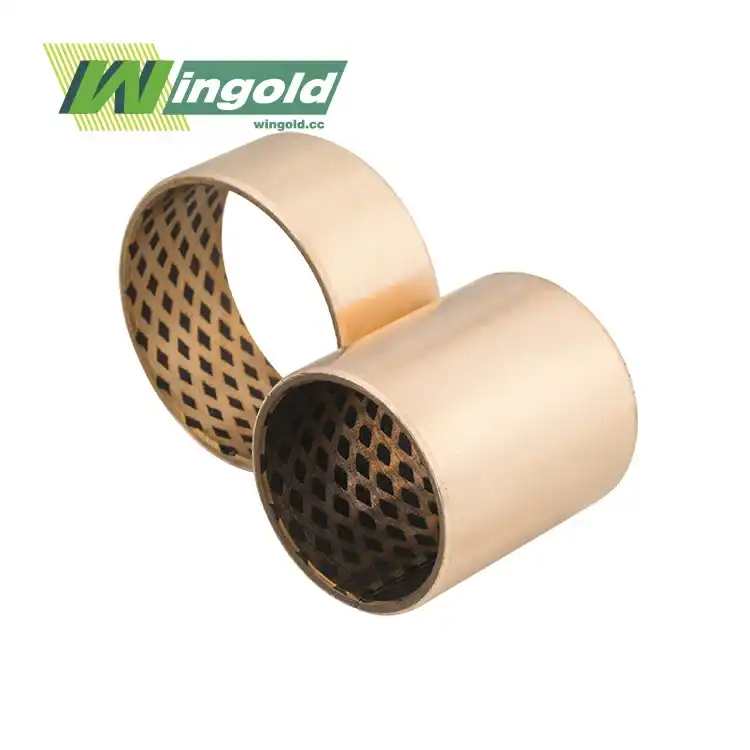
Metallic bronze alloys used to make bronze plain bearings are a high-tech engineering answer made to work in the toughest industrial settings. These parts are made from special copper-based metals, which are usually mixes of copper, tin, lead, aluminum, or phosphorus. Each mix is designed to provide certain performance qualities.
How Bronze Plain Bearings Function in Industrial Applications?
The main idea behind how it works is to make a controlled connection between moving parts. bronze plain bearings use either hydrodynamic lubrication, in which a thin film of pressurized oil divides the surfaces while they rotate, or boundary lubrication, in which solid lubricants like graphite are incorporated in the metal. With this design, they can spread loads out evenly across the bearing surface while keeping friction coefficients very low, usually between 0.08 and 0.14 when properly oiled.
Bronze is different from other materials because it has a unique set of qualities. The structure of the metal is very conformable, which means it can be changed very small amounts to fit a misaligned shaft without breaking completely. A second property of bronze is that it can insert contaminant particles into its softer material instead of letting them scratch the hardened steel shaft.
Material Composition and Alloy Variations
Different types of metal are used for different business purposes. Leaded tin bronze, like SAE 660 or C93200, is very easy to machine and doesn't cause friction, so it can be used in moderate-load situations with common shaft materials. Aluminum bronze variants (C95400) have a very high tensile strength (nearly 750 MPa) and a high level of fatigue resistance, making them perfect for heavy-duty mining and building tools. Phosphor bronze is harder and doesn't wear down as easily, making it useful in rough settings.
Bronze metals are better at transferring heat than steel or polymer options, which lets heat leave the friction zone quickly. In high-load situations, this feature is very important because frictional heat buildup could otherwise cause thermal degradation and failure before its time.
Advantages Over Alternative Bearing Materials
bronze plain bearings are more resistant to corrosion than steel ones. This is especially useful in sea settings or chemical processing plants where wetness is a constant problem. Bronze bearings, on the other hand, keep their shape over a wider range of temperatures and can handle shock loads without permanently changing shape. The material's natural properties also give it some emergency running ability—if lubrication breaks suddenly, bronze can keep working for a short time without immediately stopping, which could avoid major equipment damage.
Real-life examples show that these benefits are always true. Bronze bushings are used in the pivot points of hydraulic cylinders on earthmoving equipment. They have to deal with constant oscillation and contamination, which would quickly destroy protected ball bearings. Nickel-aluminum bronze marine stern tube bearings don't rust in salt water and can handle edge-loading caused by the hull bending during sailing.
Comparing Bronze Plain Bearings Against Other Bearing Types
When procurement teams know how different bearing technologies stack up against each other, they can make choices that are based on facts and meet practical and cost requirements.
Material Property Comparisons
In some setups, steel plain bearings are harder and can hold more weight, but they need to be oiled more often and don't fight corrosion very well. When lubrication fails, steel-on-steel contact leads to quick galling and seizure. bronze plain bearings can handle short periods of not being oiled and have self-sacrificial properties that protect more expensive shaft components.
Ball and roller bearings work best in high-speed, low-friction situations where bronze bearings can't handle the speed of spinning. But rolling element bearings can't handle shock loads, vibrations, and dirt, all of which are common in heavy industrial settings, building gear, and mining equipment. Rolling bearings also need the shaft to be perfectly aligned, but they can't handle misalignment like bronze bushings do all the time.
Bronze sleeve bearings work on the same rolling contact concept as other plain bearings, but they are smaller and easier to use, which makes them better. Compared to rolling element options, their simple design gets rid of the need for complicated sealing arrangements and makes the whole unit smaller, especially when using copper sleeve bushings.
Maintenance Requirements and Operational Considerations
Different types of bearings need very different maintenance procedures. Rolling element bearings usually need to be kept in a sealed space and need special greases to be replaced on a regular basis. bronze plain bearings usually don't need complex lubrication systems. Oil holes cut into the bearing surface or graphite plugs inserted in the bronze matrix can do the job with little work.
Bronze bearings can hold a certain amount of load depending on their PV value, which is the sum of the bearing pressure (load per unit area) and the rolling speed. When properly sized, bronze bearings can easily handle pressures higher than 200 MPa in low-speed situations. This is more than what many rolling bearing types can handle in the same envelope dimensions.
Environmental fit is another important factor that sets them apart. When things are wet, dirty, and toxic, where sealed rolling bearings break down faster, bronze bearings work consistently. Because plain bearings are open, contaminants can flow through them instead of building up inside protected systems.
Cost Analysis and Total Cost of Ownership
Prices at the start of the buying process only tell part of the story. bronze plain bearings usually cost less than precision rolling element bearings with the same load capacity. However, the total cost of ownership is higher than the price of purchase. When you buy a lot of standard bronze bushings, you can save a lot of money, and because the material is easy to work with, it's also cheap to make special ones in sizes that aren't standard.
Lead times for normal bronze bearings from well-known makers are usually two to four weeks, but they can be made faster if you need them for urgent repair. Depending on how complicated they are, custom specs can make wait times six to eight weeks longer. When it comes to rolling element bearings, delivery times may be faster for standard sizes but longer for custom configurations.
When bronze bearings are used correctly, they last longer, which means they don't need to be replaced as often and don't cost as much during downtime. Bronze bushings can usually last between 8,000 and 12,000 hours of heavy-duty use before they need to be replaced. In the same severe-duty situations, rolling bearings only last between 5,000 and 8,000 hours.
Choosing the Right Bronze Plain Bearing for Your Business Needs
In order to find the best bronze plain bearings solutions that will last and save you money in the long run, you need to carefully consider working factors, weather conditions, and the supplier's abilities.
Evaluating Load Requirements and Size Specifications
The first step in load analysis is to figure out how much horizontal or axial force the bearing needs to be able to handle during regular use and times of high load. A lot of the time, dynamic loads like shock, shaking, and starting torque are much higher than steady-state numbers. The projected area of the bearing, which is the sum of its diameter and length, needs to have enough surface area to keep the pressure within the stated capacity of the material.
Existing equipment has size limits on the bearing area measurements, so they need to be carefully checked. Standard metric sizes range from 10mm to 500mm in diameter, and length-to-diameter ratios are usually between 0.5:1 and 2:1, but can be higher or lower based on how the load is distributed and how much the shaft bends.
Operating Environment Assessment
Extreme temperatures have a direct effect on the choice of materials. Standard bronze formulations keep their shape and mechanical qualities from -40°C to +150°C, which is hot enough for most industry uses. Aluminum bronze metals that stay strong at temperatures close to 300°C work well in high-temperature areas, while phosphor bronze types that don't weaken may be needed in cryogenic settings.
Corrosion exposure decides which alloys are used and how the surfaces are treated. Nickel-aluminum bronze or special protective coats are needed in marine and chemical handling areas. Abrasive contaminants like bronze metals that are harder and have solid lubricants built in that keep particles from building up in oil holes.
Standard Versus Custom Bearing Solutions
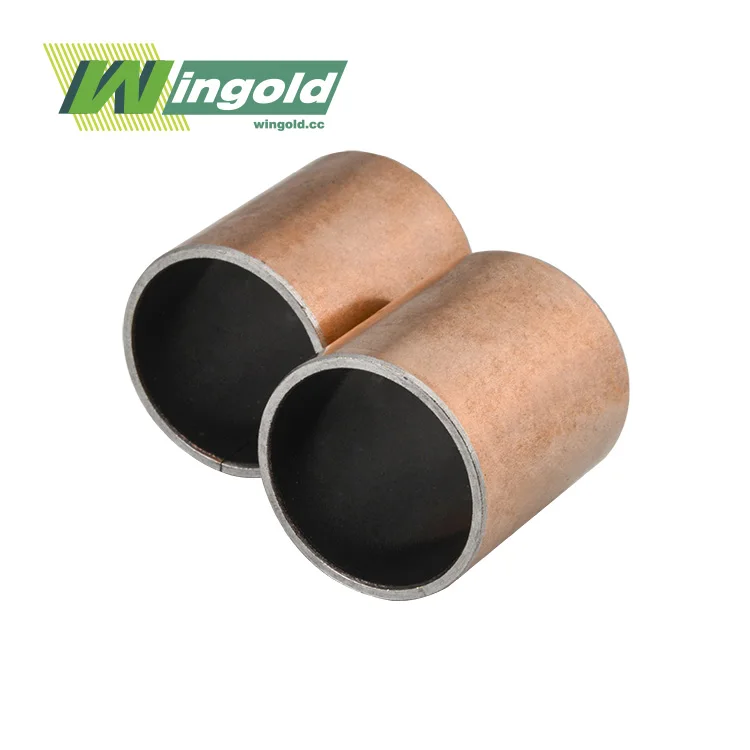
Standard bushings are cheaper and can be made faster when you need them in standard sizes. Custom production is needed when the needs of the equipment call for non-standard sizes, special alloy compositions, or one-of-a-kind features like precise oil flow patterns. As an example of advanced custom capability, Wingold's WGB-090 product line includes bearings made from specially formulated high-density copper alloy strip. The surfaces of these bearings can be precisely rolled with diamond or hemispherical oil holes and grooves, depending on the needs of the application. The high-density formulation has a great load-bearing capacity, better wear resistance, and a longer service life. Compared to standard cast bronze alternatives, it may also allow machines to be smaller and cost less.
Maintenance Best Practices for Longevity
Proper fitting sets the stage for long-lasting bearings. To keep bronze bushings from rotating while avoiding too much installation stress, controlled interference fits—usually 0.001 to 0.002 inches per inch of diameter—are needed when pressing them into housings. For steel rods, the surface finish must be 16 to 32 microinch Ra and have a hardness higher than HRC 40 to keep mechanical wear to a minimum.
When to do lubrication upkeep depends on how the machine is being used. When the motor is running all the time with light loads, the oil level may need to be checked every day and refilled once a week. Applications that oscillate and use graphite-filled bronze plain bearings can go months without being serviced. Keep an eye on the temperature of the bearings to find out if the lubrication is breaking down early. Operating temperatures more than 80°C above air usually mean that there isn't enough lubrication or the bearings are under too much load.
Evaluating Supplier Credentials and Support
A manufacturer's image is based on their reliable product, technical know-how, and quick customer service. Certifications like ISO 4383 for sizes and tolerances, ASTM B22 for the makeup of copper alloys, and skills specific to the business show that the company can make things. When sellers offer engineering help for choosing bearings, failure analysis skills, and quick reaction times for emergency replacement needs, procurement teams gain.
Support after the sale is what sets great sellers apart from average ones. Having access to applications engineers who know your equipment and how it works speeds up the process of fixing problems and makes sure that bearing specs are always up to date with changing needs.
Procurement Strategies for Bronze Plain Bearings in B2B Context
Strategic planning for buying bronze plain bearings makes sure that the abundance of bearings matches up with production plans, and it also lowers the cost of buying things and lowers the risks in the supply chain.
Sourcing from Reliable Suppliers
To find suitable providers, you have to look at their manufacturing skills, quality processes, and delivery performance. Direct ties with manufacturers get rid of markups for distributors and give you access to engineering tools. Online platforms make it easy to compare prices and check specifications, and long-term partnerships with local suppliers allow for quick emergency supplies for repair that wasn't planned.
Supplier approval should check that the product is made in-house instead of through a third party, which would ensure uniform quality control and production capacity. Visits to the factory or virtual walks of the facilities show how advanced the manufacturing is. For example, CNC machining centers, centrifugal casting lines, and full testing labs show that the company is very capable in the industrial world.
Leveraging Volume Purchasing and MOQ Considerations
For normal sizes, bulk order savings usually start when you buy more than 100 pieces. There are also price breaks at 500 and 1,000 pieces. Framework deals that are renewed every year lock in prices for expected volumes while still allowing for flexibility in real release numbers that are in line with production needs.
Minimum order amounts depend on the provider and the type of bearing. For standard bushings, the MOQ can be as low as 10 to 25 pieces, but for special specs, the MOQ is usually 50 to 100 pieces so that the costs of making the tools and setting them up can be covered. Progressive sellers let you try smaller amounts to see how well they work before you commit to larger orders.
Managing Lead Times and Inventory Strategy
To balance the costs of keeping goods with the risks of running out, you need to look at how people usually use things and how lead times can change. Important wear items that need to be kept in safety stock include bearings that support equipment that slows down production or that take a long time to get. Setting up consignment inventory agreements with sellers is a way to avoid keeping costs and make sure that goods are available right away.
Clear communication about production plans and capability limits is good for lead time management. Setting set times for when framework agreement numbers will be released lets suppliers plan their production runs more efficiently and makes sure that deliveries don't interfere with maintenance windows.
Custom Bearing Specification and Communication Protocols
Custom needs that are complicated need detailed expert conversation. Misunderstandings are less likely to happen when you provide CAD models, tolerance specs, material choices, and application parameters. Prototype samples that are checked for accuracy through measuring and trial fitting keep expensive production runs of parts that don't work right from happening.
Regular talks with suppliers—at least once every three months—keep everyone on the same page about changing needs, high performance, and ways to keep getting better. Digital teamwork tools make it easier to share documents and keep track of different versions of specifications.
Understanding Pricing Structures and Negotiation Tactics
The price of bronze bearings depends on the cost of the materials (copper prices change all the time), how hard they are to make, how many are ordered, and any extra services that are offered. Material fees that are tied to the prices of commodities protect both parties from changes in the market. When you know what causes costs to go up or down, you can negotiate in a way that maximizes overall value instead of just unit price.
When you commit to a large amount of work, offer flexible payment terms, and see the possibility of a long-term partnership, you have more negotiating power. Long-term deals with regular price changes strike a mix between security and market responsiveness. Asking for detailed quotes that separate the costs of materials, production, and shipping can help you find you ways to cut costs.
Building Trust with Bronze Plain Bearings: Quality Assurance and Brand Reliability
Long-term procurement relationships that work well are built on trust in both the performance of bronze plain bearings and the stability of the seller, especially when sourcing a bronze self lubricating bearing.
Industry Standards and Certification Requirements
Quality bronze bearings meet set international standards that spell out the limits for sizes, the make-up of the material, and how well it works. Continuously cast bronze bars are governed by ASTM B505, while centrifugal cast goods are governed by ASTM B271. ISO 4379 sets standards for the sizes and limits of plain bearings, so they can be used by different providers.
By using spectrographic analysis to check the alloy's makeup, material certification papers make sure that the amounts of copper, tin, lead, and trace elements meet the requirements. Testing the mechanical properties of a material confirms its tensile strength, yield strength, and stretch traits. Dimensional inspection records show that the measurements match the requirements in the plan.
So that quality and traceability can be checked, procurement teams should ask sellers to include material certificates and inspection reports with packages. Verification testing by a third party gives more confidence for important apps.
Learning from Leading Manufacturers
Bearings made by well-known companies have been reliable for decades in industrial use. Companies like SKF, Timken, and McGill built their names on high-quality engineering, precise manufacturing, and full application support. Their huge case study libraries contain successful solutions from many different industries, making them useful as models for similar tasks.
When it comes to customization and customer service, regional makers who specialize in bronze plain bearings often offer better options than global companies. Wingold is a good example of this method. They have over ten years of experience in sliding bearing technology, as well as CNC machining, centrifugal casting production lines, and full testing labs that allow them to deliver solutions that meet the strictest industrial needs. Customers use our goods in hydraulic systems, forging equipment, plastic tools, lifting systems, and many other places where dependability is important.
The Value of Technical Assistance and Responsive Service
Better providers are more like expert partners than just sellers. Application engineering support helps choose the best bearing arrangements for new equipment designs and figure out why old setups aren't working right. Failure analysis services find the reasons why bearings don't work as well as they should, whether it's because of mistakes in the specifications, issues with fitting, or unexpected working conditions.
In addition to technical support, responsive service includes quick production of backups in case of emergencies, flexible timing to suit changing production plans, and early warning of possible supply chain problems. Support from an engineer during the whole purchase and execution process speeds up the project and lowers the risks connected to choosing the right bearings and putting them together.
Conclusion
Choosing the right bronze plain bearings is an important part of buying big machinery because it affects how reliable the equipment is, how much it costs to maintain, and how efficiently it works. Bronze plain bearings have great performance benefits, such as being able to handle high loads, prevent corrosion, handle shocks, and last a long time. These benefits make them the best choice for harsh industrial settings. To buy bearings successfully, you need to carefully look at operational factors, carefully evaluate suppliers, and make plans that balance your current needs with the value of a long-term relationship. Procurement pros find solutions that minimize downtime risks and maximize total cost of ownership by learning about the properties of materials, comparing different technologies, and building relationships with qualified makers who give engineering support.
FAQ
What is a bronze plain bearing?
Bronze sliding bushings are sliding bearings made of bronze alloy as the base material. Their core function is to reduce mechanical transmission friction and protect the shaft from wear. They possess characteristics such as high load capacity, wear resistance, and corrosion resistance, making them key friction-reducing components in mechanical equipment.
What industries are bronze plain bearings suitable for?
It is widely used in mining machinery, petroleum equipment, chemical equipment, shipbuilding engineering, general manufacturing, metallurgy, automotive, and other industries, suitable for mechanical equipment with high loads, strong friction, and harsh working conditions.
What are the core advantages of bronze plain bearings?
It possesses excellent wear resistance, corrosion resistance, good thermal conductivity, strong load-bearing capacity, low friction noise, and long service life, ensuring continuous and stable operation of equipment.
How to select bronze plain bearings?
The selection needs to match the shaft sleeve size, working temperature, load pressure, operating speed, and lubrication conditions. It should be precisely matched with the operating parameters to ensure compatibility and performance.
How to maintain and preserve bronze plain bearings?
Regularly inspect the wear status, ensure sufficient lubrication and use compliant lubricants; maintain clean working conditions to prevent the intrusion of impurities, effectively extending the service life of the shaft sleeve.
What determines the expected lifespan of bronze plain bearings in industrial equipment?
The length of time a bearing lasts relies on many interconnected factors, such as the amount of load compared to its stated capacity, the amount of lubrication, the hardness and finish of the shaft's surface, the working temperature, and the amount of contamination it is exposed to. bronze plain bearings that are properly specified and kept can usually last between 10,000 and 15,000 hours of use in moderate-duty situations. On the other hand, mining or building equipment that is used for heavy loads may need new bearings every 5,000 to 8,000 hours. Monitoring the temperature and analyzing the grease on a regular basis lets you know early on when something is breaking down, so you can replace it before it fails completely.
How do I determine the correct bearing size for my specific machinery?
For bearing size, you need to find the radial or axial load, divide it by the expected bearing area (width × length), and then make sure that the resulting pressure is less than the material's rated capacity at the speed you want to use it. To avoid failure due to heat, the PV number (pressure × velocity) must not be higher than what the material can handle. By using maker selection guides or hiring application engineers, you can make sure that the right size is chosen, taking into account things like heat expansion, misalignment, and dynamic loads.
Can bronze bearings function reliably in wet or highly corrosive environments?
Bronze metals are very resistant to corrosion in most industrial settings, such as places with some wetness and a lot of chemical processes. Nickel-aluminum bronze versions are great for marine and ocean uses because they are made to prevent saltwater corrosion and galvanic action. The right choice of alloys matched to specific corrosion agents guarantees long-term dependability in tough conditions where steel bearings would break down quickly.
Partner with Wingold for Premium Bronze Plain Bearings Solutions
Choosing the right maker is the first step to getting reliable bronze plain bearings performance. Wingold Bearing specializes in high-performance slide bearing options that are made to work in the toughest industrial settings. Our WGB-090 bronze bearing series is made from a specially formulated high-density copper alloy and has oil hole and groove patterns that can be changed. It has a high load capacity, a long service life, and is resistant to wear in lifting equipment, construction equipment, automotive applications, machine tools, and mining.
We have flexible minimum order amounts that can be used for testing or keeping track of goods, and we offer factory-direct prices. Our advanced CNC machining centers and centrifugal casting lines also allow us to make things quickly. We can help you find the best specs and lower the total cost of your supply chain because we are an experienced producer of bronze plain bearings that offers full testing services and one-on-one engineering support. Email us at info@wingold.cc to talk about your needs and find out how Wingold's unique bearing solutions can help you save money and time in the long run.
References
1. American Society for Testing and Materials. (2019). ASTM B505-19: Standard Specification for Copper Alloy Continuous Castings. West Conshohocken, PA: ASTM International.
2. Budinski, K. G., & Budinski, M. K. (2020). Engineering Materials: Properties and Selection (10th ed.). New York: Pearson Education.
3. International Organization for Standardization. (2018). ISO 4379-1:2018: Plain bearings—Copper alloy bushes—Part 1: Solid bushes. Geneva: ISO.
4. Khonsari, M. M., & Booser, E. R. (2017). Applied Tribology: Bearing Design and Lubrication (3rd ed.). Hoboken, NJ: John Wiley & Sons.
5. Neale, M. J. (2018). The Tribology Handbook (4th ed.). Oxford: Butterworth-Heinemann.
6. Society of Tribologists and Lubrication Engineers. (2021). Plain Bearing Applications in Heavy Industrial Equipment: Technical Reference Guide. Park Ridge, IL: STLE Publications.
Learn about our latest products and discounts through SMS or email