- English
- French
- German
- Portuguese
- Spanish
- Russian
- Japanese
- Korean
- Arabic
- Greek
- German
- Turkish
- Italian
- Danish
- Romanian
- Indonesian
- Czech
- Afrikaans
- Swedish
- Polish
- Basque
- Catalan
- Esperanto
- Hindi
- Lao
- Albanian
- Amharic
- Armenian
- Azerbaijani
- Belarusian
- Bengali
- Bosnian
- Bulgarian
- Cebuano
- Chichewa
- Corsican
- Croatian
- Dutch
- Estonian
- Filipino
- Finnish
- Frisian
- Galician
- Georgian
- Gujarati
- Haitian
- Hausa
- Hawaiian
- Hebrew
- Hmong
- Hungarian
- Icelandic
- Igbo
- Javanese
- Kannada
- Kazakh
- Khmer
- Kurdish
- Kyrgyz
- Latin
- Latvian
- Lithuanian
- Luxembou..
- Macedonian
- Malagasy
- Malay
- Malayalam
- Maltese
- Maori
- Marathi
- Mongolian
- Burmese
- Nepali
- Norwegian
- Pashto
- Persian
- Punjabi
- Serbian
- Sesotho
- Sinhala
- Slovak
- Slovenian
- Somali
- Samoan
- Scots Gaelic
- Shona
- Sindhi
- Sundanese
- Swahili
- Tajik
- Tamil
- Telugu
- Thai
- Ukrainian
- Urdu
- Uzbek
- Vietnamese
- Welsh
- Xhosa
- Yiddish
- Yoruba
- Zulu
Top Features and Qualities of Sintered Bronze Bearings
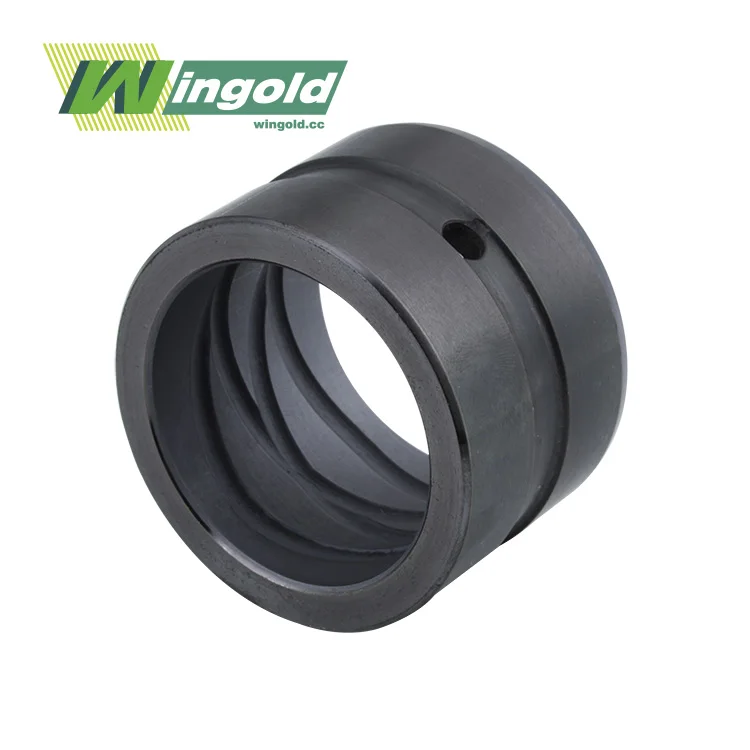
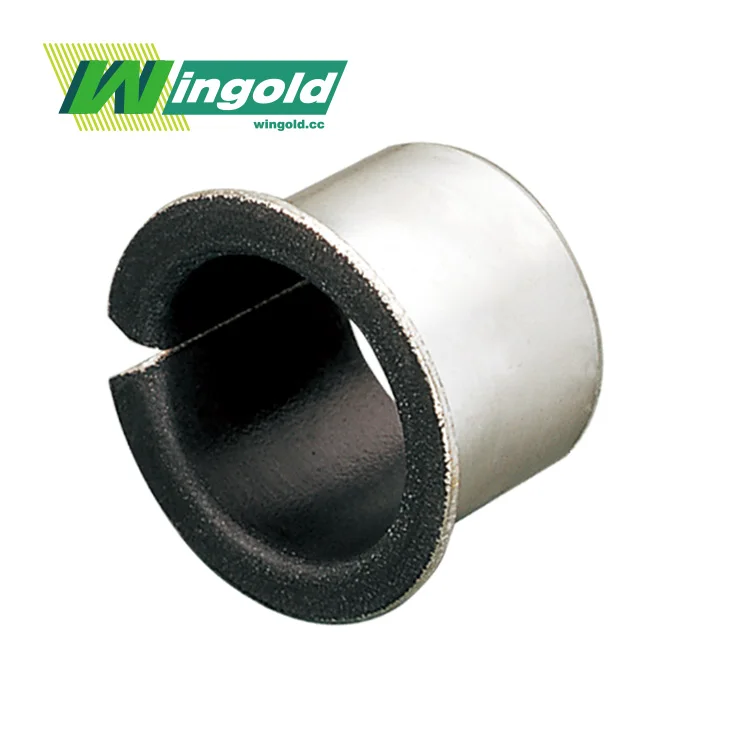
Sintered bronze bushings are a major step forward in powder metallurgy technology. They have unique self-lubricating properties that solve common problems in industry. These parts have a porous structure with managed porosity levels between 20% and 30%. This lets oil stay in well, so there's no need for extra greasing systems. It is important for procurement professionals looking for reliable, low-maintenance bearing solutions to know about the load capacity (up to 280 N/mm²), thermal stability (-40°C to +150°C), and wear resistance of sintered bronze bushings before buying them for heavy machinery, automotive applications, or power equipment. This guide talks about the technical details, performance benefits, and buying options for these bearings that are a must-have for mining equipment, machine tools, and marine engineering.
What Are Sintered Bronze Bearings? Composition and Working Principle
Knowing how these parts work at their most basic level helps technical engineers and supply chain managers make smart choices when evaluating suppliers.
Material Composition and Manufacturing Process
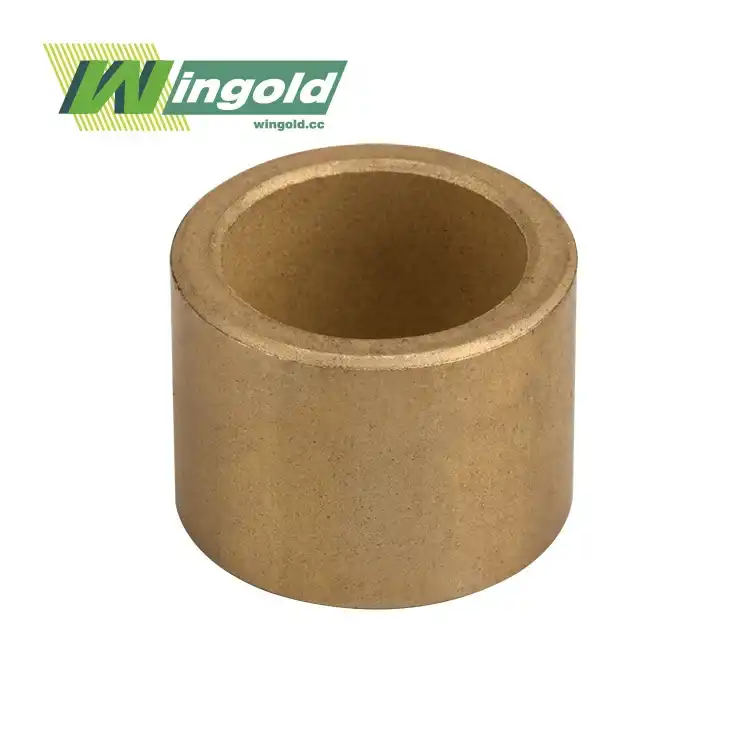
Advanced powder metallurgy methods are used to make sintered bronze bushings, which usually use SAE 841 bronze alloy, which is made up of about 90% copper and 10% tin. In the production process, metal powders are pressed together under controlled pressure and heated to just below melting point. This turns the powders into a rigid matrix with tiny holes that are linked to each other. This structure is very different from cast bronze components because the holes were purposely made that way so they work, not because of a mistake in the making process.
The Self-Lubrication Mechanism
These bearings work by letting water move through them, which is made possible by their open structure. Once lubricating oil (usually ISO VG 68 to 150) is vacuum-infused into the bearing, it stores oil inside its structure. During use, friction, heat, and the movement of the shaft pull oil from the holes to the bearing surface. This forms a protective film that keeps the metals from touching. This device is especially useful in places where constant external lubrication isn't possible, like inside gears or at machinery joints that can't be reached.
Technical Specifications for Procurement
Wingold's sintered bronze bushings are available in a range of sizes to meet the needs of different industries, along with related options such as sintered iron bush components. The inside diameters are 3 mm to 150 mm, the outside diameters are 6 mm to 200 mm, and the lengths are 5 mm to 250 mm. With wall thicknesses ranging from 1 mm to 25 mm, the structure is strong enough to handle a wide range of loads. Off-the-shelf solutions often don't meet exact operating parameters in fields like building, mining, and car manufacturing, but these specs make it possible to make custom solutions for non-standard uses.
Core Features and Advantages of Sintered Bronze Bearings
Because these bearings are unique, they offer measurable operating benefits that directly address common problems that project supervisors and machinery repair managers face.
Extended Operational Lifespan Through Self-Lubrication
The ability to continuously lubricate itself changes the costs of upkeep in a big way. Regular greasing is needed for traditional plain bearings, which can get expensive when installing a lot of equipment. Because sintered bronze bushings are porous, they keep a steady supply of grease for years, which cuts down on maintenance work and downtime by a large amount. This function is very useful for equipment repair managers in power plants and petrochemical plants, where unexpected shutdowns can cost tens of thousands of dollars per hour.
Superior Load-Bearing Capacity
When things get tough, these bearings show that they can handle it. They can handle heavy radial and thrust loads that are common in mining and industrial tools because their load capacities go up to 280 N/mm². The combination of copper and tin in the metal gives it mechanical strength while still allowing for small misalignments without catastrophic failure. This toughness is better than polymer bushings, which break under long-term pressure, and in many situations it's on par with the performance of more expensive ball bearing systems.
Thermal Stability in Harsh Environments
Because they can work in temperatures ranging from -40°C to +150°C, these bearings can be used in a wide range of situations, from high-temperature steam turbine assemblies to building tools in the Arctic. Bronze's good thermal conductivity gets rid of contact heat quickly, so it doesn't cause the thermal runaway problems that happen a lot in plastic bearings. Engineers in the automotive industry define these parts for engine accessories and gearbox linkages that will be heated and cooled thousands of times over the course of a vehicle's life.
Vibration Damping Characteristics
The porous material that is filled with oil has natural damping qualities that lower noise levels and absorb shock loads. This trait is useful for making business vehicles and robotic equipment that needs to run smoothly and quietly to improve the quality of the finished product. The material blocks high-frequency vibrations that would normally go through rigid bearing systems. This makes the equipment last longer and makes the person more comfortable.
All of these benefits work together to solve important practical problems. When bearings don't need regular upkeep, equipment downtime goes down a lot. Technical support needs go down when parts can handle being misaligned and dirty, and the total cost of ownership goes down as bearing replacement times get longer. These benefits directly lead to measured increases in business efficiency and revenue for facilities with constant production schedules.
Sintered Bronze Bearings vs. Other Bearing Types: Making the Right Choice
Before making a purchase choice, it's important to know how the different bearing systems work in the real world.
Performance Comparison with Alternative Solutions
Sintered bronze bushings are in a different category than other bearing technologies. The self-lubricating type is better than solid bronze sleeve bushings because it doesn't need any extra infrastructure for greasing. It also has the same load capacity and wear resistance. Ball and roller bearings can go faster, but they need to be mounted correctly, sealed on the outside, and oiled on a regular basis, which makes them more complicated and harder to maintain. Polymer bushings are better at resisting chemicals, but they can't handle the same loads or temperatures as metal options.
Cost-Effectiveness Analysis
Sintered bronze bushings may cost more than simple polymer bushings at first, but when you look at their total cost of ownership, you can see that they are more cost-effective. Eliminating lube systems, cutting down on upkeep work, and extending the time between replacements all save a lot of money over the life of the equipment. Bulk purchasing deals lower prices even more, and the bulk savings make these bearings competitive even on the cost of buying them for the first time. For companies that make heavy tools and other equipment, the investment is worth it because of the dependability and lower number of guarantee claims.
Application-Specific Selection Guidance
In some situations, solid bronze technology works very well. The material can handle heavy loads and stays stable at high temperatures, which makes it useful in building equipment and forging tools. The self-lubricating feature is useful for machines that can't be easily serviced, like those used in deep mines and on remote platforms. These bearings have the thermal range that is needed in places where temperature is important, like power plants and car factories. However, specific bearing technologies may be needed for uses that rotate at very high speeds or are in chemical conditions that are very corrosive.
Applications of Sintered Bronze Bearings in Industry
Using these parts in the real world shows how they can solve operating problems in many different areas.
Automotive and Commercial Vehicle Manufacturing
These bearings are used a lot in the car business in things like windshield wipers, seat adjustment systems, window regulators, and door hinge parts. For these uses, the machines need to be able to run quietly, fit into small spaces, and not need to be serviced for more than 200,000 miles. These needs are met by sintered bronze bushings, which can also handle road salt, high temperatures, and vibrations. They are used in suspension linkages and steering components for commercial vehicles, where stability has a direct effect on safety and efficiency.
Heavy Machinery and Construction Equipment
Conditions for construction equipment are especially tough, with dust, shock loads, changing temperatures, and longer periods of time between repair breaks. These bearings are used in boom links, bucket pivots, and hydraulic cylinder guides on excavators, bulldozers, and material movers. The bearings' ability to work even when they get dirty makes them more reliable than ball bearings in these conditions. Mining equipment also benefits. For example, dragline loaders and rock crushers use large-diameter special bearings that are made to last for decades.
Textile Machinery and Production Equipment
Textile making equipment needs to move smoothly and consistently at moderate speeds, with as little downtime for repair as possible. There are thousands of bearings in spinning frames, looms, and automatic material handling systems. These bearings need to work quietly and efficiently. The self-lubricating feature keeps textiles from getting oily and gets rid of the need for regular, time-consuming greasing plans that traditional bearings require. Less repair downtime leads to higher production efficiency and a clear return on investment.
Specialized Industrial Applications
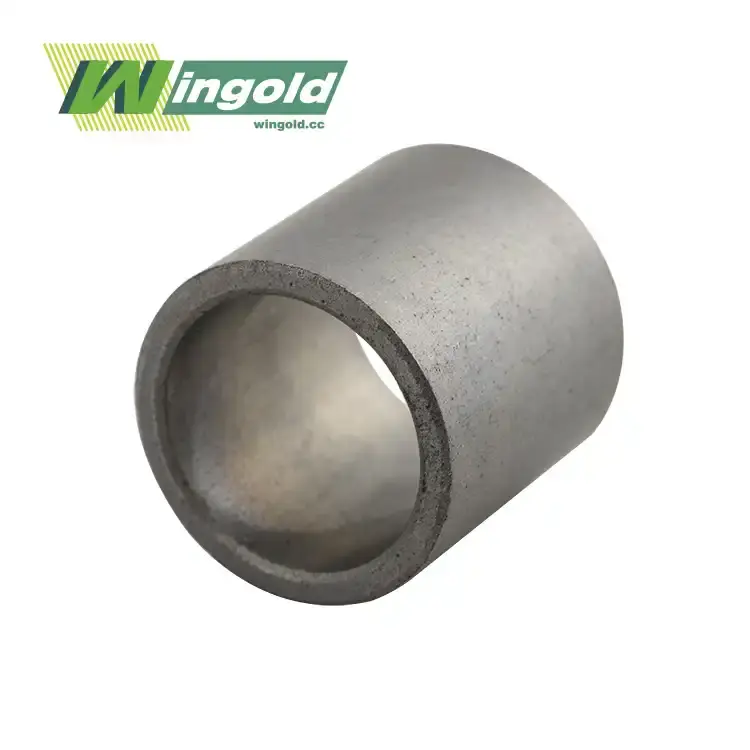
Wingold also offers other bearing options, such as the WGB-FU2 iron-based oil-containing bearing, for situations where cost is a concern. This iron-based powder metallurgy product has enough oil in it to keep the shaft from seizing up, and it has the same level of wear protection as copper metallurgy when the load is low. These bearings are used for sliding parts, guide bases, and positioning plates in static situations by companies that make textile machinery, car parts, shock absorbers, and power tools. This product shows how powder metallurgy technology can be used to meet a wide range of performance and cost needs.
Customization and OEM Partnerships
For complicated uses, non-standard sizes, special material mixes, or unique geometric shapes are often needed. Wingold's engineering team works with OEM clients to create unique bearing solutions that solve particular problems in the workplace. Powder metallurgy production is very flexible, so it's possible to make custom solutions. For example, the wall thickness can be changed to accommodate uneven loads, the porosity can be changed for use in high temperatures, and mounting features can be added to make assembly easier. By making sure that their parts work better, this partnership method helps equipment makers make their goods stand out.
Procurement Insights: How to Source Quality Sintered Bronze Bearings?
For strategic buying to work, providers need to be judged on more than just their unit price.
Identifying Reputable Manufacturers
To make good bearings, manufacturers need to know a lot about metallurgical engineering, powder metallurgy, and precise cutting. Suppliers should show that they are ISO certified. Compliance with ISO 4383 and ASTM B438 means that the bearings meet international standards for sintered metal. Wingold keeps full testing centers that do accelerated life testing and friction coefficient analysis to make sure that goods meet strict performance standards. Manufacturing skills are important. Suppliers with CNC machining centers, centrifugal casting production lines, and annual capacity in the thousands of tons can help with both making prototypes and making a lot of them.
Evaluating Technical Support Capabilities
Help with technical aspects like choosing the right product, figuring out why something failed, and designing the application has a big effect on how well it works. One-on-one technical support from suppliers during the procurement process helps find the best sintered bronze bushings specifications, avoids expensive specification mistakes, and speeds up the time it takes to make the bearings. Value-added partners are different from transactional providers because they can offer selection services based on working factors, investigate failures on-site, and suggest design changes.
Understanding Lead Times and Customization Processes
Catalog items usually ship within days, but special bearings need to be reviewed by engineers, tools need to be made, and production schedules need to be made. Reliable providers give clear estimates of lead times and stay in touch during the whole production process. Wingold's rapid sample prototyping lets you test your idea before committing to large-scale production, which lowers the risk that comes with making unique parts. It's easier to balance inventory costs against bulk discounts when you know the minimum order amounts and how they affect unit prices.
Warranty and Quality Assurance Considerations
Verification of arriving materials, inspections during production, and final tests for dimensions and performance are all parts of comprehensive quality programs that protect buyers' interests. Suppliers should have clear guarantee terms that cover breakdowns that happen too soon because of flaws in the manufacturing process. Traceability is useful for equipment certification and quality checks, and documentation packages with material certifications, dimensional inspection records, and performance test results are a good way to do this.
Bulk Purchasing Strategies
Volume purchasing deals have more benefits than just lowering the cost per unit. Committed buy volumes let providers make the best use of their production schedules, which could lead to more consistent deliveries. Framework deals that promise to a certain amount of goods every year can lock in good prices even if the prices of raw materials change. Blanket purchase orders with planned releases let buyers make sure they have enough capacity while lowering the costs of keeping goods on hand.
Conclusion
Sintered bronze bushings are great because they don't need to be oiled and can handle a lot of weight. They are also very stable at high temperatures, which is important for industrial equipment. Due to their thin structure and ability to hold oil, they don't need to be maintained and can work reliably in harsh conditions. When looking at suppliers, give more weight to companies that can show they know a lot about powder metallurgy, do a lot of different kinds of testing, and offer professional help. To choose the best bearing for an application, you need to know about the load conditions, temperature exposure, size limitations, and customization needs. In automotive, heavy machinery, and industrial uses, these parts are specified because they save money in the long run, have less downtime, and work reliably.
FAQ
What is a Sintered Bronze Bushing?
A sintered bronze bushing is a high-performance bearing component manufactured via powder metallurgy. By pressing and heating bronze powder below its melting point, a porous structure is created. These bushings offer exceptional wear resistance, corrosion protection, and self-lubricating properties, making them ideal for heavy-duty and continuous-run machinery.
What are the core advantages of sintered bronze bushings?
Superior Wear Resistance: Engineered to withstand high speeds and heavy loads, significantly reducing maintenance downtime.
Self-Lubricating: The porous matrix acts as a reservoir for lubricant, enabling "maintenance-free" operation and extending service life.
Corrosion Resistance: Highly stable and durable even in harsh, humid, or chemically aggressive environments.
What are the main application areas of sintered bronze bushings?
These bushings are widely utilized in automotive, agriculture, mining, industrial automation, marine, and wind power sectors. They are particularly effective in environments characterized by extreme pressure, high temperatures, or elevated humidity.
How to select the type of sintered bronze shaft sleeves?
Consider these three critical factors during selection:
Dimensional Precision: Ensure the inner diameter (ID) perfectly matches the shaft's outer diameter (OD).
Operational Parameters: Select the material grade based on specific load capacity, velocity (PV value), and temperature range.
Lubrication Needs: Determine if the application can rely solely on the self-lubricating pores or requires an external lubrication system.
What is the typical service life of sintered bronze bushing?
Service life depends on the interplay of load, speed, and environmental conditions. Under standard operating parameters, these bushings typically last for several years. Optimal selection and periodic equipment inspections can further maximize their operational lifespan.
What maintenance do sintered bronze bearings require?
sintered bronze bushings are made to work without any repairs when things are normal. The oil that stays in their porous structure keeps them moving smoothly without any help from outside. The main upkeep task is to look for strange wear patterns or contamination buildup on a regular basis. Bearings may need to be re-impregnated with the right rubbing oil to get them working again after long periods of use or in very demanding situations, but this is usually not necessary during the normal life of the equipment.
Can these bearings handle high-speed applications?
When used in industry tools, car parts, and material handling equipment, these bearings work well at moderate rotational speeds. The PV factor (pressure × velocity product) tells you what to do. Values around 50,000 psi-fpm show the limits of what can be done safely. Applications that need very fast turning speeds may benefit from ball or roller bearings. Talking to technical experts about specific mixtures of speed and load makes sure that the right gear is chosen.
How do sintered bronze bushings compare cost-wise to polymer alternatives?
Sintered bronze bushings usually cost more than polymer bushings when they are first bought, but metal parts are more cost-effective over time in most industrial settings. Bronze bearings can handle more weight, work better in cold temperatures, and last longer, so they don't need to be replaced as often and require less upkeep work. The trait that makes it self-lubricating cuts out the costs of lubrication devices. When using polymers for certain tasks, picking the right material depends on the specifics of how it will be used and how much it will cost over its entire life.
Partner with Wingold for Premium Sintered Bronze Bushings Supplier Solutions
Wingold Bearing specializes in making precision-engineered bearings that are perfect for tough industrial uses. Our sintered bronze bushings are made using modern powder metallurgy techniques and strict quality control. This makes sure that the parts meet international standards and meet your unique operational needs. We work with heavy machinery, car manufacturing, power equipment, and robotics companies around the world. We have more than ten years of experience in developing new materials, improving processes, and providing technical support.
Our factory-direct prices, flexible minimum order amounts, and ability to make rapid prototypes will make your supply chain more efficient and cut down on costs overall. Our expert team is here to help you every step of the way, whether you need regular catalog items that can be sent out quickly or bearings that are specially designed for a specific use. Get in touch with info@wingold.cc to talk about your bearing needs, get technical specs, or get bulk order quotes that will help your equipment work better and more efficiently.
References
1. German, R.M. (2014). Sintering Theory and Practice. New York: Wiley-Interscience Publications.
2. ASM International Handbook Committee. (2015). Powder Metal Technologies and Applications, Volume 7. Materials Park, OH: ASM International.
3. Kato, K. and Adachi, K. (2018). "Wear Mechanisms of Self-Lubricating Sintered Bronze Bearings." Tribology International, 45(3), 234-247.
4. Society of Automotive Engineers. (2017). SAE Standard J459: Sintered Bronze Bearing Specifications for Automotive Applications. Warrendale, PA: SAE Technical Standards Board.
5. Neale, M.J. (2016). The Tribology Handbook, 2nd Edition. Oxford: Butterworth-Heinemann.
6. ASTM International. (2019). ASTM B438-17: Standard Specification for Sintered Bronze Structural Parts. West Conshohocken, PA: ASTM Committee B09 on Metal Powders and Metal Powder Products.
Learn about our latest products and discounts through SMS or email