- English
- French
- German
- Portuguese
- Spanish
- Russian
- Japanese
- Korean
- Arabic
- Greek
- German
- Turkish
- Italian
- Danish
- Romanian
- Indonesian
- Czech
- Afrikaans
- Swedish
- Polish
- Basque
- Catalan
- Esperanto
- Hindi
- Lao
- Albanian
- Amharic
- Armenian
- Azerbaijani
- Belarusian
- Bengali
- Bosnian
- Bulgarian
- Cebuano
- Chichewa
- Corsican
- Croatian
- Dutch
- Estonian
- Filipino
- Finnish
- Frisian
- Galician
- Georgian
- Gujarati
- Haitian
- Hausa
- Hawaiian
- Hebrew
- Hmong
- Hungarian
- Icelandic
- Igbo
- Javanese
- Kannada
- Kazakh
- Khmer
- Kurdish
- Kyrgyz
- Latin
- Latvian
- Lithuanian
- Luxembou..
- Macedonian
- Malagasy
- Malay
- Malayalam
- Maltese
- Maori
- Marathi
- Mongolian
- Burmese
- Nepali
- Norwegian
- Pashto
- Persian
- Punjabi
- Serbian
- Sesotho
- Sinhala
- Slovak
- Slovenian
- Somali
- Samoan
- Scots Gaelic
- Shona
- Sindhi
- Sundanese
- Swahili
- Tajik
- Tamil
- Telugu
- Thai
- Ukrainian
- Urdu
- Uzbek
- Vietnamese
- Welsh
- Xhosa
- Yiddish
- Yoruba
- Zulu
Self-lubricating Bearing, Life With Less Friction
1000s of machines in heavy businesses face a quiet threat every day: friction. When friction is not controlled, it leads to faster wear, unexpected downtime, and rising maintenance costs. In reaction to these difficulties, self-lubricating bearings, especially Bimetallic self lubricating bearing types, are a smart choice. The strength of steel and the low friction of certain copper metals are combined in these composite solutions, which provide solid performance in places where standard lubrication is not possible or is not enough. These bearings are made to work with building equipment, metallurgical machinery, and power generation systems. They reduce friction and increase the time between repair visits. This guide breaks down the technical basics, selection criteria, and procurement insights that allow purchasing managers, technical experts, and maintenance teams to make smart choices that meet practical needs and stay within budget.
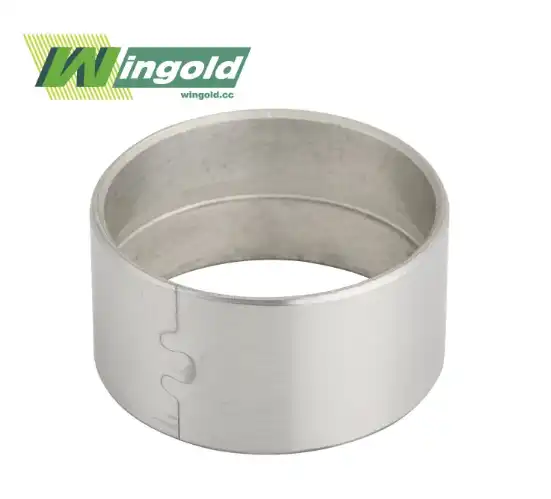
Understanding Bimetallic Self-Lubricating Bearings
What Defines the Bimetallic Structure?
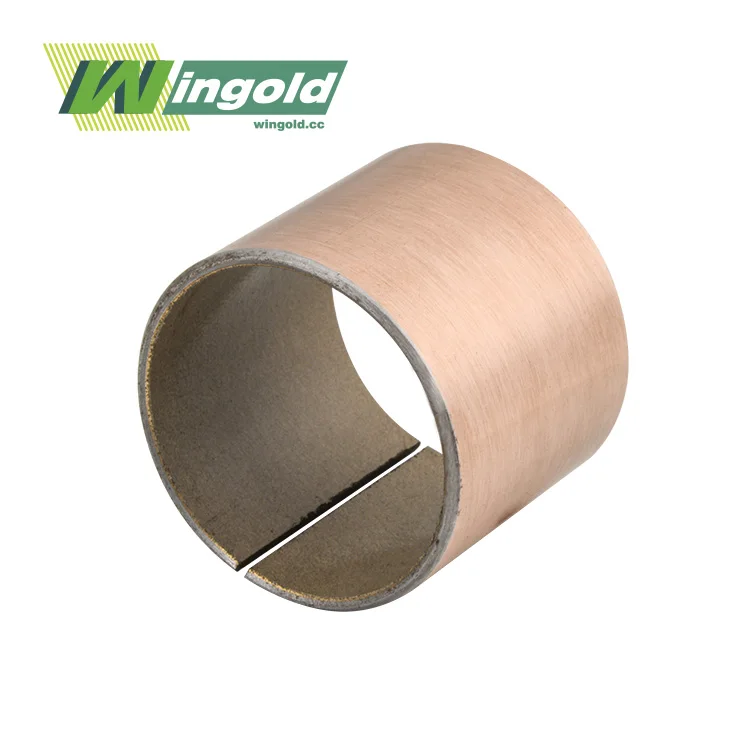
Bimetallic bearings have a backing made of high-quality low-carbon steel and a layer of powdered copper alloy that doesn't wear down easily. The WGB-800 line from Wingold is a great example of this design theory. The steel substrate is very strong and stable, and the sintered top layer, which comes in different compositions like CuPb10Sn10, CuPb24Sn4, and AlSn20Cu, reduces friction and prevents wear. The secondary sintering and secondary extrusion processes make the material's connection between the two metals stronger. This means that the metals won't come apart even when they're hit with big shocks.
How the Self-Lubricating Mechanism Functions?
Traditional plain bearings need to be oiled from the outside all the time. These hybrid bearings, on the other hand, have oil grooves, spherical dents, and pockets cut into the copper alloy surface. When the lube is first applied, these containers hold it and create a boundary lubrication film that stays in place while the machine is running. Alloys like CuPb30 have a lot of lead in them, which works as a solid lubricant at starting and low speeds to keep metal from touching metal. This feature is very helpful in situations where relubrication is hard to do all the time, like on remote mining equipment, offshore platforms, or sealed gearbox systems that work in dirty environments.
Advantages Over Conventional Bearing Solutions
When compared to solid bronze joints, bimetallic designs use less material and last longer without wearing out. The steel backing takes on structural pressures that would break uniform bronze when loaded and unloaded many times. Compared to polymer-based dry bearings, bimetallic versions can handle up to 250 MPa of static load and 150 MPa of dynamic load better. They also conduct heat better, so friction heat is quickly removed. The mix works well in temperatures ranging from -40°C to 280°C, which is good for thermal problems that come up in steam engines, hydraulic cylinders, and forging presses.
Key Considerations When Selecting Bimetallic Self-Lubricating Bearings
Material Composition and Performance Matching
The best copper metal for a Bimetallic self lubricating bearing relies on the specifics of the job. CuPb10Sn10 has a modest load capacity and good conformability, making it a good choice for oscillating uses in car suspension parts. CuPb24Sn4 is better at border lubrication situations that happen a lot in farming machinery that needs to be serviced over whole harvest seasons because it has more lead in it. For naval rudder bearings that are exposed to sea, AlSn20Cu metals make them more resistant to corrosion. To make sure the bearing wears more evenly and protects expensive polished shafts, technical experts should match the material hardness (usually HB 60–90) with the shaft hardness (at least HRC 50).
Application Alignment Across Industrial Sectors
Bearings for heavy building equipment need to be able to handle a lot of wear and tear, pressure loads, and dirt. Excavators' track rollers and carrier rollers work with heavy loads and slow, high-torque movement. The steel backing absorbs shock, and the bronze lining keeps the turning from wearing down too quickly. Metallurgical equipment has the same problems, plus high temperatures. Power equipment has problems with high-speed spinning and intermittent loading. Different industries have different tribological needs that need specific specs. Talking to the technical support teams of bearing makers speeds up the right selection process and lowers the cost of trial and error.
Comparative Analysis: Bimetallic Versus Alternative Technologies
Bronze bearings have been used for a long time and have been proven to be reliable. However, bimetallic alloys are stronger and more cost-effective. To be truly dry, polymer bearings must be used, but they can't match the load capacity or heat performance of other types. Bimetal options are in the middle. They can handle heavy loads well and only need to be oiled every so often, so they don't require any care at all. Total cost of ownership is something that procurement professionals should look at. Initial unit prices may be higher than polymer alternatives, but lower replacement rates and easier maintenance procedures often lead to better lifecycle economics, especially for equipment that is used a lot and works multiple shifts.
Common Challenges and Maintenance of Bimetallic Self-Lubricating Bearings
Identifying Wear Patterns and Root Causes
Early failure of a Bimetallic self lubricating bearing is usually caused by not lubricating the bearing well enough at first, using the wrong clearance specs, or having problems with the surface of the shaft. Looking at worn bearings can help you figure out what's wrong: uneven wear patterns can mean that the bearings aren't aligned correctly or are dirty, and too much scoring can mean that the oil film isn't forming properly. When you go beyond the recommended PV limits (pressure times speed), you create heat that uses up oil reserves faster than the design parameters expect. Dimensional changes are also caused by thermal effects. If the housing doesn't fit right, the bearing could spin or fretting rust could happen at the contact.
Maintenance Best Practices for Prolonged Service Life
Cleaning the housing bores and shafts to get rid of protection coatings and dirt is the first step in a proper fitting. Controlled force is needed for press-fitting so that the bearing doesn't get distorted or the sintered layer gets damaged. Initial lubrication must fill all designed oil pockets after installation. Using grease during assembly makes sure that tanks start out fully charged. The state of the shaft's surface should be checked on a regular basis, since changes in hardness speed up wear. Setting relubrication schedules based on real working hours instead of calendar time takes into account changes in how the equipment is used. This stops both not applying enough grease and applying too much grease, which attracts dirt.
Quality Indicators and Performance Benchmarks
Suppliers you can trust will give you material certifications that say the alloy's makeup meets standards like SAE 797 or ISO 3547. Testing the bond shear strength makes sure that the steel-bronze contact is solid; if the bonds are weak, the steel and bronze will separate catastrophically when loaded. Interference fits are directly affected by dimensional errors; wall thickness differences greater than ±0.03mm make fitting less reliable. Reputable makers keep written quality control methods that include chemical analysis, measuring, flattening tests, and checking the surface sharpness. For high-volume contracts, purchasing teams should ask for certificates of conformance and think about factory checks to make sure that quality is the same from batch to batch, which lowers the number of mistakes in the field.
Bimetallic Self-Lubricating Bearings in Procurement—A Buyer's Perspective
Supplier Landscape and Brand Positioning
There are both well-known international names and specialized regional producers in the global bearing market. Companies like SKF and Timken charge a lot of money because they have a wide range of products and give a lot of application tech support. New Chinese providers have put a lot of money into high-tech manufacturing tools and quality control systems, which has helped them get ISO approval while keeping their prices low. Wingold is a good example of this change: they have been in the business for over ten years, they have been involved in material research and technological development, and they have CNC machining centers and centrifugal casting production lines that let them deliver products that meet ASTM B22 and ISO 4383 standards at factory-direct prices.
Evaluating Selection Criteria for Bulk Orders
When purchasing managers are trying to keep costs down and make sure quality is maintained for a Bimetallic bushing sleeve, they should look at more than one aspect of a seller. Minimum order amounts affect the cost of keeping inventory on hand. Wingold is flexible enough to handle smaller trial orders, which make it easier to test a product before committing to an annual framework agreement. Reliable lead times keep production from stopping, and suppliers with 10,000-ton annual capacity and streamlined operations give customers faith in delivery times. When you need something that isn't standard, customization is important. Wingold's engineering team can work with custom sizes, alloy compositions, and oil groove shapes to meet the needs of the 35% of industrial bearing uses that need custom solutions instead of catalog items.
Calculating True Total Cost of Ownership
The price of the purchase is only one part of lifetime economics. Longer service life lowers the cost of new parts and the work that goes with them. Less frequent relubrication intervals and easier repair procedures mean lower ongoing operating costs. Less downtime for equipment means more efficient production. Since heavy machinery rentals cost more than $500 an hour, bearing problems that stop production for several hours quickly support higher prices. The quality of technical support affects how well the adoption goes. Engineers who help with selection, failure analysis, and on-site troubleshooting add value that goes beyond the actual product. Unit costs are more likely to be in line with commitment levels when you negotiate bulk buy deals with tiered pricing structures. This keeps your supply secure.
How to Choose the Right Bimetallic Self-Lubricating Bearing for Your Business?
Synthesizing Technical Requirements with Application Demands
To choose the right bearings, you should first write down the working factors, such as the highest static and dynamic loads, sliding speeds, temperature ranges, and external exposures. Continuous rotation and oscillating applications are very different. Oscillating applications need metals with a higher lead content, while continuous rotation can handle formulas with less friction. Places that are dirty can benefit from protected housing designs that keep the bearing surfaces safe. For chemical exposure, you need to choose a metal that doesn't rust; naval uses call for aluminum-tin bronzes, and petrochemical equipment may need special platings. Putting all of this information into a detailed specification sheet makes it easier to talk to suppliers about the details and lowers the risk of wrong application.
Supplier Evaluation Beyond Product Specifications
Quality assurance starts with certifications. For example, ISO 9001 shows that the process is being controlled, and IATF 16949 shows that the quality systems are up to par for the car business. The terms of the warranty show how confident the maker is in the product; full coverage that includes material flaws and early wear reduces the risk. Having technical support is very important during the deployment phase. For example, engineering teams that offer friction coefficient tests, life acceleration analysis, and application simulation help choose the best bearings before they are made. Wingold's full testing labs provide these validation services and help customers all the way through the buying process, from the first samples to full-scale production.
Trial Validation and Long-term Partnership Development
The first test example shows that the theoretical performance is the same as the real-world process. Before going into wide use, compatibility problems can be found by installing test bearings in real equipment that is used for work. During trial times, keeping an eye on performance measures like temperature rise, noise levels, and wear rates gives information that can be used to improve the final specifications. When tryouts go well, they lay the groundwork for long-term ties with suppliers. Preferred vendor deals make it easier to reorder, and promises to buy in bulk can help you get better prices. As equipment designs change, working together with bearing makers makes it possible to develop new parts before they break. This makes sure that future production needs are met on time, instead of having to fix problems after they happen.
Conclusion
Using modern bearing technology such as a Bimetallic self lubricating bearing to control friction has a direct effect on how reliable industrial equipment is and how much money the business makes. Bimetallic self-lubricating bearings have been used for a long time to solve problems in difficult situations where regular greasing methods don't work. The composite construction, which includes a steel backing for structural stability and a sintered copper alloy for tribological performance, solves the main problems that procurement professionals face, such as matching starting costs with lifespan value, making sure supply reliability, and getting technical help. To make implementation work, you need to make sure that the material requirements fit the needs of the application, choose suppliers that have a history of making things, and set up upkeep procedures that keep the design working well. By reducing downtime and extending service times, strategic bearing selection can turn a maintenance item into a competitive edge.
FAQ
Q1: Do These Bearings Require External Lubrication?
A: Bimetallic composite bearings work with border lubrication, while PTFE-based dry bearings don't. They need to be oiled or greased when they are installed, and designed tanks make the time between relubrication much longer than with standard plain bearings. The sintered surface grabs and holds on to the lubricant, making films that last and protect while the machine is running. However, upkeep is still needed on a regular basis based on the equipment's job cycles.
Q2: What Distinguishes Bimetallic Bearings From Solid Bronze Bushings?
A: When compared to homogeneous brass, the steel backing is stronger against wear and shock. This feature of the structure keeps it from breaking when it's hit by heavy building equipment. At the same time, bimetallic designs use less copper, which lowers the cost of materials while keeping the same level of wear protection by using the best alloy combinations in the useful layer.
Q3: VCan Bearings Be Machined After Press-Fitting?
A: Bearings are usually sold with small cutting allowances from the manufacturer. After being press-fitted into housings, bores can be finished to exact sizes that make sure the shafts are perfectly aligned. This method works for different housing bore sizes as long as key gaps are kept, and cutting doesn't make the sintered layer thinner than the required minimum thickness, which is usually at least 0.25 mm.
Partner With Wingold for Reliable Bimetallic Self Lubricating Bearing Solutions
Wingold Bearing is ready to help you with your bearing needs by giving you straight access to their factory-made WGB-800 line bimetallic composites. We can make everything from standard stock items to fully personalized solutions with non-standard sizes, alloy choices, and oil groove configurations that are best for a certain purpose. Every project gets one-on-one engineering support, from help with the original selection process to methods for optimizing the whole lifecycle. Our streamlined production capacity allows for quick prototyping and can be expanded to 10,000 tons per year, so it can meet the needs of both trial studies and full production. Wingold, a reputable maker of Bimetallic self lubricating bearings, keeps its quality systems ISO-certified to guarantee consistent performance batch after batch. Email our expert team at info@wingold.cc to talk about the needs of your particular application, get performance data, or set up a sample review. Find out how the right bearing partnership can lower your total cost of ownership and make your tools more reliable.
References
1. Bhushan, Bharat. Principles and Applications of Tribology (Second Edition). Wiley-Interscience, 2013.
2. Khonsari, Michael M., and E. Richard Booser. Applied Tribology: Bearing Design and Lubrication (Third Edition). John Wiley & Sons, 2017.
3. Hutchings, Ian M., and Philip Shipway. Tribology: Friction and Wear of Engineering Materials (Second Edition). Butterworth-Heinemann, 2017.
4. Czichos, Horst. Tribology: A Systems Approach to the Science and Technology of Friction, Lubrication, and Wear. Elsevier Science, 2009.
5. Neale, Michael J., and Morton Gould. The Tribology Handbook (Second Edition). Butterworth-Heinemann, 1995.
6. ASME International. Bearing Design: Historical Aspects, Present Technology, and Future Problems. American Society of Mechanical Engineers, 1980.
Learn about our latest products and discounts through SMS or email