- English
- French
- German
- Portuguese
- Spanish
- Russian
- Japanese
- Korean
- Arabic
- Greek
- German
- Turkish
- Italian
- Danish
- Romanian
- Indonesian
- Czech
- Afrikaans
- Swedish
- Polish
- Basque
- Catalan
- Esperanto
- Hindi
- Lao
- Albanian
- Amharic
- Armenian
- Azerbaijani
- Belarusian
- Bengali
- Bosnian
- Bulgarian
- Cebuano
- Chichewa
- Corsican
- Croatian
- Dutch
- Estonian
- Filipino
- Finnish
- Frisian
- Galician
- Georgian
- Gujarati
- Haitian
- Hausa
- Hawaiian
- Hebrew
- Hmong
- Hungarian
- Icelandic
- Igbo
- Javanese
- Kannada
- Kazakh
- Khmer
- Kurdish
- Kyrgyz
- Latin
- Latvian
- Lithuanian
- Luxembou..
- Macedonian
- Malagasy
- Malay
- Malayalam
- Maltese
- Maori
- Marathi
- Mongolian
- Burmese
- Nepali
- Norwegian
- Pashto
- Persian
- Punjabi
- Serbian
- Sesotho
- Sinhala
- Slovak
- Slovenian
- Somali
- Samoan
- Scots Gaelic
- Shona
- Sindhi
- Sundanese
- Swahili
- Tajik
- Tamil
- Telugu
- Thai
- Ukrainian
- Urdu
- Uzbek
- Vietnamese
- Welsh
- Xhosa
- Yiddish
- Yoruba
- Zulu
What are the main types of brass bushing?
When choosing bearings for heavy machinery or accurate equipment, knowing the different kinds of copper-alloy bushings can have a big effect on how well they work and how much they cost to maintain. Plain sleeve bushings, metric flanged brass bushings, split bushings, push washers, and self-lubricating composite versions are the main types. Flanged designs have a built-in fixing shoulder that stops axial movement and supports radial loads. This makes them very useful in places where side-loading happens a lot, like on construction equipment pivots and hydraulic cylinder eyes. Depending on the direction of the load, the surroundings, and the limitations of the placement, each type has its own benefits that procurement teams must carefully consider.
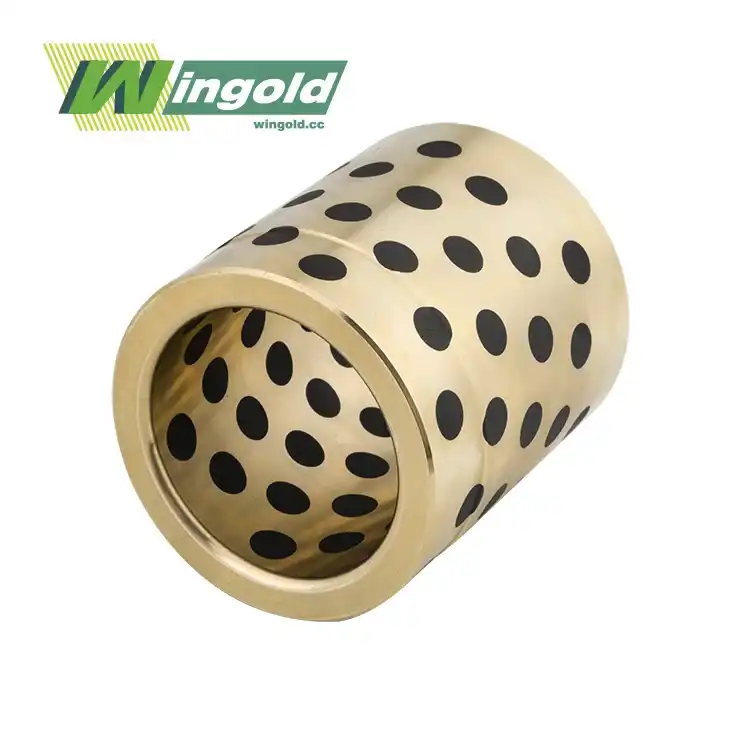
Overview of Brass Bushings and Their Applications
For more than one hundred years, copper-based plain bearings have been the standard way to control friction in mechanical devices. These cylinder-shaped parts act as a cheap bearing surface between shafts that rotate or oscillate and their housings. This keeps expensive polished surfaces from coming into direct touch with metal. The alloys usually come in a range of compositions, from free-cutting brass (C36000), which is made up of 60% copper and 35% zinc, to high-leaded tin bronze (C93200), which can hold more weight because it has tin and lead added to it.
The choice of material has a direct effect on how well it works. Leaded bronzes are better at embedding, which means that the bearing matrix can take in rough bits that would otherwise damage polished shafts. This trait is very useful for mining and earth-moving equipment that has to deal with pollution all the time. On the other hand, aluminum bronze versions (C95400) work really well in naval settings because they don't rust when exposed to saltwater.
Almost every industry that needs relative motion under load has a purpose for it. In the automobile industry, starter motor bearings have to work at high speeds sometimes without much lubrication. There are dozens of pivot bushings in hydraulic excavators' boom and stick systems. During digging cycles, each one handles shock loads of more than 50 tons. Manufacturers of petrochemical pumps choose brass bearings because they can handle harsh process fluids.
Small metal bushings are used in the gears of some office chairs, showing that the technology can be used with a wide range of loads. The business case for brass bearings is based on the total cost of ownership, not the price of the bearings themselves. A properly chosen bearing that works within its design limits can last longer than the equipment around it, preventing unplanned downtime. On the other hand, incorrect use causes fast wear, damage to the shaft, and catastrophic failure modes that procurement pros work hard to avoid by making smart material decisions.
Main Types of Brass Bushings with a Focus on Flanged Variants
Engineers can fit the shape of a part to its mechanical needs by understanding the structural differences between bushing designs. The most basic division that affects assembly architecture is the difference between plain and flanged forms.
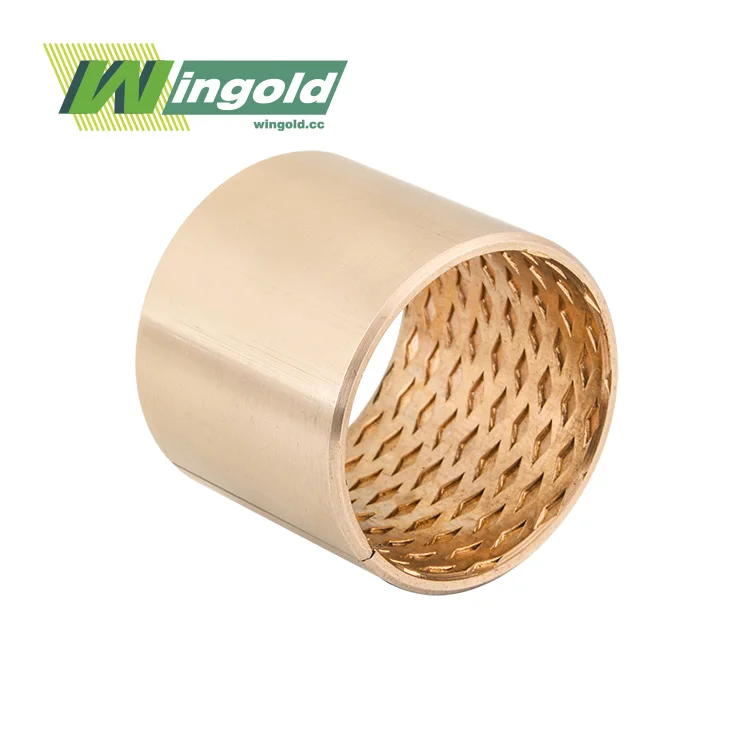
Plain Sleeve Bushings
When axial setting is controlled from the outside, like with retaining rings or housing shoulders, straight cylinder bushings without shoulders give you the most options. Press-fitting into a housing hole machined to H7 tolerance is usually needed for installation. This creates interference that stops spinning while the device is running. During assembly, the outer diameter goes through hoop stress, which means that wall thickness estimates have to balance the need for strength with the need to get rid of heat. When room is limited, these parts are most often used in small forms, like on conveyor idler rollers and machine tool spindle supports.
Metric Flanged Brass Bushings
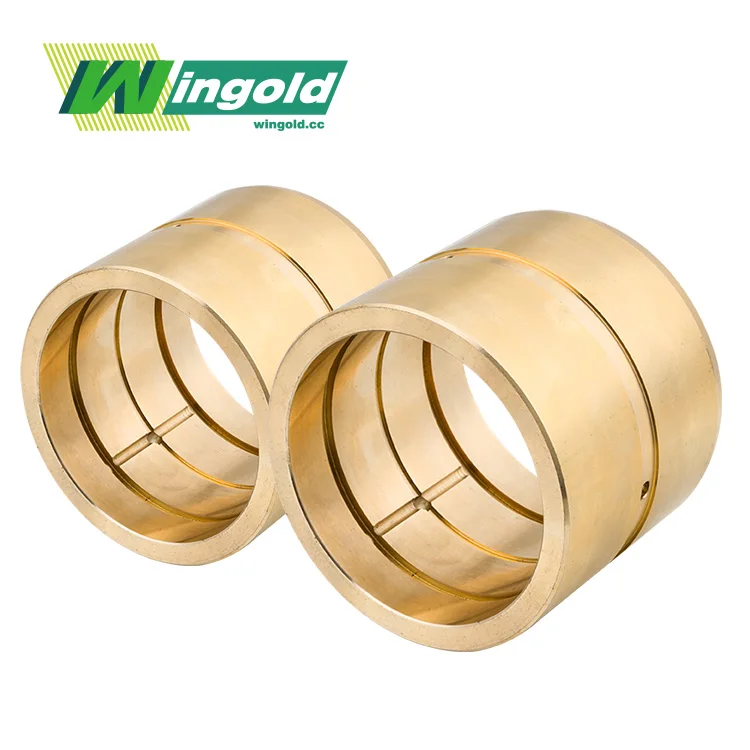
When compared to straight arms, the combined flange completely changes how the load is distributed and how it is installed. This flat mounting surface can handle thrust loads up to the compression limit of the material. It also acts as a fitting stop to make sure that the shaft contact depth stays the same. Dimensional standards for metric flanged brass bushings are based on ISO 3547 and DIN 1850, and important factors include the flange's width, thickness, and alignment with the bearing hole axis.
Wingold makes precise metric flanged versions by using rotational casting methods that align the grain structure in a way that distributes load most efficiently. The WGB650-2 line of products is designed for low-load, high-temperature situations up to 280°C. They are used in fireplace door hinges, industrial oven rollers, and textile machinery guides. The way the material is made puts thermal stability ahead of peak load capacity. This makes it perfect for continuous-duty uses where heat dissipation is more important than shock protection that only happens sometimes.
The WGB650-3 version builds on this by improving the compression strength by changing the chemistry of the metal. This lets the flange be directly welded to the base structures. This feature changes the economy of installation in building equipment that needs to be permanently attached for repairs to be done in the field. Metallurgical compatibility lets you TIG weld structural steel without preheating it first, which cuts down on the time you have to spend working on-site. Some examples of uses are bulldozer track roller assemblies, conveyor pivot points, and charging devices for metallurgical furnaces that can't be oiled because of dirty environments or high temperatures.
Split Bushings
Installing clam-shell designs with axial splitting lines is easy when shafts can't be taken apart or removed for repair. The two-piece design lets you put it laterally around a shaft that is already in place, but the split interface means that you have to give up some load capacity for this ease. Lock bolts hold the halves together, causing a clamping force that needs to be estimated to keep the halves from coming apart when the load changes. For emergency fixes at sea, marine propeller shaft bearings often use this arrangement.
Thrust Washers and Axial Bearings
In places like gearbox end-play control and vertical pump thrust surfaces, flat circular parts handle only axial loads. When these washers are used in border lubrication conditions, the service life is directly affected by the finish and flatness of the surface. To make a suitable wear couple, the hardness of the material must be weighed against the hardness of the matching surface. This way, the bushing can protect more expensive parts while giving up its own life. The technical rules that guide these groups go beyond simple size limits and include tolerance classes.
To help the oil film stay on during hydrodynamic lubrication, the surface roughness needs to be between 0.4μm and 0.8μm Ra. Concentricity between the inner and outer radii must stay within 0.03 mm to avoid edge loading, which builds up stress and speeds up failure. Not using general terms like "commercial grade" should be avoided in procurement requirements; instead, these geometric limits should be made clear.
Comparing Flanged Brass Bushings with Other Bearing Types
A method for choosing materials, such as flanged brass bushings, needs to carefully look at many aspects of performance that affect each other in complicated ways while the material is being used. The framework for comparison needs to look at mechanical qualities, environmental compatibility, and lifetime costs all at the same time. To handle contact pressures higher than 35 MPa in slow-speed uses, bronze alloys with a higher tin content (8–10%) perform better than brass formulas. This benefit comes at the cost of higher material costs and harder machineability, which are important when making parts with complicated shapes or close tolerances. Steel-backed bimetal bearings have a thin layer of bronze lining and a structural steel backing. They have great crush strength for press-fit setups and keep the tribological benefits of copper alloys.
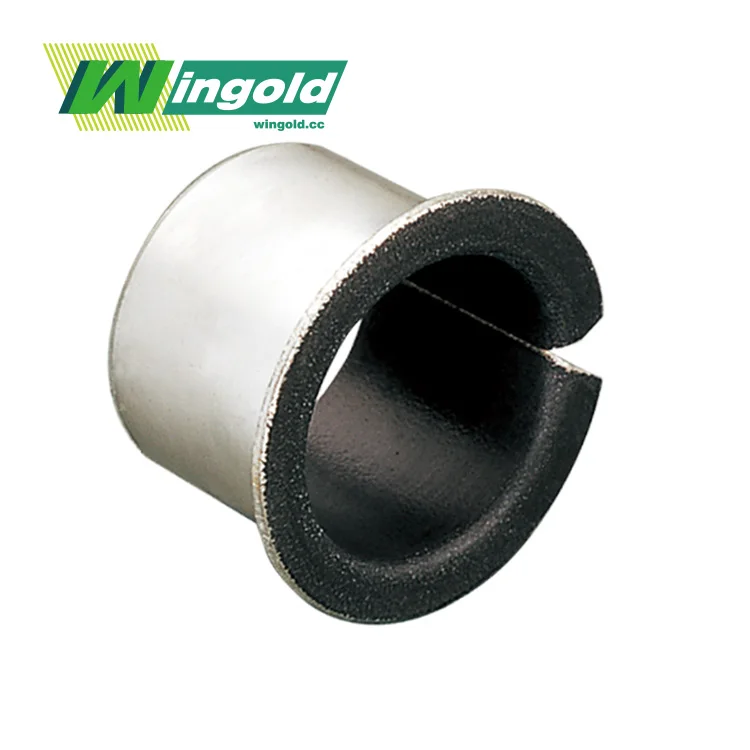
When industrial plastics like PTFE composites or polyimide are used to make polymer bushings, they can run without any greasing, so they are perfect for clean rooms or places where food is processed. Their maximum load and temperature limits are much lower than those of metal bearings, so they can only be used in light-duty situations. As plastics wear down, the coefficient of friction actually goes up until it reaches a point where frictional heat speeds up deterioration.
Thermal performance clearly separates the different types of materials. Brass moves heat at 120 W/m·K, while steel moves heat at 50 W/m·K and most plastics move heat at less than 1 W/m·K. Because metric flanged brass bushings are good at conducting heat, they can send frictional heat into nearby structures. This stops the thermal runaway that kills plastic bearings. When used at high speeds, like in motor armatures, this ability to move heat directly decides the highest RPM that can be used. In outdoor tools, marine systems, and chemical processes, corrosion resistance is very important. When brass is exposed to air, it naturally forms a protective patina. Steel, on the other hand, needs platings or coats that wear off at the fixing points. When connecting brass hinges to aluminum housings, you need to think about galvanic compatibility. Isolation or sacrificial anodes are needed to stop electrolytic corrosion when moisture is present.
Procurement teams should use a decision grid that ranks these factors by how important they are to the application. A hydraulic backhoe pivot that is loaded and unloaded 100 times a day for 15 years needs different materials than an access door hinge that is loaded and unloaded twice a day. Different factors like load size, cycle regularity, contamination exposure, maintenance access, and accepted replacement intervals make up a person's specific needs, which helps them make the best choice. Wingold's engineering team helps with selection by connecting these operational factors to material specifications. This keeps buying managers from over-engineering, which wastes money, and under-specification, which leads to failure too soon.
Installation, Maintenance, and Lifespan of Flanged Brass Bushings
While proper installation is the first step toward a product's expected design life, field use often introduces failure modes that weren't found in lab tests. The first step in the assembly process is to prepare the bore and make sure that the housing dimensions match the specs and that the surface finish supports the interference fit that is being planned.
Installation Best Practices
Press-fitting brass bushings needs controlled force along the line of the bushing to keep it from cocking or deforming. When it comes to control, hydraulic arbor presses are better than impact methods, which can break weak bronze alloys. When interference is greater than 0.05 mm, the housing should be heated to 80–100°C. This will make the bore width bigger and the entry force 70% lower. This heat support stops galling and keeps the bushing's internal shape. Metric flanged brass bushings must fit fully against the housing face. This can be seen with the naked eye and confirmed with a feeler gauge around the whole circle.
Preparing the shaft is just as important. If the surface hardness is less than HRC 45, the softer brass can embed particles and wear more easily. But if the surface is too soft, the shaft will get scored as the bearing plows ridges into the journal surface. To keep the bearing from going dry, the grinding marks must go around the outside instead of along the center. Before full-load operation, the first run-in processes are done at 25% of the design load for two hours. This lets any rough spots on the surface wear down into place.
Maintenance Protocols
Inspection times depend on how hard the job cycle is. When working in dirty places, equipment needs to have its bearings checked every three months to see if there is any rotational play that could mean the wear is getting worse. Axial movement greater than 0.5 mm points to distortion of the flange or erosion of the mounting face. Oil research tools can find brass particles before they show signs of wear, which is a sign that failure is about to happen.
There are three main types of lubrication methods: flood, bath, and grease. Flooded systems keep putting in new oil, which flushes wear debris away from the bearing contact. Bath lubrication needs the shaft to be turning in order for the oil to get through the bearing gap, so it needs to be running at a certain speed. When installing grease, it's important not to overfill because that can cause hydraulic lock and temperature rise because the grease churns instead of making a film. Our WGB650 series products have solid oil plugs that release graphite particles while they're working. This makes the products self-lubricating in situations where regular lubrication wouldn't work. With this technology, repair times for conveyor systems and other material handling equipment can be raised from 500 hours to over 5,000 hours.
Lifespan Expectations
The PV factor, which is pressure times speed, is closely related to service life. This factor shows how hard the bearing job is. PV stays below 1.8 MPa·m/s in conservative designs so it can work continuously for 20,000 hours or more. Intermittent duty lets PV values hit 3.5 MPa·m/s by letting the system cool down between rounds. Temperature makes wear worse exponentially; every 20°C rise above 80°C cuts projected life in half because oil breaks down faster and rust speeds up.
Variability is caused by things in the environment that can't be captured by simple mechanical formulas. When moisture gets into the bushing-housing contact, it leads to fretting rust, which makes the joint loose even though the bearing surface is still usable. When compared to sealed industrial settings, abrasive dust in mine environments shortens the life of equipment by 80%. By understanding these operating facts, procurement experts can set reasonable replacement plans and keep the right amount of spare parts on hand.
Procurement Guide for Flanged Brass Bushings: Sourcing and Supplier Insights
Comparing unit prices is only one part of strategic sourcing for metric flanged brass bushings. The skills of the seller also have an effect on the total cost of purchase and the security of long-term supply. The framework for review should look at technical know-how, quality systems, the ability to customize, and the ability to meet pressing needs.
Supplier Evaluation Criteria
ISO 9001:2015 certification gives you basic trust in documented quality processes, but having the certificate doesn't really tell you much about a company. A more in-depth check is done to see if providers have their own metallurgical testing tools, such as spectrometers for checking alloys and hardness tests for checking material properties. Coordinate measuring tools (CMM) and air gauging systems show that physical quality control is more than just a "go/no-go" check. Material traceability through heat lot coding and mill certifications is very important for businesses that have to follow rules or follow processes for investigating failures. Automotive Tier 1 suppliers usually need IATF 16949 certification that shows how to approve production parts and use statistical process control. For aerospace uses, AS9100 rules apply, which include more paperwork and stricter inspections.
Pricing Factors and Cost Optimization
The base cost is determined by the makeup of the raw materials. Because they are more complicated to make and need to be handled in certain ways, leaded bronzes cost more than unleaded brass formulas. As tolerances get tighter, dimensional accuracy makes grinding take a lot longer. For example, going from a H9 bore tolerance to a H7 bore tolerance increases production costs by 40%. Custom geometries that need special tools come with one-time planning fees that can be anywhere from $800 to $3,500, based on how complicated they are.
With volume agreements, you can get a lot of price pressure. Suppliers can make the best decisions about when to start production and buy raw materials thanks to annual framework deals that make demand clear. Wingold offers discounts for buying in bulk starting at 1,000 pieces, with more saves at 5,000 and 10,000 pieces. Kanban delivery plans lower total costs even more by keeping production going while lowering the costs of customers holding inventory.
Technical Support and Customization Capabilities
Costly redesigns that happen after the promise to make the tools are avoided with the help of supplier engineering during the specification phase. Using finite element analysis and numerical PV limit data, load analysis services make sure that the bearings they choose work within the limits of their materials. When replacing foreign bearings with local ones, prototype programs are especially helpful because they let you test the design physically before scaling up production.
Wingold has specialized application engineers who have worked in the building equipment, industrial machinery, and marine systems industries for an average of 12 years. Our expert help goes beyond just choosing an item from a catalog. It also includes making custom alloys for harsh environments, improving the shape to reduce weight, and analyzing failures when actual performance is different from what was predicted. With this consultative approach, we go from being a seller of parts to a strategic partner who cares about the success of your tools.
Customization includes changing the size, replacing the material, and treating the surface. We can make bushings with diameters ranging from 15 mm to 650 mm using centrifugal casting, which doesn't require a minimum order number like investment casting does. Standard designs can become self-lubricating by installing solid oil plugs. Electroplating services protect against corrosion in naval settings or where electrical transmission is needed.
Conclusion
When choosing the right bearings, you have to find a balance between mechanical performance, compatibility with the surroundings, and cost, using practical facts instead of theoretical ideals as a guide. When it comes to managing rotational loads and making assemblies easier, metric flanged brass bushings are the way to go. However, these benefits only happen when installation conditions and job cycles match what the designers thought they would be. Instead of looking at the bushing as a separate part, material specifications need to take into account the whole tribological system, such as the stiffness of the shaft, how it is oiled, how much contamination it is exposed to, and its temperature environment. The buying process includes more than just comparing prices. It also checks how professional the suppliers are, how mature their quality systems are, and how quickly they can meet urgent shipping needs that keep production running.
FAQ
Q1: What distinguishes metric flanged brass bushings from standard sleeve bearings?
A: The built-in ring allows for both axial placement and thrust load capacity in a single part, so there is no need for extra hardware to hold it in place. Metric measurement standards for metric flanged brass bushings are based on ISO 3547, which makes sure that they can be used interchangeably in global supply lines. The flange makes installation easier because it acts as a positive stop during press-fitting, making sure that the shaft engages consistently without the need for complicated tools.
Q2: Can brass bushings operate without external lubrication?
A: Standard cast brass needs to be oiled or greased from time to time using oil bath systems or grease fittings. Self-lubricating versions with solid graphite plugs or sintered brass filled with oil allow for maintenance-free use in situations where regular lubrication isn't possible. Through special material composition and integrated lubricant technology, our WGB650-3 model meets the needs of building and conveyor tools that don't need to be oiled.
Q3: What effect does the working temperature have on the choice of bearings?
A: Temperature changes the qualities of materials and the way lubricants work. Standard brass bushings work successfully up to 150°C as long as they are properly oiled. For high-temperature uses like industrial ovens and fireplace systems, the WGB650-2 product line raises this temperature range to 280°C. Above 120°C, lubricant breakdown speeds up considerably, so manufactured fluids or solid lubricant technologies are needed.
Q4: What quality standards should be used in purchase specifications?
A: Instead of using general terms, dimensional limits should say whether an item fits ISO H7/f7 or a similar standard. Surface finish needs to be between 0.4μm and 0.8μm Ra to help keep the oil film in place. Verification of the material's makeup using ASTM B505 or DIN 1709 standards stops the use of lower-quality metals. To keep edge loading failures from happening, geometric tolerancing (GD&T) should keep concentricity within 0.03mm and flange perpendicularity under control.
Partner with a Trusted Metric Flanged Brass Bushings Manufacturer
Choosing the right bearing source has effects on the reliability of tools and operating costs that go far beyond the cost of the parts themselves. Wingold Bearing has been specializing in self-lubricating bearing solutions for more than 20 years. They are ISO 9001:2015 certified and have a lot of testing tools in-house, such as the ability to analyze friction coefficients and validate increased life. Our metric flanged brass bushings are used in heavy industry, building tools, and metallurgical equipment where failure is not an option. We keep our production capacity at or above 10,000 tons per year and offer flexible order quantities to support just-in-time shipping plans and prototype development. When your equipment needs to work reliably in harsh conditions, our engineering team is ready to offer unique solutions with full technical documentation. Talk to our experts at info@wingold.cc about your unique needs and find out how working with a skilled bearing manufacturer can lower your total cost of ownership.
References
1. Khonsari, M.M. and Booser, E.R., "Applied Tribology: Bearing Design and Lubrication," Third Edition, John Wiley & Sons, 2017.
2. Bhushan, B., "Principles and Applications of Tribology," Second Edition, John Wiley & Sons, 2013.
3. American Society for Testing and Materials, "ASTM B505 - Standard Specification for Copper Alloy Continuous Castings," ASTM International, 2020.
4. International Organization for Standardization, "ISO 3547 - Plain Bearings - Wrapped Bushes - Part 1: Dimensions," ISO Standards, 2019.
5. Neale, M.J., "The Tribology Handbook," Second Edition, Butterworth-Heinemann, 1995.
6. German Institute for Standardization, "DIN 1850 - Plain Bearings - Tolerance Tables for Flanged Bushes," Deutsches Institut für Normung, 2016.
Learn about our latest products and discounts through SMS or email