- English
- French
- German
- Portuguese
- Spanish
- Russian
- Japanese
- Korean
- Arabic
- Greek
- German
- Turkish
- Italian
- Danish
- Romanian
- Indonesian
- Czech
- Afrikaans
- Swedish
- Polish
- Basque
- Catalan
- Esperanto
- Hindi
- Lao
- Albanian
- Amharic
- Armenian
- Azerbaijani
- Belarusian
- Bengali
- Bosnian
- Bulgarian
- Cebuano
- Chichewa
- Corsican
- Croatian
- Dutch
- Estonian
- Filipino
- Finnish
- Frisian
- Galician
- Georgian
- Gujarati
- Haitian
- Hausa
- Hawaiian
- Hebrew
- Hmong
- Hungarian
- Icelandic
- Igbo
- Javanese
- Kannada
- Kazakh
- Khmer
- Kurdish
- Kyrgyz
- Latin
- Latvian
- Lithuanian
- Luxembou..
- Macedonian
- Malagasy
- Malay
- Malayalam
- Maltese
- Maori
- Marathi
- Mongolian
- Burmese
- Nepali
- Norwegian
- Pashto
- Persian
- Punjabi
- Serbian
- Sesotho
- Sinhala
- Slovak
- Slovenian
- Somali
- Samoan
- Scots Gaelic
- Shona
- Sindhi
- Sundanese
- Swahili
- Tajik
- Tamil
- Telugu
- Thai
- Ukrainian
- Urdu
- Uzbek
- Vietnamese
- Welsh
- Xhosa
- Yiddish
- Yoruba
- Zulu
How to Choose the Right Bronze Bushing Sleeve for Industrial Applications
Picking the correct bronze bushing sleeve for your business can mean the difference between having equipment that works well for years and having expensive downtime that throws off your whole production plan. When choosing parts for heavy machinery, mining equipment, or hydraulic systems, you need to pay close attention to the qualities of the materials, how they will be used, and the skills of the suppliers. A bronze bushing sleeve is like a cylinder-shaped plain bearing that lowers the friction between spinning or sliding shafts and their housings. It acts as a spare part to keep expensive sharpened steel shafts from getting damaged or worn out. If you know how to fit the alloy's composition, load capacity, and resistance to the environment to your application, you can keep it from breaking down too soon, save money on upkeep, and make sure it works well even in tough circumstances.
Understanding Bronze Bushing Sleeves and Their Key Properties
Plain bearings like bronze bushings have been used to support industry tools for many years. These parts work by making a contact between moving parts with low friction. They do this by using sliding action instead of rolling elements to allow motion. Setting up either a hydraulic or border lubrication film that keeps metals from touching during operation is the basic idea behind it.
What Defines a Bronze Bushing Sleeve?
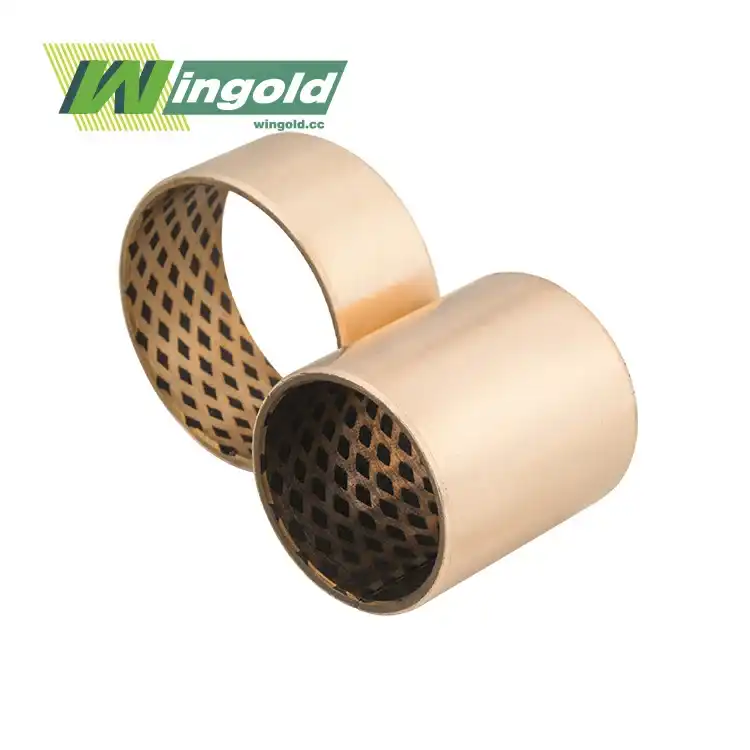
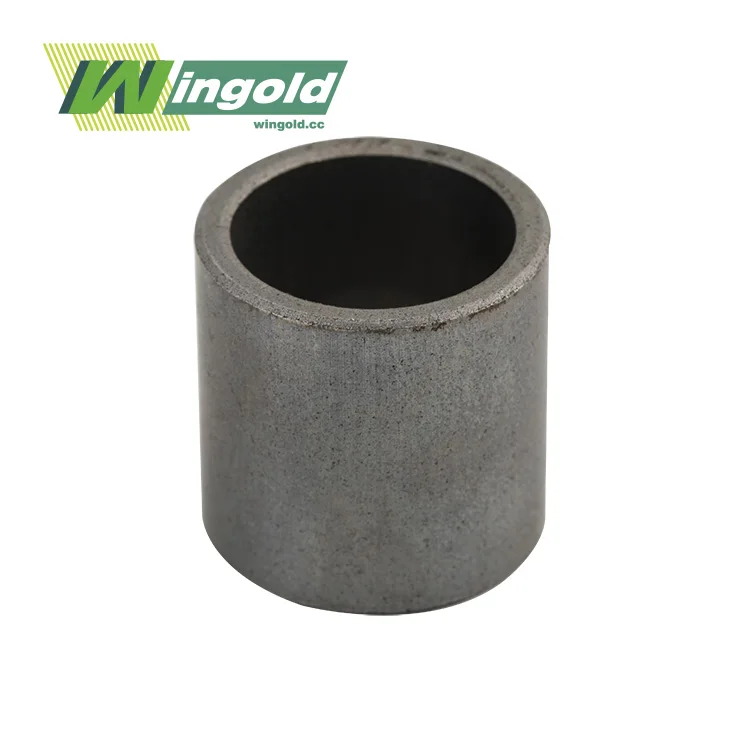
At its core, a bronze bushing sleeve is a cylinder-shaped part made from copper-based metals that usually have tin, aluminum, or lead added to them to improve their qualities. Instead of moving elements like ball bearings do, these tubes work by sliding against each other. This makes them very useful in situations where shock loads, misalignment, or contamination would quickly destroy other types of bearings. The part fits into a housing hole and can hold a shaft that rotates or moves back and forth. It spreads loads over a bigger surface area than point-contact bearings can.
Material Composition and Alloy Selection
The way copper bands work depends a lot on what kinds of metals are used to make them. The standard for general-purpose uses is still C93200 metal, which is also called SAE 660 bearing bronze. It has a yield strength of about 19 ksi and a hardness of 65 HB. This mixture is very easy to work with and doesn't cause friction, so it's good for mild amounts and speeds.
When extra strength is needed, C95400 aluminum bronze has a tensile strength of up to 85 ksi, which means it can be used for big machinery that is loaded very heavily. The manganese bronze type, C86300, can handle very high loads because its tensile strength is higher than 110 ksi. However, the shaft roughness needs to be carefully matched to keep it from wearing out too quickly.
Core Performance Advantages
Bronze alloys have a number of technical benefits that make them useful in current industry. Copper-based materials are better at getting rid of heat than steel or polymer options because they conduct heat more efficiently. This keeps oil from breaking down and reduces thermal distortion during use. Bronze is naturally lubricious and can hold foreign particles within its softer core. This keeps joining shafts from scoring damage that would need expensive repairs otherwise. When lubrication fails for a short time, the anti-galling qualities of leaded bronze keep parts from "welding" together in a way that stops the machinery totally. This ability to bend when there is border lubrication gives soft materials a safety margin that hard materials can't match.
Different types of bronze can handle different temperatures, but common alloys will work successfully up to 450°F. Specialized versions with graphite plugs make this range bigger and provide solid lubrication in places where liquid oils would wash away or break down. Lubricated bronze usually has a coefficient of friction between 0.08 and 0.14, which is much lower than steel-on-steel contact. This means that less energy is used and less heat is produced.
Common Types and Configurations
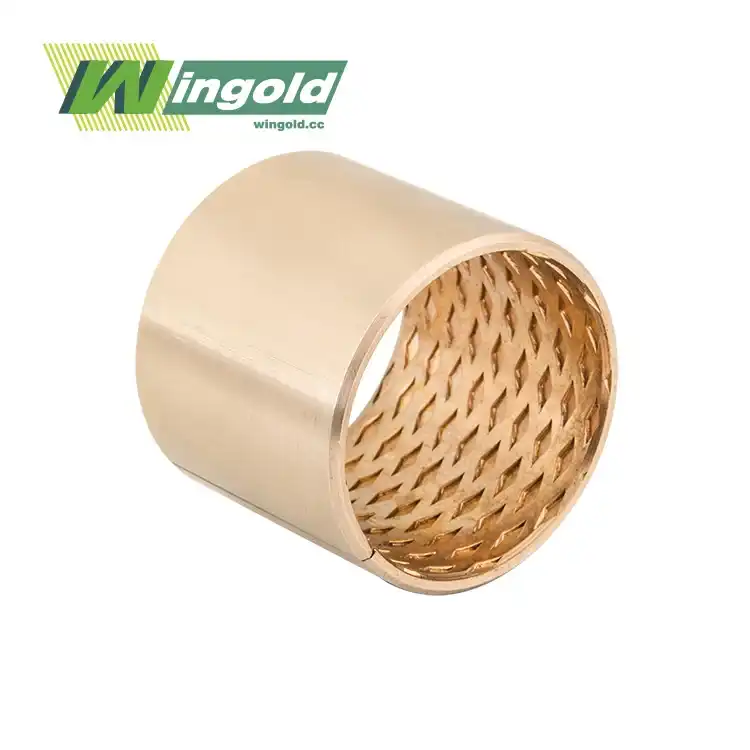
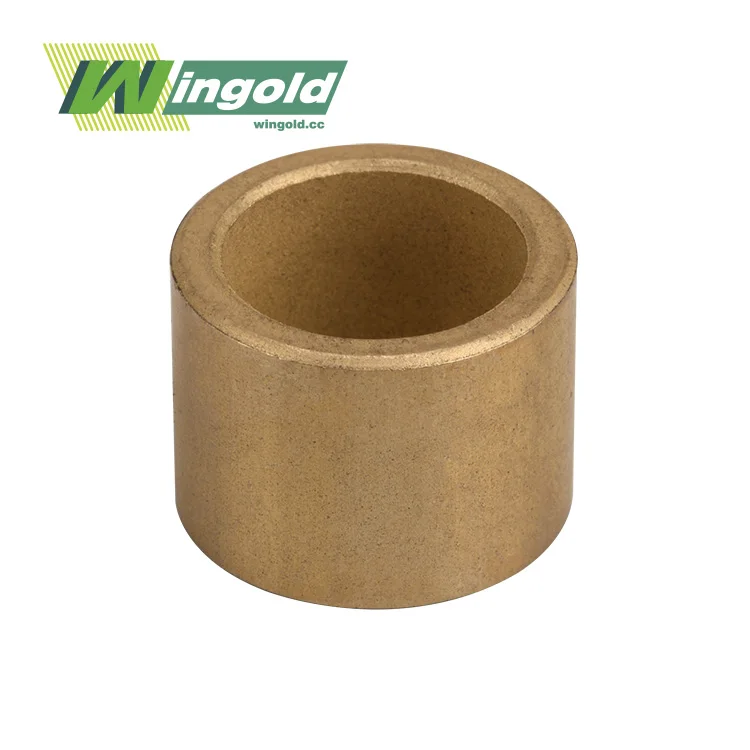
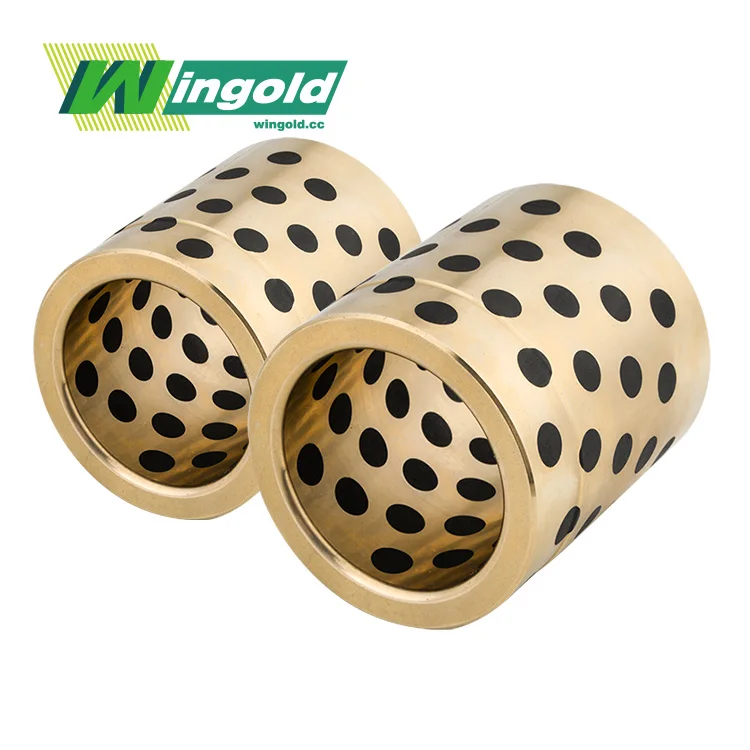
Different types of bushings are made using different manufacturing methods to meet specific operating needs. For heavy-duty structure uses that are exposed to dirt and heavy loads, solid bronze bands made from continuous cast bars offer the highest level of strength and wear resistance. Oil-impregnated sintered bronze, also known as SAE 841, has a porous structure that is filled with lube during production. This makes it self-lubricating for high-speed, light-load uses like small motors and office equipment. Rolled bronze bushings with diamond or hemispherical oil indentations have lubricant tanks put in strategic places that keep the size small and extend the time between service intervals.
Criteria for Choosing the Right Bronze Bushing Sleeve
To choose the right sleeve, you need to carefully consider the working conditions and technical stresses your tools will be put under. The choice process should take into account the types of loads, kinematic parameters, temperatures, and external factors that affect how well the bearings work.
Load Capacity and Pressure Analysis
If you divide the radial load by the sum of the shaft diameter and bushing length, you get the expected area load. This number tells you if a certain alloy can handle your application without breaking. Bronze C93200 can handle light loads well, but when surface pressures go over 4,000 PSI, metals C95400 or C86300 are needed. Dynamic loading patterns are just as important as static capacity.
For example, equipment that is subjected to shock loads or impact forces will benefit from the better wear resistance of aluminum bronze. The PV number, which is found by multiplying pressure by velocity, gives a full picture of the performance. Standard bronze bushings are usually rated between 50,000 and 75,000 for long-term use.
Speed and Thermal Considerations
Both the production of heat and the formation of hydraulic fluid films are affected by the speed of rotation. Boundary lubrication is mostly used in low-speed situations below 100 feet per minute because the material of the gasket naturally stops wear. Higher speeds cause friction heating that needs to be removed by the thermal conductivity of the bearing and its ability to cool itself from the outside.
When shaft speeds generate a lot of heat, it's important to make sure there is enough radial space. As a general rule, there should be 0.001 inches of clearance per inch of shaft diameter in high-temperature settings to account for the different rates of thermal expansion between bronze and steel parts.
Environmental and Chemical Resistance
Material choice is greatly affected by operating factors that go beyond mechanical loads. Nickel-aluminum bronze is good for marine uses because it doesn't rust or corrode in cold water and doesn't conduct electricity, which can damage weaker alloys and cause stress corrosion cracking. Excavators and other mining equipment work in rough places where silica dust gets on the bearing surfaces. When regular greasing isn't possible, solid bronze bushings with graphite plugs work consistently. Chemical handling equipment may need to use certain alloys because it will be exposed to certain acids, bases, or solvents that could damage normal compositions.
Dimensional Tolerances and Shaft Compatibility
For the best performance, the nut and shaft must have the right amount of space and a surface finish that matches. Bushings are usually installed by pressing them into housing bores. This requires exact measurement control to keep the parts from coming loose or breaking. The surface finish of the matching shaft has a direct effect on how fast it wears. Usually, the specs call for a shaft that is less than 16 Ra rough and at least three times harder than the bushing material. When you buy from qualified makers, tolerance standards like ISO 2768 make sure that parts can be swapped out and that the performance will be predictable.
Comparing Alternative Bearing Solutions
Figuring out when bronze bushings work better than other options helps improve the design and cost of equipment. Steel bushings can hold more weight, but they need to be oiled all the time to keep them from quickly galling and seizing up. Plastic bushings are resistant to chemicals and don't need to be oiled for light loads, but they can't handle the high temperatures and high pressures that are common in heavy industry. Ball bearings work great for precise, high-speed tasks, but they can get dirty and shock-loaded, which bronze bushings can handle easily. Brass has some of the same qualities as bronze but is less expensive. However, it is not as strong or resistant to wear as bronze, so it is not good for heavy-duty use.
Practical Considerations When Procuring Bronze Bushing Sleeves
To successfully source components, you need to think about more than just the technical specs. You also need to think about how to evaluate suppliers, negotiate prices, and plan your processes. As part of your buying plan, you should make sure that the supply chain is reliable and that performance needs are balanced with the total cost of ownership.
Evaluating Manufacturers and Suppliers
Reputable bearing makers show what they can do by having licenses, testing centers, and quality systems that are written down. For bronze bearing materials, look for providers that are in line with ISO 4383 and ASTM B22, which check the alloy's composition and mechanical qualities. Manufacturers who use CNC machine centers and centrifugal casting lines can make sure that all of their production runs are the same size and shape. If a provider has access to tools for friction coefficient testing and accelerated life testing, it shows that they are committed to providing performance datasheets along with verified results.
Wingold Bearing is an example of a source that can do both manufacturing and application research. Our buildings have full testing labs that make sure products meet standards before they are sent out. This lowers the chance that they will break down in the field and stop activities. One-on-one technical support from experienced experts makes it easier to figure out difficult questions about application needs and material selection.
Factory-Direct vs. Distributor Sourcing
When you buy a lot of things, purchasing directly from bronze bushing manufacturers is often the best option. When you deal directly with the manufacturer, you don't have to pay markups to a wholesaler, and you can talk about customization with the engineering team that creates and makes the parts. This direct contact speeds up the process of fixing technical problems and lets standards be improved over time based on real-world working conditions. Distributors are helpful when you need to repair something quickly or get a lot of different kinds of parts from one source. However, they usually can't change standard goods or offer as much application support.
Customization Capabilities and Non-Standard Dimensions
Standard stock bushings work well for many uses, but equipment makers and repair departments often need bushings that aren't in the normal size range. Capable sellers are different from simple parts distributors because they can offer non-standard sizes, special alloys, or altered shapes. Customization includes changes in both size and material. For example, bushings can have inner widths ranging from 5mm to 500mm and lengths up to 1000mm. Material changes can include graphite plug shapes or oil grooves placed to work with certain lubrication systems.
When you ask for custom solutions, you need to be clear about the working settings, part dimensions that fit, and performance standards. Suppliers who offer quick prototyping can make test samples of parts to make sure they work before committing to large production runs. This lowers the chance of making mistakes that cost a lot of money.
Pricing Structures and Volume Considerations
The price of bronze bushings depends on the type of material used, how hard it is to make, and how many are ordered. Because they need to be made with more work and cost more to make, leaded bronze metals tend to be less expensive than aluminum or manganese bronze. With volume price tiers, suppliers can make the best use of their production schedules by saving a lot of money on yearly framework deals or bulk purchases. When comparing quotes, it's more useful to look at the total cost of ownership than just the unit price. For example, a better bushing that lasts twice as long is a better deal than a cheaper part that needs to be replaced often, which costs money in work.
Knowing the wait time helps keep production from stopping and avoids having to pay extra for emergency speeding. Standard bushings from well-known companies usually ship within days, but special designs may need a few weeks for tooling, production, and quality control. Keeping a strategic inventory of key sizes weighs the cost of taking those sizes against the cost of having to shut down equipment when bearings break down without warning.
Maintenance, Performance Optimization, and Longevity
The life of bushings can be greatly increased by installing and maintaining them correctly. This also keeps expensive equipment from getting damaged in other ways. Total running costs go down and machinery is available more often when bearing management is done proactively.
Installation Best Practices
For a job to be done right, interference fits must be used to keep the nut in its case without causing stress to build up. The freeze-fit method involves putting the bushing in a freezer or liquid nitrogen to briefly shrink its outside diameter. This lets the part be pressed into place without using too much force, which could break the part or bend the housing hole.
Instead of hitting the bushing faces directly with a hammer, use soft drifts or arbor presses with guide mandrels that keep the parts in place. By measuring the fitted measurements after press-fitting, you can be sure that the inner diameter stays within the specifications and hasn't been shrunk by the compressive forces used during assembly.
Lubrication Requirements and Schedules
Some uses oil-soaked or graphite-filled bushings that need little care, but most bronze sleeves need to be oiled every so often to keep the protected film between the bearing surfaces. Setting lubrication times based on hours of use, load cycles, or external exposure stops the border lubrication conditions that make wear happen faster. Using lubricants with the right viscosity for the temperature range will ensure the right film thickness. Lighter oils work best for high-speed tasks, while heavier greases help with padding for slow, heavily loaded movements.
Inspection and Wear Monitoring
Regular checks find problems as they start to form before they get bad enough to break down the equipment. A visual study shows signs of overheating, such as extra wear patterns, scoring, or discoloration. Using feeler gauges or dial indicators to measure clearances lets you quantify wear development and make choices about when to replace things based on data. During operation, strange noises or vibrations are often a sign of not enough greasing, imbalance, or wear that is too high. If you take care of these signs right away, you can avoid further damage to shafts, which is much more expensive to fix or replace than the bushings themselves.
Troubleshooting Common Failure Modes
When bushings fail too soon, systematic analysis finds the root reasons that need to be fixed to keep the problem from happening again. Scoring on the shaft surface is usually caused by the shaft not being hard enough, not being oiled enough, or being contaminated with gritty particles. Galling or stopping is a sign of lubrication failure, which is usually caused by choosing the wrong lubricant, running the machine at too high of a temperature, or not replacing the oil often enough.
Fatigue cracking means that the material is being loaded beyond its limit or that stress is being concentrated at the edges of the housing. Fixing these core problems instead of just repairing broken parts stops expensive failures from happening again and makes the equipment more reliable overall.
Making the Final Decision: Which Bronze Bushing Sleeve Is Best for Your Needs?
The best way to choose a bearing or bronze bushing sleeve is to combine technical needs, practical limitations, and business concerns. Different industries have different performance requirements that call for specific alloys and design structures.
Matching Applications to Optimal Solutions
Heavy construction and mining equipment that works in dirty, high-impact, low-speed settings can benefit from C86300 or C95400 tubes with graphite holes for solid lubrication. These strong bushings can handle surface pressures of more than 6,000 PSI in boom pivots and bucket connections that are hard to get to for repair.
For marine propulsion systems to work consistently in saltwater, nickel-aluminum bronze needs to be able to fight corrosion. This is especially true for the propeller shaft and rudder, where galvanic action breaks down weaker materials. Companies that make hydraulic cylinders use precision-machined leaded tin bronze bushings that keep tight tolerances for volumetric efficiency and don't hurt when the engine starts up without oil.
Balancing Cost, Durability, and Maintenance
The starting cost of a part, its projected service life, and the amount of maintenance that needs to be done are all things that equipment designers and maintenance managers have to weigh. Premium metals cost more, but they last longer between repair intervals, which saves money on labor costs and production delays. Applications that are easy to get to and need regular upkeep may be able to get away with replacing inexpensive bronze grades more often.
On the other hand, remote sites or equipment that is very important should spend in long-life standards. The most cost-effective solution for a given situation can be found by figuring out the yearly cost of the part, the work needed to install it, how long it is expected to last, and any costs related to downtime.
Partnering with Knowledgeable Suppliers
Because choosing the right bearings can be hard, it's often best to work with makers who have a lot of experience with a wide range of businesses. If a supplier offers engineering help, they can look at your working parameters, suggest the best specs, and find any possible performance problems before production starts. This consultative method works especially well for custom uses or when switching from parts that are imported to ones that are made in the United States.
Wingold's team has a lot of experience working with hydraulic systems, building equipment, mining equipment, and a lot of other types of equipment. Our high-density copper alloy bushings have oil grooves that are put in a way that makes them last longer between greasing cycles while keeping their small size. The structural benefits include a high load capacity, better resistance to wear, and a longer service life than standard casting methods.
Inner diameters range from 5 mm to 500 mm, so they can fit a wide range of tools, from precision instruments to heavy industrial machines. Tolerance control based on ISO 2768 standards and surface finishes ranging from 0.8 to 3.2 μm make sure that the bearings work as expected and fit properly with hardened shafts. Often, these fine parts are used instead of bigger standard bushings. This makes the system more reliable while lowering the size of the equipment and its overall cost.
Conclusion
In conclusion, to choose the correct bronze bushing sleeve, you need to balance technical performance factors with practical operating issues and business concerns. To make smart choices, you need to know about the properties of the alloy, the speed and load requirements, and the weather conditions. Effective buying includes more than just requirements. It also includes the skills of the provider, the ability to make changes, and a study of the total cost of ownership.
Installing and maintaining things the right way extends the life of parts and keeps expensive equipment from getting damaged again. When you buy quality bushings from a company with a lot of experience, you get long service intervals, less downtime, and effective operation even in tough conditions. Taking the time to carefully consider your needs and match them with the right bearing solutions will set up your business for long-term efficiency and low-cost maintenance.
FAQ
What clearance should I specify between the bushing and shaft?
As a general rule, there should be 0.001 inches of diameter space for every inch of shaft diameter when the machine is running at room temperature. Applications that produce a lot of heat need more space around them to account for the fact that metal and steel expand and contract at different rates. Too little clearance leads to jamming and fast wear, while too much clearance lets the shaft get out of line and makes load distribution less effective. Working with sellers who know how your business works can help you get the most out of this important factor.
Can bronze bushings replace ball bearings in my gear?
Bronze sleeves work great in low-speed, high-load situations where dirt and shock loads would destroy ball bearings quickly. They work great for oscillating or reversing motion instead of high-speed spinning that goes on all the time. For heavy loads below 300 RPM, plain bronze bushings are usually the best choice because they are strong and easy to maintain. The lower friction and tighter running limits of ball bearings make them better for high-speed precision uses that go faster than 1000 RPM.
How long should bronze bushings last in industrial service?
The amount of load, the quality of the grease, the working temperature, and the level of contamination all have a big impact on the service life. When used in moderate-duty situations, bushings that are properly chosen and kept will usually last between 5 and 10 years. Heavy-duty mining or building equipment may need to be replaced every one to three years, even if it is made of high-quality metals. Regular inspections help keep an eye on wear so that replacements can be based on state instead of just time.
Partner with Wingold for Reliable Bronze Bushing Sleeve Solutions
Businesses that need reliable bearing performance can benefit from working with a bronze bushing sleeve manufacturer that cares about quality and customer service. Wingold Bearing combines advanced manufacturing with quick expert support to give you parts that are exactly what you need and work at the level you expect. Our factory-direct prices don't include markups for distributors, and you can customize them in ways that online sellers don't let you. Over 10,000 tons of production capacity per year provides consistent availability, and flexible minimum order numbers allow for both testing steps and long-term supply agreements.
During the selection and design process, our engineering team gives you one-on-one expert advice to help you make decisions about material choices, dimensional needs, and improving performance. Wingold has a wide range of skills that can help you succeed, whether you need standard bushings shipped quickly or special solutions designed for specific uses. Email our team at info@wingold.cc to talk about your bearing needs, get detailed specs, or get quotes from other companies for your next project. Working with a bronze bushing sleeve provider that cares about your operating reliability and cost-effectiveness is a good thing.
References
1. American Society for Testing and Materials. (2021). "Standard Specification for Bronze Castings for Bridges and Turntables." ASTM B22-21, West Conshohocken, PA.
2. Bhushan, B. (2013). "Principles and Applications of Tribology," 2nd Edition. John Wiley & Sons, New York.
3. International Organization for Standardization. (2019). "Bimetallic Plain Bearings—Metallic Thick-Walled Bushes." ISO 4383:2019, Geneva, Switzerland.
4. Neale, M.J. (1995). "The Tribology Handbook," 2nd Edition. Butterworth-Heinemann, Oxford.
5. Budinski, K.G. and Budinski, M.K. (2010). "Engineering Materials: Properties and Selection," 9th Edition. Prentice Hall, Upper Saddle River, NJ.
6. SAE International. (2018). "Bearing and Bushing Alloys." SAE AMS-QQ-C-390B, Warrendale, PA.
Learn about our latest products and discounts through SMS or email