- English
- French
- German
- Portuguese
- Spanish
- Russian
- Japanese
- Korean
- Arabic
- Greek
- German
- Turkish
- Italian
- Danish
- Romanian
- Indonesian
- Czech
- Afrikaans
- Swedish
- Polish
- Basque
- Catalan
- Esperanto
- Hindi
- Lao
- Albanian
- Amharic
- Armenian
- Azerbaijani
- Belarusian
- Bengali
- Bosnian
- Bulgarian
- Cebuano
- Chichewa
- Corsican
- Croatian
- Dutch
- Estonian
- Filipino
- Finnish
- Frisian
- Galician
- Georgian
- Gujarati
- Haitian
- Hausa
- Hawaiian
- Hebrew
- Hmong
- Hungarian
- Icelandic
- Igbo
- Javanese
- Kannada
- Kazakh
- Khmer
- Kurdish
- Kyrgyz
- Latin
- Latvian
- Lithuanian
- Luxembou..
- Macedonian
- Malagasy
- Malay
- Malayalam
- Maltese
- Maori
- Marathi
- Mongolian
- Burmese
- Nepali
- Norwegian
- Pashto
- Persian
- Punjabi
- Serbian
- Sesotho
- Sinhala
- Slovak
- Slovenian
- Somali
- Samoan
- Scots Gaelic
- Shona
- Sindhi
- Sundanese
- Swahili
- Tajik
- Tamil
- Telugu
- Thai
- Ukrainian
- Urdu
- Uzbek
- Vietnamese
- Welsh
- Xhosa
- Yiddish
- Yoruba
- Zulu
How do POM bushings compare to PTFE - lined bushings?
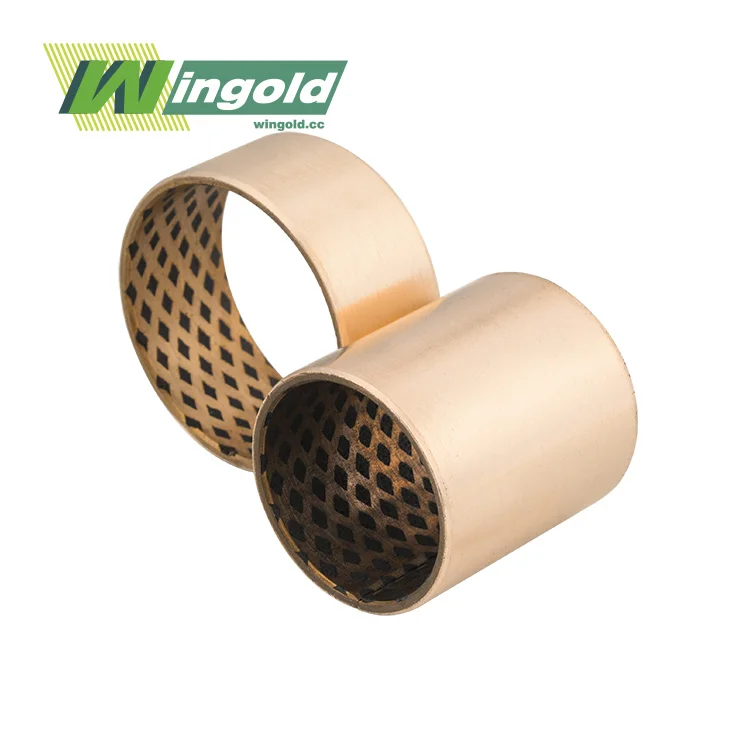
When looking for ways to reduce friction in heavy machinery, it's important to know the main differences between these two types of bushings. The pom composite bushing is a boundary lubrication bearing with three layers: a steel backing, a sintered bronze interlayer, and a modified polyoxymethylene sliding surface with pockets for grease. PTFE-lined bushings, on the other hand, have a metal shell that is bonded to layers of polytetrafluoroethylene fabric, which allows them to really run dry. POM bushings need to be greased at first and then on a regular basis, but they can handle loads of up to 140 MPa. PTFE-lined versions, on the other hand, work great with lighter loads and don't need to be greased at all during their service life.


Understanding POM and PTFE-Lined Bushings: Materials and Properties
Picking the right bushing material has a direct effect on how much equipment is used, how often it needs to be serviced, and the total cost of ownership. Both POM and PTFE-lined bushings help with friction management, but their structural engineering shows that they are designed to work in very different ways.
Material Composition of POM Composite Bushings
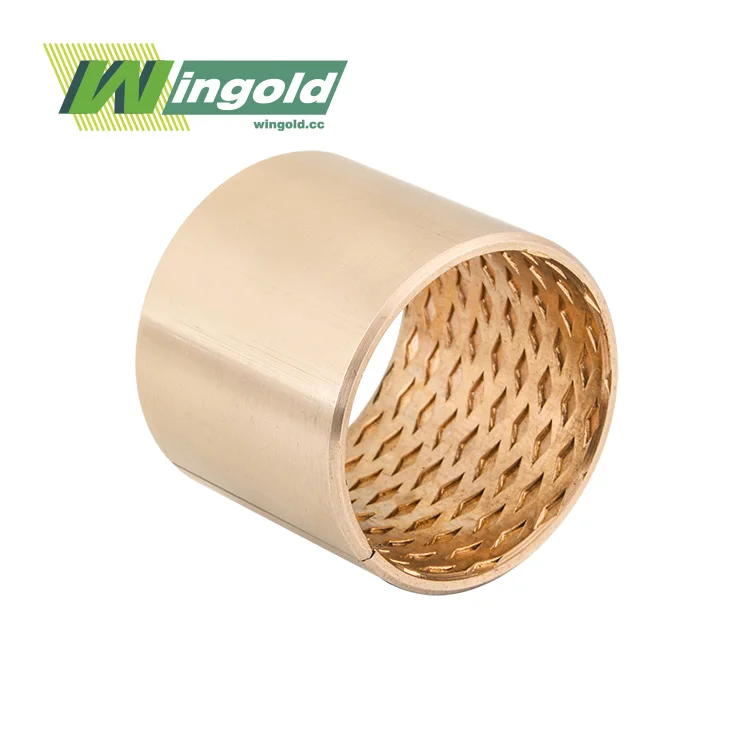
A pom composite bushing has a complex, multi-layer design that is made for places with little or no lubrication. The base is made of SAE 1010 steel, which gives the structure rigidity and the ability to press-fit. On top of this base is a layer of sintered, porous bronze that allows the parts to mechanically fit together and lets the heat from operation escape. The outermost sliding surface is made of modified polyoxymethylene and is usually 0.3 to 0.5 mm thick. It has precisely cut grooves that hold lubricant.
The bushing can perform as well as both solid-lubricated bearings and traditional oil-lubricated metal bearings because it is made of a composite material. The bronze interlayer keeps the temperature from building up, which would damage the polymer layer in high-load situations. During operation, the grease pockets embedded in the POM surface hold and slowly release lubricant, keeping a protective film even during slow oscillating movements where hydrodynamic lubrication can't form.
PTFE-Lined Bushing Architecture
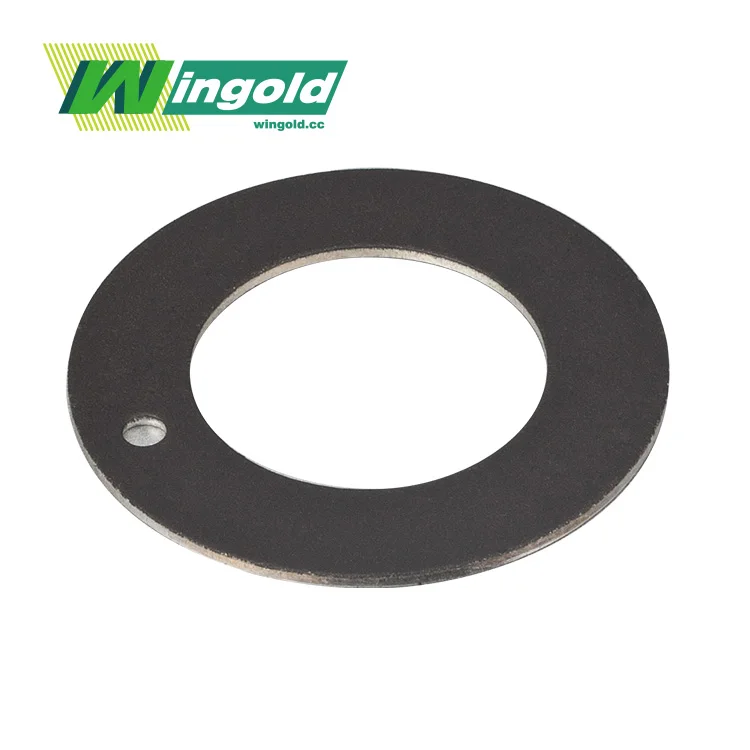
PTFE-lined bushings are made in a different way. They have a metal backing (usually steel or bronze) that woven PTFE fabric layers are heated and pressed onto. Some versions have bronze powder mixed in with the PTFE to make it better at transferring heat and resisting wear. Within the molecular structure of polytetrafluoroethylene, the PTFE lining has its own lubricity, which keeps the coefficient of friction very low even when no external lubricant is used.
This design focuses on maintenance-free operation in places where re-greasing would be hard to do or could cause contamination. The PTFE layer constantly lubricates the mating shaft by transferring material to it. This makes a thin transfer film that keeps the metals from touching directly. This selfless mechanism, on the other hand, means that the bushing wears down over time. How long it lasts depends on how thick the PTFE layer is and how it is used.
Key Mechanical Properties Comparison
One important thing that sets these technologies apart is their load capacity. If there isn't much grease on the pom composite bushing, they can handle static loads of up to 250 N/mm² and dynamic loads of up to 140 N/mm². PTFE-lined bushings usually work well with lower dynamic loads, usually between 60 and 80 N/mm². However, some formulations with bronze reinforcement may be able to handle a slightly wider range of loads.
Tolerance for temperature changes a lot too. pom composite bushing work reliably from -40°C to 130°C, and they can handle short-term peaks up to 150°C. PTFE-lined versions can work continuously at temperatures ranging from -200°C to 280°C, which makes them better for use in cryogenics or high-temperature places where POM would break down.
The chemical resistance profiles are also not the same. Polyoxymethylene is very strong against hydrocarbons, solvents, and most industrial chemicals. However, strong acids and oxidizing agents can damage it. It is almost impossible for chemicals to stick to PTFE. Only molten alkali metals and fluorine gas at high temperatures can really damage it.
Performance Comparison: POM Composite vs. PTFE-Lined Bushings in Industrial Applications
Real-world performance includes more than just the material's specs; it also includes how it works under different loads, speeds, and environmental conditions. Knowing these practical differences helps procurement teams match the right bushing technology to the needs of each piece of equipment.
Friction Characteristics and Wear Behavior
Both types of bushings provide low-friction operation, but they do so in different ways. The pom composite bushing can have friction coefficients between 0.05 and 0.25, depending on the type of grease used and the conditions under which it is used. When heavy machinery starts up from a stop (the boundary lubrication phase), the grease trapped in surface depressions forms a protective film right away. This stops the stick-slip phenomenon that causes juddering. This steady breakaway torque is very useful in hydraulic cylinder pins and excavator joints, where it's important for movement to start smoothly even when there are heavy static loads.
Even less friction is created by PTFE-lined bushings, which usually have coefficients between 0.04 and 0.15 throughout their working range. This operation is very smooth, which means it uses less energy in continuous rotary applications. But because PTFE isn't very hard, it wears more quickly when it's contaminated with abrasives or when the shaft isn't hard enough. The material keeps moving to the shaft surface, so the right specifications for the mating parts are needed to keep them from breaking too soon.
Load-Bearing Capacity in Heavy Machinery
Load-bearing performance clearly indicates which technologies are most effective. In tests using construction equipment kingpins, composite bushing designs maintained stable operation under oscillating loads exceeding 100 MPa for over 5,000 hours before re-greasing was required. The bronze interlayer also provided effective thermal management, preventing polymer softening even during continuous high-load operation in mining excavators.
PTFE-lined bushings used in similar situations showed wear over time when loads were higher than their design limit. A case study with overhead crane sheaves showed this problem: when PTFE bushings were replaced with POM composite versions, maintenance intervals went from 2,000 hours to over 8,000 hours, and failures in the middle of the cycle caused by PTFE layer delamination under shock loads stopped happening.
Temperature Stability and Environmental Durability
When used in demanding situations, thermal performance has a big effect on how long a bushing lasts. The pom composite bushing kept their shape and stopped seizure by spreading heat through the bronze layer in forging press applications where high-load impacts happen on a regular basis. Surface temperatures stayed within acceptable ranges even during long production runs, as shown by temperature monitoring.
PTFE-lined bushings work better in places with very high temperatures that aren't in POM's operational range. PTFE can handle temperatures as low as -150°C and as high as 200°C, which makes it ideal for cryogenic conveyor systems and high-temperature kiln conveyors. In standard industrial temperature ranges, where most heavy equipment works, however, POM's mechanical strength helps keep clearances accurate and prevents deformation.
Maintenance Requirements and Service Life
These technologies have very different approaches to maintenance. When installing pom composite bushing, they need to be oiled for the first time, and then they need to be oiled again and again based on the duty cycle intensity. In automotive chassis applications, these intervals often last until the end of the vehicle's life or until a major overhaul, which means that the parts are "lubricated for life." Regular bronze bushings would only keep oil films on their surfaces for a short time, but the grease reservoirs keep the bearings oiled for a much longer time.
Scheduled lubrication is not needed for PTFE-lined bushings, which makes them appealing to facilities that want to reduce the number of maintenance points they need to touch. However, this benefit comes with a cost: the lifespan is strictly limited by wear, and there is no way to extend service by re-lubricating. In rough places like aggregate processing equipment, PTFE wear rates can mean that they need to be replaced more often than pom composite bushing that are properly maintained.
Practical Considerations for Choosing Between POM and PTFE-Lined Bushings
To choose the right bushing technology, you need to compare the performance envelope of each material to the characteristics of the application. The choice you make will have an effect on both the short-term costs of buying things and the long-term costs of running the business due to repairs, potential downtime, and the need to replace parts over time.
Application Scenario Alignment
Pom composite bushings work best in situations with low speed, high load, and oscillating or intermittent motion. Ideal uses include pivot points on hydraulic cylinders, suspension linkages, and pins on material handling equipment. When grease retention and high crush resistance work together, they stop metal-to-metal contact that leads to galling during the critical boundary lubrication phase at startup and reversal points.
POM's design is especially useful for agricultural equipment that works in dirty and dusty places. The grease pockets hold on to the lubricant, and the tough polymer surface is better at keeping abrasive particles from sticking to it than softer PTFE compounds. Field data from the makers of combine harvesters showed that POM bushings in header pivot points lasted three seasons, while PTFE bushings only lasted one season in the same soil.
When PTFE-Lined Bushings Prove Indispensable
PTFE-lined technology is the best choice for continuous rotary motion applications where the lower load capacity is acceptable because there is no need for lubrication maintenance at all. Food processing equipment, pharmaceutical manufacturing equipment, and clean room automation systems often need bearings that don't move grease. This is done so that contamination risks are reduced.
This technology is also good for high-speed uses that are within the load envelope of PTFE. PTFE has low friction at all speeds, which is good for conveyor rollers, office equipment mechanisms, and textile machinery spindles. The self-lubricating property of the material stops the buildup of heat that would quickly consume externally applied grease in high-speed operation that goes on all the time.
Total Cost of Ownership Analysis
Lifecycle economics is more than just comparing unit prices. People who work in procurement need to look at it. A pom composite bushing usually costs more per unit than a similar PTFE version, but this extra cost usually goes away when you look at the total cost of ownership. In high-load applications, the longer service life and regular maintenance intervals cut down on unplanned downtime costs that can be much higher than the cost of the parts in production settings.
A company that makes metallurgical equipment did some research and found that even though PTFE bushings were 30% cheaper at first, the POM composite alternative cut annual bearing costs by 40% when replacements were made less often, inventory costs were lower, and emergency shutdowns were eliminated. More productivity was gained by being able to schedule maintenance for planned outages instead of having to deal with failures that happened out of the blue.
Critical Decision Metrics
The initial material choice should be based on the load capacity needs. When the dynamic load is more than 60 N/mm² or the static load is more than 150 N/mm², pom composite bushing technology is usually needed to keep the material from breaking too soon. This choice is also affected by how hard the shaft is. For example, PTFE needs mating surfaces that are above HRC 50 to avoid too much wear, but POM can handle shafts that are less hard because of the protective grease film.
The speed of operation is another important factor. If the sliding speed stays above 2.5 m/s, PTFE-lined bushings are better at managing heat, unless there is a lot of grease available to keep the POM designs cool. On the other hand, oscillating applications below 0.5 m/s benefit from POM's better boundary lubrication performance, while PTFE's self-lubricating mechanism might not fully work in these situations.
The levels of pollution in the environment should be carefully thought through. The strong construction and grease-based protection of POM make it good for outdoor equipment that gets wet, muddy, or rough. PTFE's maintenance-free operation can provide the most value when it's used in clean, controlled indoor environments where environmental problems don't affect performance.
Market Insights and Sourcing Strategies for POM and PTFE-Lined Bushings
To get around in the global bearing market, you need to know how the manufacturing landscape changes, how to find reliable supply chains, and how to make the most of the economics of procurement.
Quality Certification and Compliance Standards
Reputable pom composite bushing manufacturers stay in line with ISO 3547 and DIN 1494, which makes sure that their products can be used interchangeably and meet industry standards. These certifications make sure that the controls in the manufacturing process are followed, that the materials are always the same, and that the performance characteristics are checked using standard testing methods. Suppliers to the automotive industry also have IATF 16949 certification, which means they have advanced quality management systems that can meet the requirements for zero-defect manufacturing.
When evaluating potential suppliers, it is important to request detailed documentation on material composition. Proper self lubricating bushings, such as POM composite bushings, require tightly controlled bronze sintering density and uniform POM layer thickness. Reliable manufacturers provide metallographic cross-sections to verify strong interlayer bonding and the absence of voids or contaminants. Since delamination is a common failure mode in low-quality bushings, measuring peel strength is a critical step in supplier qualification and long-term performance assurance.

Sourcing Strategies for Volume Procurement
Forming partnerships with skilled manufacturers has benefits beyond lowering unit costs. Suppliers who sell parts are different from those who help optimize applications because they offer engineering support. Wingold is a good example of this approach because they offer one-on-one technical support where engineers help choose the right bushings, look into possible failure modes if problems happen, and suggest design changes that will improve performance.
When dealing with equipment OEMs that need custom dimensions, production flexibility is very important. Making non-standard sizes possible without having to pay a lot for tools or meet a minimum order quantity lets you make prototypes and small batches while you're developing new equipment. Wingold's CNC machining centers and flexible manufacturing approach can handle orders ranging from a few prototypes to 10,000 units per year, helping customers at all stages of a product's lifecycle.
Customization Capabilities and Technical Collaboration
A lot of the time, heavy machinery needs bushings that aren't available in standard catalog sizes. Manufacturers that can make custom bore diameters from 5mm to 100mm, outer diameters from 8mm to 120mm, and lengths from 10mm to 150mm give procurement teams the design freedom they need to find the best place for bearings in assemblies with limited space. This customization goes beyond changes in size and includes unique grease groove patterns, changes to the material's composition for certain chemical exposure, and better surface treatments for environments that corrode.
During the design phase, working together technically stops mistakes that cost a lot of money. Manufacturers of bearings with a lot of experience can spot problems like poor press-fit interference, a rough shaft surface, or misalignment that would lower the performance of a bushing no matter how good the material is. Access to friction coefficient testing, accelerated life testing, and application-specific validation lowers the risks of development and speeds up the time it takes for new equipment models to reach the market.
Conclusion
When choosing between POM composite and PTFE-lined bushings, you need to think about the load capacity, how you plan to maintain them, the environment, and the cost over their entire life. Heavy machinery, construction equipment, and industrial manufacturing all use pom composite bushing technology, which works very well in high-load, oscillating situations. When grease lubrication is combined with strong layered construction, service intervals are extended while the risks of seizure that come with not enough lubrication are avoided.
PTFE-lined bushings work great in applications that need continuous motion without any maintenance, as long as the load is within their range of capabilities. This is especially true when you need to keep things clean or when the temperature is very high or low. The success of procurement depends on matching the properties of the bushing to the needs of the application and working with manufacturers who can offer technical support, the freedom to make changes, and quality assurance throughout the supply chain.
FAQ
What makes POM composite bushings different from standard bronze bushings?
The layered design of pom composite bushing combines the strength of the metal backing with the sliding properties of polymers and lubrication reservoirs that are built right in. Solid bronze bushings need to be oiled all the time, but the grease pockets on the POM surface make it possible to lubricate it much less often and at higher loads than PTFE alternatives. The bronze interlayer lets heat escape in a way that all-polymer designs can't.
Can PTFE-lined bushings handle abrasive environments?
Because PTFE is pretty soft, it can wear down quickly when it comes in contact with rough particles. The hard particles get stuck in the PTFE matrix and score the mating shafts, which starts a cycle of wear that gets worse over time. When used in dusty mining or farming situations, pom composite bushing that are greased on a regular basis to flush out contaminants last longer than PTFE versions that don't grease and can't get rid of debris.
How often do POM bushings require regreasing?
Regreasing intervals depend a lot on the duty cycle intensity, the load size, and the environment. Automotive chassis applications often last as long as the vehicle does without needing any maintenance. When industrial machinery is kept clean, it usually needs to be greased every 2,000 to 5,000 hours. Heavy-duty mining equipment may need maintenance every 1,000 hours, which is still a lot more often than most bronze bushings need to be serviced.
Do PTFE-lined bushings work in high-temperature applications?
PTFE can work continuously at temperatures up to 280°C, which is much higher than POM's limit of 130°C. Since POM would break down at high temperatures, PTFE-lined bushings are the best choice for kiln equipment, oven conveyors, and other machinery that works at those temperatures. But in normal industrial temperature ranges, POM's higher load capacity often makes it a better value overall, even though its thermal envelope is smaller.
Partner with Wingold for High-Performance Bushing Solutions
Wingold provides engineered bearing solutions with world-class manufacturing and full technical support. As a pom composite bushing supplier, we can make products to your exact measurements, test and validate them quickly, and let you choose from a range of order quantities, from small prototypes to large production runs. We make sure that our products meet the international standards set by ISO 4383 and ASTM B22 by using CNC machining centers, centrifugal casting lines, and full testing laboratories that test for friction coefficients and life acceleration. Email our engineering team at info@wingold.cc to talk about the specifics of your application, get technical documentation, or samples for testing to make sure they work. Our one-on-one technical support helps you choose the best bushings, simplify your supply chain, and lower the total cost of ownership for all of your equipment.
References
1. Stachowiak, G.W. and Batchelor, A.W. (2014). Engineering Tribology. Fourth Edition. Butterworth-Heinemann.
2. Khonsari, M.M. and Booser, E.R. (2017). Applied Tribology: Bearing Design and Lubrication. Third Edition. John Wiley & Sons.
3. ISO 3547:2023. Plain Bearings - Wrapped Bushes - Dimensions and Tolerances. International Organization for Standardization.
4. Mang, T. and Dresel, W. (2007). Lubricants and Lubrication. Second Edition. Wiley-VCH.
5. ASM International Handbook Committee. (2018). ASM Handbook Volume 18: Friction, Lubrication, and Wear Technology. ASM International.
6. Bhushan, B. (2013). Principles and Applications of Tribology. Second Edition. John Wiley & Sons.
Learn about our latest products and discounts through SMS or email