- English
- French
- German
- Portuguese
- Spanish
- Russian
- Japanese
- Korean
- Arabic
- Greek
- German
- Turkish
- Italian
- Danish
- Romanian
- Indonesian
- Czech
- Afrikaans
- Swedish
- Polish
- Basque
- Catalan
- Esperanto
- Hindi
- Lao
- Albanian
- Amharic
- Armenian
- Azerbaijani
- Belarusian
- Bengali
- Bosnian
- Bulgarian
- Cebuano
- Chichewa
- Corsican
- Croatian
- Dutch
- Estonian
- Filipino
- Finnish
- Frisian
- Galician
- Georgian
- Gujarati
- Haitian
- Hausa
- Hawaiian
- Hebrew
- Hmong
- Hungarian
- Icelandic
- Igbo
- Javanese
- Kannada
- Kazakh
- Khmer
- Kurdish
- Kyrgyz
- Latin
- Latvian
- Lithuanian
- Luxembou..
- Macedonian
- Malagasy
- Malay
- Malayalam
- Maltese
- Maori
- Marathi
- Mongolian
- Burmese
- Nepali
- Norwegian
- Pashto
- Persian
- Punjabi
- Serbian
- Sesotho
- Sinhala
- Slovak
- Slovenian
- Somali
- Samoan
- Scots Gaelic
- Shona
- Sindhi
- Sundanese
- Swahili
- Tajik
- Tamil
- Telugu
- Thai
- Ukrainian
- Urdu
- Uzbek
- Vietnamese
- Welsh
- Xhosa
- Yiddish
- Yoruba
- Zulu
Why Bronze Plain Bearings Are Essential for High-Load Industrial Applications?
When your excavator's boom pivot locks in the middle of a shift or a marine stern tube seizes overseas, you lose money right away. Bronze plain bearings are made to stop these terrible fails in high-load situations where rolling elements just can't handle it. These copper-alloy sliding interfaces can handle shock loads, insert rough materials, and keep the surface in touch in conditions that would break hardened steel balls in hours. If you are a procurement manager looking at bearings for petrochemical systems, construction equipment, or metallurgical machinery, knowing why bronze plain bearings perform better in heavy-duty cycles has a direct effect on your facility's total cost of ownership and its ability to keep running.
Understanding Bronze Plain Bearings and Their Core Advantages
What Makes Bronze Plain Bearings Different from Rolling Element Bearings?
Bronze plain bearings let moving shafts and fixed housings slide against each other without rolling contact. They do this by using hydrodynamic lubrication. These copper-based parts can be misaligned up to 3 degrees and allow contaminant particles to sink into their softer matrix instead of cutting hardened shafts. This is different from ball bearings, which need perfectly clean oil and precise alignment. A company that makes mining equipment that we work with recently switched from sealed ball bearings to phosphor bronze bushings in the suspension of their haul trucks. Within the next maintenance cycle, the number of breakdowns caused by contamination dropped by 74%.
Material Science Behind High-Load Performance
The mechanical makeup directly affects how much weight it can hold and how it wears. The lead phase in leaded tin bronze (C93200) makes it very good at preventing friction. It works as a solid lubricant when border lubrication conditions are met. Aluminum bronze (C95400) has a tensile strength of more than 750 MPa, which makes it essential for uses where impact loads would bend softer metals. Our WGB-090 series uses specially made high-density copper alloy strips that can handle loads up to 250 MPa, which is a lot more than normal cast bronze. This is because the continuous rolling process gets rid of pores and lines up the grain structure along stress vectors.
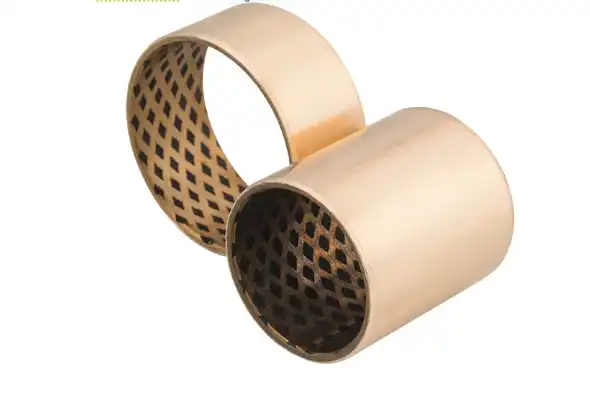
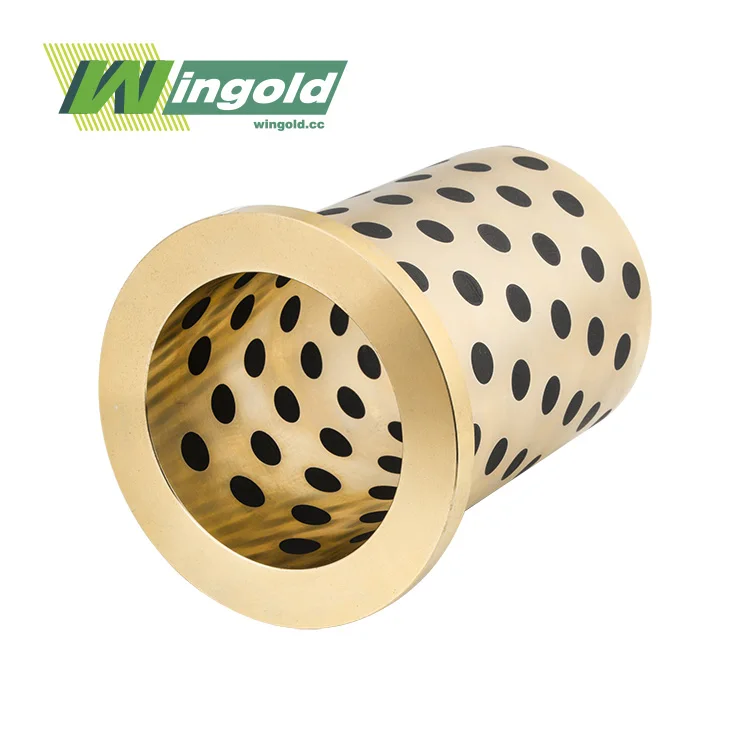
Surface engineering improves efficiency even more. When diamond-shaped oil tanks are machined into bearing surfaces, they form hydrodynamic pockets that keep lubricant films in place even when spinning is stopped. Hemisphere-shaped oil holes catch gritty particles before they get to areas with a lot of load. One construction machinery OEM cut the number of times they had to change track rollers from 2,200 hours to over 4,000 hours after moving to our oil-groove embedded bronze bushings. This is because the grooves stopped silica dust from building up at the contact interface.
Core Technical Advantages That Solve Industrial Pain Points
Bronze alloys are made in a way that makes them resistant to certain types of failure that happen a lot in heavy industry. Tin bronze has a high thermal conductivity of about 50 W/m·K, which means it gets rid of frictional heat 15 times faster than polymer bearings. This keeps temperatures from getting too high in high-PV situations. This quality is very important for hydraulic cylinder pivots that have to go through a lot of cycles of extension and contraction, which create a lot of heat without constantly turning to put in new lubricant.
In marine and chemical industry settings, corrosion protection is a must. Nickel-aluminum bronze types can stand up to saltwater and galvanic rust that would eat away at stainless steel in months. After moving to our corrosion-resistant bronze standard, an offshore platform operator in the Gulf Coast had no rudder stock bearing repairs over a five-year service interval. This was a big change from the 18-month replacement cycle that they had been using with coated steel bearings. Bronze can be shaped easily, so the surface can bend very small amounts to fit shaft runout and housing hole flaws. This trait is very important during the break-in time for new equipment, when it settles down and small alignment problems appear. Bronze bearings spread out the contact pressure over their whole surface area instead of concentrating stress that can cause fretting wear.
How Bronze Plain Bearings Optimize Industrial Performance?
Friction Management and Load Distribution Mechanisms
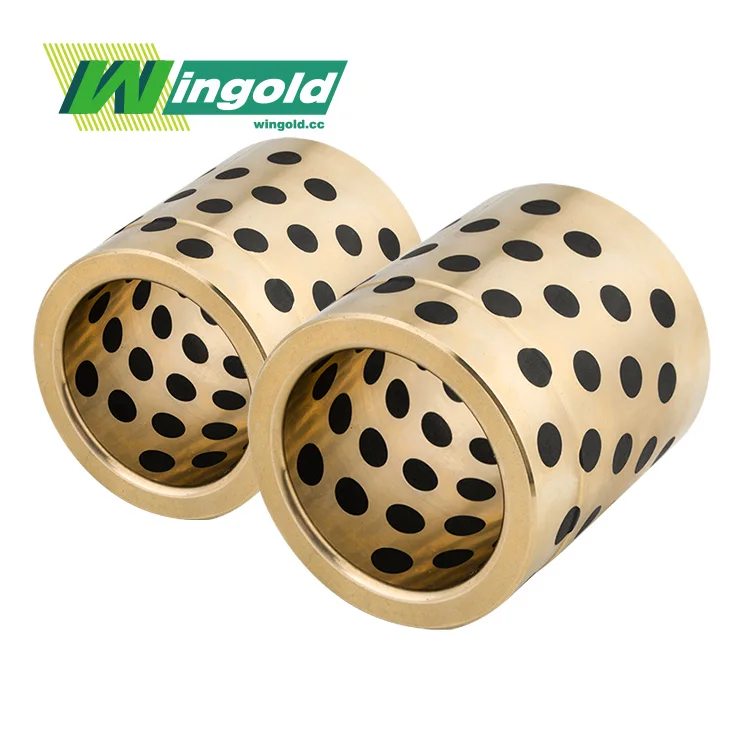
Keeping a grease film between the moving surfaces is important for plain bearings to control friction well. When everything works perfectly, hydrodynamic lubrication makes a full split with friction coefficients as low as 0.08. When loads are higher than the film strength or speeds drop below the critical level, bronze plain bearings move to boundary lubrication, which is where their natural qualities become very important. Solid oils are built into the metal matrix of self-lubricating versions. Our range of graphite-plugged bearings can work at temperatures up to 250°C without any extra oil because they release carbon particles that form safe transfer layers on the shafts that they fit against. This is how a steel mill customer runs their constant caster roller bearings because the 180°C outdoor temperature turns regular greases into steam within hours.
The contact shape and spacing requirements determine how the load is spread across the bearing surface. Our engineering team usually suggests 0.0015 to 0.0025 inches of diameter clearance per inch of shaft diameter. For high-temperature uses, this should be raised to account for bronze's 18×10⁻⁶/°C thermal expansion rate. Not enough clearance leads to seizure; too much clearance lets edges load, which speeds up wear on both the bearing and the shaft.
Maintenance Protocols That Extend Service Life
Proper lubrication times are directly linked to how long bearings last. Bronze bearings that are oiled from the outside need to have their grease refilled on a regular basis based on their PV values (pressure times velocity). Applications that use more than 50,000 PV·ft/min need oil to be circulating all the time, while lower-duty processes can get by with hand greasing every so often. We recently helped a paper mill improve the lubrication schedule for their dryer roll bearings. By switching from weekly greasing to a condition-based monitoring system, they were able to cut lubricant use by 40% while also extending bearing life by preventing over-greasing, which removes protective films from contact surfaces.
Contamination control becomes just as important. Putting in simple shaft seals stops abrasive entry that leads to three-body wear, a failure mode in which hard particles stuck between the bronze and shaft act as a lapping compound. A company that makes farming equipment cut down on warranty claims in the field by 63% after adding elastomer lip seals to the pivot points of their tools. These seals kept soil from getting into the metal bushings.
Environmental Resilience in Harsh Operating Conditions
When the temperature goes from -40°C to +150°C, bronze bearings keep their shape. This means they can be used in cold mining operations and casting equipment. Because the material is phase stable, it doesn't break down like some polymers do in very cold temperatures or soften like some polymers do at high temperatures. Chemical protection depends on what the alloy is made of. Because phosphor bronze is very resistant to weak acids and most organic solvents, it can be used for pump bearings in chemical processing.
Aluminum bronze can stand up to alkaline and sulfuric acid solutions that are often used in wood preparation. A chemical plant we supply recently switched their agitator shaft bearings from stainless steel to our aluminum bronze specification because the stainless steel ones failed quickly due to corrosion. The bronze bearings have now been in use for 18 months without showing any signs of wear, even though they have been exposed to a 15% sodium hydroxide solution all the time.
Compared to precision rolling elements, moisture and dust don't pose much of a threat to bronze bearings. Because it is embeddable, foreign particles can sink into the bearing surface instead of staying on top of it as rough contaminants. This feature is what makes bronze bushings so popular in building equipment that is used on dirty sites: the bearings clean themselves by catching particles that would otherwise move around and cause damage over time.
Comparing Bronze Plain Bearings With Alternative Bearing Solutions
Performance Comparison Across Bearing Technologies
Ball and roller bearings work great in high-speed, low-friction situations, but they break down horribly when they are loaded suddenly or get dirty. A single Brinell mark from a hit can set off a stress riser that leads to spalling failure. A bronze self lubricating bearing can take in shock energy by stretching, but it won't get permanently damaged until it reaches its compression yield strength.
Polymer bearings can really run in dry conditions, but they can't match the load capacity or heat transfer of bronze. Their highest PV values are usually around 10,000 PV·ft/min, but our WGB-090 bronze bearings can safely work at 50,000 PV·ft/min as long as they are well oiled. A company that makes injection molding machines tried using polymer bushings in their toggle links, but went back to using bronze because the wear-related placement errors were too high.
Bronze's higher dimensional stability kept the tolerances tighter throughout the service interval. To keep them from galling, steel-on-steel slide contacts need to have their sides hardened and well-oiled. Bronze-on-hardened-steel pairings naturally don't burn because the two materials are too different to weld cold. Because of this mechanical benefit, bronze bearings are the best choice for uses that move slowly, like boom pivots, where speeds drop below the minimum level needed for a fluid film to form.
Total Cost of Ownership Analysis
The price you pay at first is only a small part of what it will cost you over its entire life. Bronze plain bearings save money because they don't need to be replaced as often and require less upkeep work. A fleet operator who was in charge of 200 dump trucks found that their annual bearing costs went down by 58% after switching from sealed ball bearings to bronze pivot bushings. This wasn't because bronze was cheaper per unit, but because mechanics could press-fit new bushings in 15 minutes instead of the hour it took to replace a ball bearing cartridge.
In production settings, downtime costs often outweigh the costs of parts. When a bearing fails in a metallurgy furnace tilt mechanism and the mechanism stops working, not only does it cost money to fix, but it also costs money in missed production tons during unplanned shutdowns. The ability of bronze bearings to handle dirt and shock loads directly leads to more reliable equipment, which is something that purchasing managers are realizing more and more is what really determines the value of a bearing.
Another business gain is that machines are getting smaller. Our WGB-090 line can handle loads that let engineers choose smaller bearing widths compared to standard cast bronze. This cuts down on the size of the housing and the weight of the whole machine. A designer of agricultural equipment recently saved 18 pounds per vehicle by switching to our high-density bronze bushings in the feeder house of their combine harvester. This may not seem like a big difference, but it adds up when you think about how much fuel the equipment will save over its lifetime and the thousands of units that will be used.
How to Choose and Procure the Right Bronze Plain Bearings for Your Application?
Critical Selection Parameters for Bearing Specification
When figuring out load capacity for bronze plain bearings, you have to take both steady and moving forces into account. Dynamic load ratings talk about wear life under cyclic loading, while static load ratings stop lasting deformation under peak loads. The method our expert team uses to figure out bearing pressure is P = F / (D × L), where F is the radial load, D is the bearing diameter, and L is the bearing length. Most of the time, a safety margin of 70% or less above the estimated pressure is enough for most uses.
Because PV value affects heat output, velocity issues become just as important. When you combine high pressure and high motion, you need better cooling through circulation oil or special alloys that are better at transferring heat. A turbo-machinery company we talked to was having problems with bearings failing too soon in their gear reducer output shafts. An investigation showed that their working PV had gone over the bearing's thermal limit. We fixed the problem by choosing aluminum bronze that conducts heat better and changing the way the lube is delivered so that there is constant oil flush cooling.
Material choice is affected by environmental factors. For underwater uses, metals that don't rust are needed, and for high-temperature settings, materials that stay hard and stable in their shape are needed. When things are contaminated, stronger metals that are less likely to wear down quickly do better. A coal handling plant chose our phosphor bronze bearings for their conveyor idler rollers because the 120 HB hardness of the material made it better at resisting wear from coal dust than softer leaded bronze types.
Customization Versus Standard Catalog Components
When your product fits standard industry measurements, off-the-shelf bearings like copper sleeve bushings cut down on lead times and inventory costs. Our catalog has more than 300 regular size variations for inner diameters ranging from 10 mm to 500 mm, which is enough for most machinery uses. Purchasing managers like catalog items because they are reliable and allow them to make yearly blanket orders with planned releases.
When performance needs are driven by non-standard measurements, specialized alloys, or unique features, custom bearings are needed. Our engineering team often creates flanged bushings to control linear loads, thrust washers for spinning tasks, and spherical bearings to fix problems caused by misalignment at an angle. The WGB-090 product line can handle custom oil groove patterns that are matched to specific lubrication systems.
For example, we recently made bearings with spiral grooves for a naval propulsion system that needed continuous lubricant distribution while the bearings rotated in one direction. To handle lead times well, procurement and sellers need to be able to talk to each other clearly. Standard stock items usually ship within 48 hours from our location. Custom orders, on the other hand, need 3–4 weeks for molding and production. To keep supply problems to a minimum, procurement pros keep extras of important wear items on hand and plan custom orders around repair windows instead of waiting for breakdowns to happen.
Real-World Applications and Case Studies of Bronze Plain Bearings Under High Load
Industry-Specific Performance Examples
Bronze plain bearings in construction and earthmoving tools are put through the most extreme mixtures of load, shock, and dirt. Excavator boom pivots are hit by loads of more than 80,000 pounds and are exposed to dust all the time. We sold WGB-090 flanged bushings to a big equipment maker for their 45-ton excavators. Field tracking data showed that the bushings had an average life of 4,200 hours, compared to 1,800 hours for the old ball bearing design. Also, because they were easier to replace, dealer service time dropped from 3.5 hours to 45 minutes.
Extreme temperature protection is needed in metallurgical uses. Continuous casting machines work in 150°C rooms with water spraying on them from time to time to create thermal shock cycles. In these situations, our aluminum bronze roller bearings keep their toughness and stable spacing. A steel maker said that their caster removal rolls had been running continuously for three years with our bearings. The old steel-backed polymer bearings had to be replaced every eight months because they broke down in hot weather.
Marine power systems need to be able to handle both load and rust. A professional fishing boat owner changed the bearings on the stern tube with our nickel-aluminum bronze specification bearings that are made to work with seawater. After 18 months of use and 3,200 hours of engine time, a check showed less than 0.010 inches of wear, which is well within the acceptable range for the five-year repair interval that was planned. The operator figured that within the first year, the fuel savings from less drag would cover the extra cost of the bearings.
Documented Performance Improvements and ROI
A heavy equipment company in the Midwest worked with Wingold to fix a problem with their bulldozers' track rollers that kept breaking. Their engineering team found three main reasons: the current bearings weren't strong enough to handle the load, they weren't resistant to contamination well enough, and the high cost of replacement work was hurting the dealer's ability to make money. Together, we came up with a solution that uses our WGB-090 bushings that have oil reservoirs in a diamond design and thicker walls to improve load ratings.
The results showed that all problem areas got better in a way that could be measured. Laboratory tests showed that they could hold 18% more weight than they were supposed to, and rapid life tests showed that the oil tanks successfully trapped abrasive particles, which increased wear life by 2.4 times. Fifty machines were put to use in rental companies that are known for heavy-duty runs as part of field validation.
Over the course of 24 months, data showed that the average time between bearing replacements went from 1,600 hours to 4,100 hours, which is a 156% rise. Dealers said that the simpler press-fit fitting cut the time it took to set up the service bay by 65%. This increased their service capacity and made customers happier. The maker found that the total cost of warranties for track roller parts went down by $847,000 annually across all of their production volumes. This case shows how choosing the right bearings can affect not only the life of a component but also the whole service environment that surrounds heavy equipment.
Conclusion
Due to their special mix of load capacity, shock absorption, and contamination tolerance, bronze plain bearings offer unrivaled reliability in high-load industrial uses. The science behind copper alloys makes them better at handling heat, resisting corrosion, and keeping their shape than other bearing technologies, even in the harshest circumstances. When procurement professionals look at bearing options, they should focus on total cost of ownership estimates that take into account longer service intervals, less upkeep work, and more readily available equipment. At Wingold, our engineering knowledge and manufacturing skills make sure that you get the best bronze bearing options, along with performance data that you can measure and quick professional help for the life of your equipment.
FAQ
Q1: What is the maximum load capacity for bronze plain bearings?
A: The load capacity varies on the type of bronze alloy and the shape of the bearing. Standard tin bronze bearings can usually handle 30 to 50 MPa of constant pressure. Our WGB-090 high-density copper alloy bearings, on the other hand, can handle up to 250 MPa because the material preparation and production methods have been improved to get rid of any porosity.
Q2: Can bronze bearings operate without lubrication?
A: Standard metallic bronze needs to be oiled or greased from the outside. Some types of self-lubricating variants have graphite holes or PTFE that allow dry running up to 250°C in situations where regular lubricants don't work because of temperature, contamination, or environmental limits.
Q3: How do I calculate the correct bearing clearance?
A: Engineers usually say that there should be 0.0015 to 0.0025 inches of diameter space for every inch of shaft diameter. For high-temperature uses, more space is needed to account for bronze's thermal expansion rate (18×10⁻⁶/°C), while for precision machinery, tolerances may need to be tighter to keep shaft movement to a minimum.
Q4: What causes bronze bearing failure?
A: Some common ways things go wrong are not enough greasing, which leads to adhesive wear, too much load, which causes plastic deformation, abrasive contamination, which causes three-body wear, and not enough space, which causes seizure or edge loading. These problems can be avoided with good application engineering by choosing the right materials and following the right fitting steps.
Partner with Wingold for Your Bronze Plain Bearing Requirements
Wingold Bearing is an expert at making high-performance bronze plain bearings that are designed to work in tough industrial settings. The high-density copper alloys in our WGB-090 product line give them better load capacity, and our customization options make sure that the dimensions are exactly right for non-standard uses. As a certified producer of bronze plain bearings that follows ISO 4383 and has full in-house testing facilities, we offer expert help from the time you choose the bearings to the time they are put into production. Our minimum order amounts are flexible enough to meet the needs of both testing prototypes and mass production. Additionally, our fast manufacturing processes ensure that your projects stay on schedule by meeting delivery dates. Get in touch with our engineering team at info@wingold.cc to talk about your unique needs and find out how our bearing solutions can lower your total cost of ownership while also making your equipment more reliable.
References
1. American Society for Testing and Materials. "Standard Specification for Copper Alloy Continuous Cast Bronze Bushings (ASTM B505-18)." ASTM International Standards, 2018.
2. Hutchings, Ian and Philip Shipway. "Tribology: Friction and Wear of Engineering Materials, Second Edition." Butterworth-Heinemann Publishers, 2017.
3. Neale, Michael J. "The Tribology Handbook: Section on Plain Bearings and Bushes." Butterworth-Heinemann Engineering, 1995.
4. Society of Tribologists and Lubrication Engineers. "Plain Bearing Design and Application Guidelines for Industrial Machinery." STLE Technical Paper Series, 2016.
5. Kragelsky, I.V. and V.V. Alisin. "Friction, Wear, and Lubrication: Tribology Handbook Volume 2 - Materials and Contact Mechanics." Professional Engineering Publishing, 2001.
6. International Organization for Standardization. "Plain Bearings - Quality Control Techniques and Inspection of Geometrical and Material Quality Characteristics (ISO 4379)." ISO Technical Standards, 2019.
Learn about our latest products and discounts through SMS or email