- English
- French
- German
- Portuguese
- Spanish
- Russian
- Japanese
- Korean
- Arabic
- Greek
- German
- Turkish
- Italian
- Danish
- Romanian
- Indonesian
- Czech
- Afrikaans
- Swedish
- Polish
- Basque
- Catalan
- Esperanto
- Hindi
- Lao
- Albanian
- Amharic
- Armenian
- Azerbaijani
- Belarusian
- Bengali
- Bosnian
- Bulgarian
- Cebuano
- Chichewa
- Corsican
- Croatian
- Dutch
- Estonian
- Filipino
- Finnish
- Frisian
- Galician
- Georgian
- Gujarati
- Haitian
- Hausa
- Hawaiian
- Hebrew
- Hmong
- Hungarian
- Icelandic
- Igbo
- Javanese
- Kannada
- Kazakh
- Khmer
- Kurdish
- Kyrgyz
- Latin
- Latvian
- Lithuanian
- Luxembou..
- Macedonian
- Malagasy
- Malay
- Malayalam
- Maltese
- Maori
- Marathi
- Mongolian
- Burmese
- Nepali
- Norwegian
- Pashto
- Persian
- Punjabi
- Serbian
- Sesotho
- Sinhala
- Slovak
- Slovenian
- Somali
- Samoan
- Scots Gaelic
- Shona
- Sindhi
- Sundanese
- Swahili
- Tajik
- Tamil
- Telugu
- Thai
- Ukrainian
- Urdu
- Uzbek
- Vietnamese
- Welsh
- Xhosa
- Yiddish
- Yoruba
- Zulu
What are the most common plain bearings made of?
Choosing the right plain bearing material has a direct effect on how well your equipment works, how often it needs to be serviced, and the total cost of ownership. Plain bearings, which are also called bushings or sleeve bearings, can be made from metal, steel, brass, engineered plastics like PTFE and nylon, and new types of composite sleeve bearing materials. Different materials have different tribological qualities that work best with certain loads, speeds, and situations. Bronze works best in heavy-duty traditional uses, while steel can hold a lot of weight. Modern composite sleeve bearing technology combines fiber-reinforced surfaces with self-lubricating plastics to provide long-lasting performance in harsh industrial settings where regular materials often fail.
Understanding Plain Bearing Materials: An Industry Overview
Plain bearings are the most important part of systems that move things in a straight line or rotate. They are used in industry, building, and transportation. Plain bearings, on the other hand, depend on moving contact between surfaces, which makes choosing the right material very important for efficiency.
Traditional Metal Bearing Materials
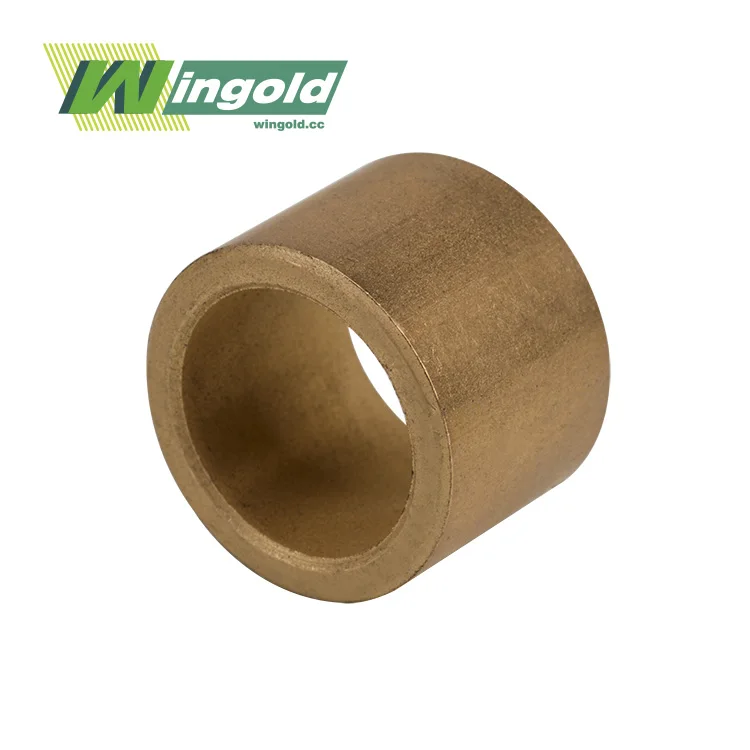
Bronze is still the most common choice for industrial uses that need a plain bearing. Bronze bearings, which are made of copper mixed with tin, aluminum, or lead, can hold a lot of weight and transfer heat well. Different types of phosphor bronze and aluminum bronze don't rust in sea and chemical processing settings, and they can handle pressures above 100 MPa as long as they are properly oiled. Most high-speed spinning machines, like engines and compressors, use steel-backed bearings with Babbitt metal linings. The tin or lead-based Babbitt metal is soft and low-friction. It can bend around shaft imperfections, and the steel backing keeps the structure together. Brass bushings aren't used as much as they used to be, but you can still find them in car linkages and small machines because they're cheap and easy to machine.
Engineered Polymer Bearing Materials
In the 1960s, thermoplastic bearings made from PTFE (polytetrafluoroethylene), nylon (polyamide), and acetal (POM) changed the way motion control was done because they didn't need to be oiled from the outside. PTFE has the lowest friction coefficient of all solid materials, ranging from 0.04-0.10. This means that it can be used safely in food processing and medicinal equipment where oil or grease would be too likely to get dirty. Nylon bearings are good at absorbing vibrations, which makes them last longer in uses that move back and forth, like farming equipment pivots.
Modern Composite Bearing Technology
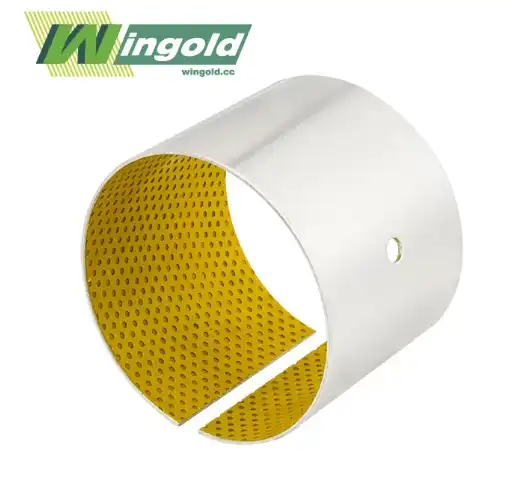
The composite sleeve bearing is where metal science and polymer science meet. These multi-layered structures usually have a steel backing to keep the shape, a middle layer of powdered bronze to spread the load, and a POM (polyoxymethylene) or PTFE moving surface that is filled with solid lubricants. Wingold's composite bearings use this structure by mixing a steel base with powdered porous bronze powder and modified polyformaldehyde. They can handle friction coefficients between 0.05-0.25 at temperatures ranging from -40°C to 130°C. When choosing a material, you have to weigh its mechanical qualities against its cost-effectiveness. Bronze bearings need to be oiled and inspected from time to time, but their proven dependability in heavy machinery makes the upkeep costs worth it. On the other hand, composite systems don't need any lubrication infrastructure, but they need to be installed correctly to avoid edge loading problems.
Composite Sleeve Bearings: Composition and Performance Advantages
Understanding how composite sleeve bearings are put together on the inside makes it clear why they work better than single-piece materials. Certain types of failure that happen in regular bearings are taken care of by the three-layer design.
Structural Composition and Design Principles
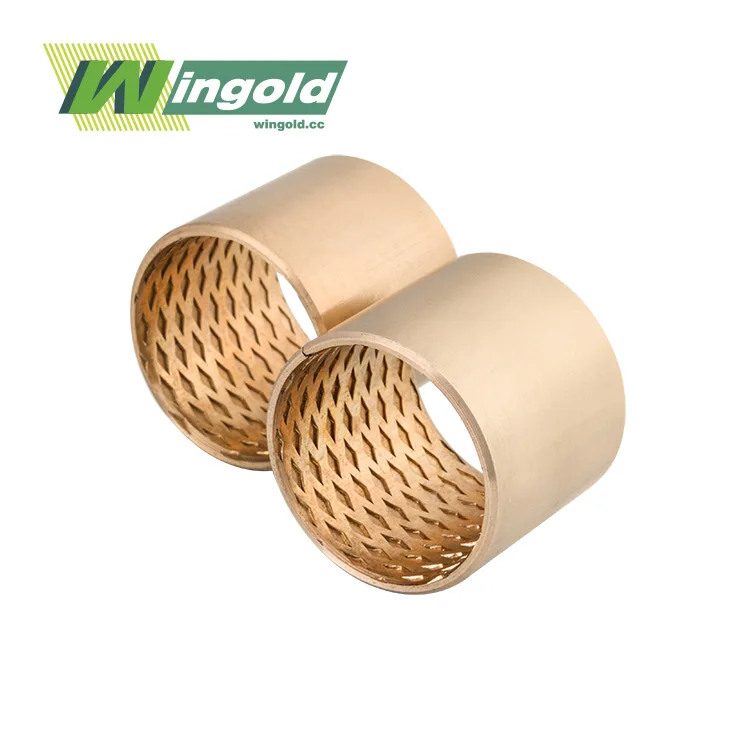
Wingold's composite bushing design starts with a low-carbon steel backing that is usually 0.8 to 2 mm thick. This gives the bushing shape stability and helps heat escape. To improve the contact with the middle bronze layer, the surface of this steel base is prepared by shot peening or chemical etching. Bronze powder that has been sintered into small particles (50–150 microns) makes a porous matrix that is about 0.2–0.5 mm thick and has 15–25% of its volume made up of linked gaps.
The upper slide layer is made of modified polyformaldehyde (POM), a semi-crystalline thermoplastic that is very stable in shape and doesn't absorb much water (less than 0.2%). During the making process, under pressure, liquid POM moves through the pores in the metal, forming mechanical interlocking as it hardens. This fusion stops delamination under dynamic loads, which is a typical way for bearing layers that are stuck together with glue to fail. Usually 0.5 mm deep and set 5–10 mm apart, oil indentations are machined into the POM surface. These serve two purposes: they catch tiny wear debris, which stops abrasive three-body wear, and they hold any leftover lube from the initial assembly, which extends the break-in time.
Self-Lubricating Mechanism and Tribological Performance
The ability to lubricate itself comes from the molecular structure of POM and the oil-retention qualities of the metal layer. POM chains have low intermolecular friction, so the transfer film on the surface of the connecting shaft is constantly being renewed while the machine is running. This transfer film, which is only a few nanometers thick, keeps the bearing and shaft from touching directly. The layer of sintered brass acts as an extra layer of grease. During operation, if the temperature of the bearing rises, any oil that is trapped in the copper pores expands and moves toward the sliding contact through capillary action. When the engine is not being used, the holes take oil back from the surface as the temperature drops. This heat pumping cycle keeps the boundary lubrication conditions the same even when the classifications are dry running.
Wingold's composite bearings can handle loads up to 70 N/mm² and PV values of up to 22 N/mm²·m/s when they're not wet. To get these levels of performance, methods that caused the bearings to be oiled were needed in the past. Extreme thermal cycle kills regular plastic bearings in places like Arctic offshore platforms and steel mill rolling equipment, but this bearing can work in temperatures ranging from -40°C to 130°C.
Comparing Composite Sleeve Bearings with Other Popular Bearing Materials
For procurement choices, it's important to be able to compare the actual performance of different types of materials. This study looks at five main types of bearing materials that are used in industry tools.
Bronze Bearings vs. Composite Solutions
Bronze bearings remain the norm for heavy machinery uses. When provided with hydrodynamic oil films, cast or wrought bronze bushings can handle constant loads of up to 140 MPa, which is higher than the static values for composite sleeve bearing materials. Their thermal conductivity (50–120 W/m·K) gets rid of frictional heat well in fast-moving places like electric motor bearings. A pom bush, on the other hand, doesn't need to be maintained, which is a big plus for distant sites like wind turbine yaw systems or mining equipment that works in dusty places. In these conditions, bronze bearings quickly lose their oil, so they need to be re-greased every 200 to 500 hours of use. Composite options can run for more than 5,000 hours without any help, which greatly lowers their total costs, even though they cost more at first.
Chemical protection makes these materials very different from each other. Bronze metals are damaged by acidic or caustic process fluids that dezincify or dealuminate them. POM-based composites, on the other hand, can handle most industrial chemicals below 80°C. Where metal would rust and contaminate goods, washdown areas like those used to make food or medicines are better for composite solutions.
Steel Bearings: Strength with Lubrication Dependency
Hardened steel bushings with special treatments (chromium plating, nitrocarburizing) can hold the most weight of any type of bearing. They are perfect for difficult situations where shock loads of more than 200 MPa are expected, like on the pins of earthmoving equipment. Their 200 GPa elastic stiffness keeps them from deflecting when forces are at their strongest. The main problem is that they have a high coefficient of friction (0.15-0.40 under border lubrication), which makes a lot of heat and needs a steady flow of oil. Failure of lubrication leads to a catastrophic seizure within minutes of being loaded. Composite bearings protect against these kinds of failures—even if all the oil is lost, the bearings can still work at lower speeds for a short time, which keeps the equipment from breaking down during managed shutdowns.
Plastic Bearings: Lightweight but Temperature Limited
Pure polymer bearings (PTFE, nylon, and acetal) have the lowest friction coefficients (0.08 to 0.15), and they don't rust. Their density (1.1 to 1.4 g/cm³) lowers the spinning mass of things like textile machines or conveyor wheels. Because they are cheaper, they are good for making a lot of consumer electronics. Because of temperature limits, they are not very useful in industry. Nylon 6/6 weakens above 90°C and experiences physical creep when loads are applied for a long time. Even though PTFE is very resistant to chemicals, it is not very resistant to wear when used by itself. It needs to be reinforced with glass fibers or metal particles. These fillers raise the friction ratios to 0.15 to 0.25, which takes away PTFE's natural edge.
Composite bearings fill in this gap by adding a copper backing structure to POM to make it stronger. This lets them work at temperatures up to 130°C while keeping friction coefficients below 0.25. The metal base stops creep deformation, which lets PV values three times higher than those of plastics that aren't strengthened.
Ball and Roller Bearings: Precision vs. Simplicity
Rolling element bearings are used for a lot of high-speed, high-precision tasks where reducing friction makes their complexity and cost worth it. When ball bearings are properly oiled, they can achieve friction coefficients as low as 0.001-0.002, which lets them go faster than 10 m/s with little heat production. Different types of plain bearings, including hybrid ones, are used for different tasks. They work best in undulating motion (less than 180° turn), where fretting wear happens with rolling elements. For shock load absorption, which is important in building equipment and naval rudder systems, the ability of plain bearings to stretch without breaking is a plus. Because of limited space in coupling systems, plain bearings often have smaller radial dimensions than rolling bearings with the same load capacity.
Wingold's composite bushings can hold up to 140 MPa of force and come in diameters ranging from 10 mm to 500 mm, so they can be used for both small instrument pivots and big industrial tasks. Because they are so flexible and don't need to be maintained, composite materials are the best choice for equipment that has to deal with radial loads, axial thrusts, and rotational misalignment, all at the same time. These are situations that quickly damage rolling element bearings.
Installation, Maintenance, and Longevity of Composite Sleeve Bearings
To get the best performance out of composite sleeve bearings, you need to pay close attention to how they are installed and how they are used. No matter how good the material is, it will fail early if it doesn't fit right.
Best Practices for Installation
Bearing life depends on how well the housing hole is prepared. The reception hole needs to keep its cylinder shape within 0.05 mm and its surface roughness below 3.2 μm. When pressing the bearing edges together, chamfers at the hole openings (0.5 mm x 45°) keep them from getting damaged. Most interference fits are between 0.1% and 0.3% of the outer diameter of the bearing. This creates enough holding force without putting too much stress on the steel base.
For press-fitting to work, the horizontal force distribution needs to be managed. Using hardened mandrels and firmly holding the body stops cocking, which is an angle misalignment that causes stress to build up. Consistent force is applied by hydraulic presses. Hammer impact installation often cracks the POM layer inside, even if the outside looks fine. Performance is also affected by how the shaft is prepared. To keep the bronze bits in the POM matrix from wearing down the mating shaft surfaces, they need to be harder than HRC 45. The finish on the surface should keep Ra between 0.4 and 0.8 μm. Smoother finishes stop the formation of the first transfer film, while rougher surfaces cause too much mechanical wear. To allow for thermal expansion while avoiding too much play that would allow impact loads, running clearances should be between 0.1% and 0.2% of the diameter of the shaft.
Maintenance Protocols and Inspection Criteria
Composite bearings are advertised as not needing any upkeep, but they do benefit from eye checks every so often. Checking the uncovered bearing sides for radial cracks shows that there is too much press-fit interference or thermal cycle that goes beyond the limits of the material. The change in color of POM from white to brown indicates that working temps are getting close to 130°C, which means that the cooling system needs to be looked at.
Monitoring the state of the shaft gives early signs of failure. Longitudinal scoring on the shaft sides shows that foreign particles got in, which happens a lot in uses that aren't protected. Taking care of environmental seals keeps the cost of replacing bearings from going up because of damage to the shaft. Axial play readings show how wear is progressing; rises greater than 0.5 mm from the installation baselines show that the service life is getting close to its end. While initial greasing helps with break-in (even though dry running is classified as an option), compatibility testing stops polymer breakdown. Lithium-based greases work well with POM, but molybdenum disulfide additives may make wear happen faster by being rough. Using thin grease films instead of packed lubrication during installation lowers starting friction, which is especially helpful when the temperature is below 0°C.
Technical Parameters Influencing Service Life
Specifications for load capacity set safe operating limits. Wingold's composite bearings can handle steady loads of up to 70 N/mm² and moving loads up to 22 N/mm²·m/s. When these limits are exceeded, wear happens faster because of heat degradation instead of mechanical failure. The P (pressure) and V (velocity) result measures how much frictional heat is produced. Bearing temperatures stay within the -40°C to 130°C range when operating below the rated PV values.
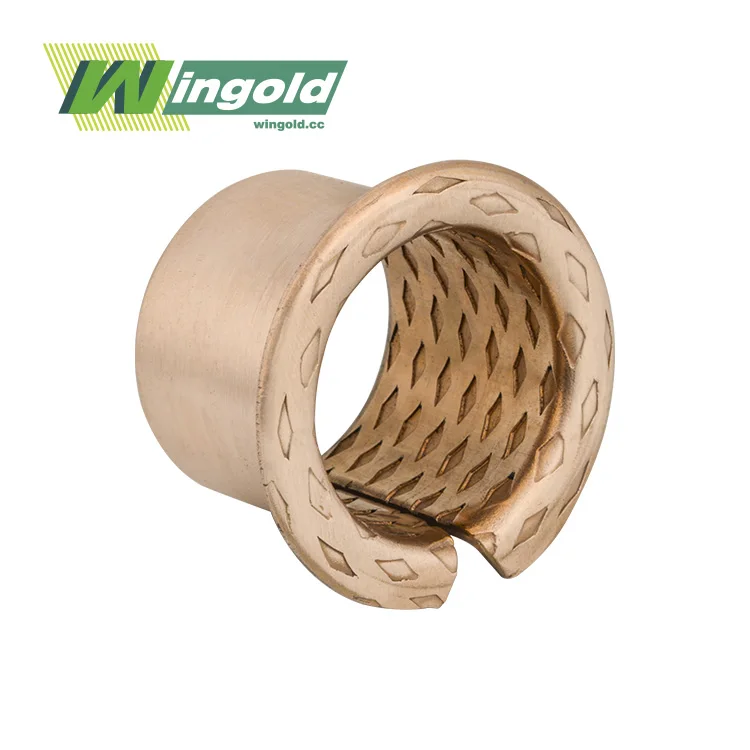
Changes in the friction coefficient (0.05–0.25) over the working range show how the contact conditions are changing. During the first few breaks-in times, there is more friction (0.25-0.25), but this goes away as the surface smooths out and the transfer film forms. In ideal situations, steady-state function settles to 0.05-0.10. When friction rises to 0.25, it means that the bearing is wearing out or there isn't enough space between the surfaces, which breaks down the border lubrication. Specifications for dimensions allow for a wide range of uses. Inner diameters range from 10mm to 500mm, wall thicknesses range from 1mm to 50mm, and lengths range from 10mm to 1000mm. These sizes can be used for everything from precision tools to industrial gears. Custom designs, like flanged bushings, thrust washers, and split bearings, make composite materials usable in unique situations where standard cylinder shapes don't work.
Procurement Considerations for Composite Sleeve Bearings in B2B Markets
When you do strategic buying for composite sleeve bearings, you have to look at more than just the unit price of each provider. The real procurement value is based on how consistent the quality is, how deep the expert help is, and how reliable the supply chain is.
Supplier Evaluation Criteria
Verification of certification sets a baseline level of production skill. ISO 9001 certification for quality management means that process rules are written down, and ISO 14001 certification for environmental management means that materials are handled in a responsible way. Certifications specific to a field, like IATF 16949 for car suppliers or API standards for oil and gas uses, show that you know a lot about that field. A review of the manufacturing potential shows that production limits are hurting the dependability of delivery. Precision bore and length limits (±0.05mm usual) are made possible by CNC machining centers, which is very important for press-fit uses. Vertical integration is shown by centrifugal casting tools used to make layers of sintered bronze. Suppliers who buy pre-sintered bronze strips may see quality differences due to inconsistencies in third-party materials.
Testing lab skills set skilled makers apart from assemblers. Material performance claims are backed up by friction coefficient tests under controlled load and motion conditions. Accelerated life tests at high temperatures and loads can predict how long something will last in the field, which lets materials be optimized for particular uses. Wingold has full testing labs that offer these validation services and make sure that OEM goods meet foreign standards like ISO 4383 and ASTM B22.
Pricing Models and Volume Considerations
The price of a composite bearing depends on how much the materials cost and how hard it is to make. Prices will be 150–300% higher than for bronze bushings of the same type, but the costs of a lubrication system will be removed, and the replacement times will be longer. Volume price models usually go into effect when you buy 500 to 1,000 pieces, and discounts of 20 to 30 percent are available when you buy 10,000 or more pieces a year. Minimum order numbers (MOQs) change based on how customized the product is. Standard catalog sizes from well-known sources may have MOQs as low as 50 pieces, but fully custom shapes that need special tools may need 500–1,000 piece pledges to spread out the setup costs. Wingold lets you order in smaller amounts at first, so you can test the product's performance before putting it into full production.
Strategic sellers are different from basic vendors because they can make things to order. Special material formulas (elevated temperature POM types, improved chemical resistance) and built-in design features (locking tabs, assembly chamfers) mean that engineers have to work together. When suppliers offer one-on-one technical help from mechanical experts during the specification process, it speeds up the development process and lowers the risks of the application.
Building Long-Term Supplier Relationships
Suppliers must be able to keep their finances stable and increase their capacity for the supply chain to be strong. Reviewing production capacity (Wingold's 10,000-ton annual capacity) makes sure that the company can handle increasing equipment production numbers without having to deal with distribution problems. Diverse customer groups show that the market is accepting, but they also need to be looked at in terms of top status when materials are in short supply. Delivery dependability measures are set by how well lead times are met. Standard goods that ship within two to three weeks work well with maintenance inventory plans, but special designs that take six to eight weeks need equipment makers and bearing providers to work together on planning. When pressing substitute orders come in, the ability to speed up production cuts down on the costs of equipment downtime, which often justifies higher freight costs.
Setting up a quality deal makes performance standards official. Objective acceptance standards are made by listing acceptable flaw rates (usually between 0.1 and 0.5 percent for machined parts), dimensional tolerance ranges, and material approval needs (for example, mill test results for steel backing). Regular quality reviews find ways to improve the process, which is good for everyone because it lowers the cost of inspections and guarantee claims. Total landing costs and response are affected by how close something is to another place. Import taxes are not charged by domestic providers, and freight costs are lower. However, global sourcing may give you access to more specialized materials or production technologies. Wingold can buy and export goods to serve both domestic and foreign markets, helping people in their own countries while still making the most of the economies of scale in manufacturing.
Conclusion
The choice of material for plain bearings has a direct effect on how reliable equipment is and how much it costs to run in all industries. Traditional bronze, steel, and brass bearings are still used for some high-load or high-speed tasks, but composite sleeve bearing technology has many benefits, such as not needing to be maintained, being resistant to weather factors, and being able to be used in a variety of ways. The three-layer design with steel backing, solid bronze, and self-lubricating POM gives performance levels that were previously not possible with solutions made of just one material. When buying something, people have to weigh the original costs against the total cost of ownership, taking into account things like lower upkeep costs and longer service intervals. Companies can get the best bearing performance in a wide range of situations by working with highly skilled providers that offer customization, quality approvals, and quick delivery.
FAQ
Q1: What is the typical service life of composite sleeve bearings compared to bronze?
A: Service life depends a lot on how they are used, but in dirty settings, composite sleeve bearings usually last two to three times as long as bronze bearings. Bronze may last longer than plastics if it is kept clean and properly oiled. Composites, on the other hand, keep working even when the lubrication stops, which would kill metal bearings in minutes. The self-lubricating system makes the machine last longer in situations where it's hard or expensive to do upkeep.
Q2: Can composite bushings work constantly at their full recommended loads?
A: Continuous operation at the highest static load rates (70 N/mm² for Wingold products) is still possible as long as PV values stay below 22 N/mm²·m/s. To keep the temperature safe, slide speeds must be slowed down appropriately when the load is higher. Intermittent loading lets the ongoing scores go above for short periods of time. To find the right de-rating factors for reliability, application-specific engineering research should look at duty cycles, heat dissipation routes, and ambient temperatures.
Q3: How do I set the distances between installs for composite bearings?
A: The running space between the shaft and the inner diameter of the bearing should be between 0.1% and 0.2% of the width of the shaft. Tighter clearances can cause buckling when the temperature rises, while too many clearances let impact loads and misalignment happen. Differential thermal expansion needs to be taken into account. When the temperature goes up, POM expands more than steel rods. Different POM, nylon, and PTFE-based composites have different thermal expansion factors, so check the manufacturer's instructions for exact material formulas.
Partner with Wingold for Reliable Self-Lubricating Bearing Solutions
Industrial equipment needs bearing solutions that strike a mix between performance, dependability, and the cost of running the business. Wingold Bearing is an expert at making high-quality composite sleeve bearings that are designed to work in tough environments like hydraulic systems, big machinery, and process equipment. Our three-layer design with a steel backing, powdered bronze, and modified POM gives you friction coefficients as low as 0.05 while getting rid of the upkeep needs that come with regular bearing systems. Our product line meets a wide range of industrial needs, with inner diameters from 10 mm to 500 mm and working temperatures from -40 °C to 280 °C.
Wingold is an experienced company that makes composite sleeve bearings. They keep quality under tight control by having fully integrated production facilities with CNC machining centers, centrifugal casting lines, and approved testing labs. We offer custom solutions that are made to fit your load, speed, and surroundings, and we provide tech help throughout the specification and application process. With factory-direct prices and flexible minimum order numbers, you can test the performance before committing to full production. Get in touch with our expert team at info@wingold.cc to talk about your bearing needs and find out how our self-lubricating solutions can lower your total cost of ownership while making your equipment more reliable.
References
1. Budinski, K.G. "Tribological Properties of Polyoxymethylene and Comparison with Other Polymers." ASTM International Journal of Testing and Evaluation, Volume 31, 2018.
2. Hutchings, I.M. and Shipway, P. "Friction and Wear of Engineering Materials: Plain Bearings and Sliding Contacts." Butterworth-Heinemann Engineering Materials Series, 2020.
3. Neale, M.J. The Tribology Handbook: Plain Bearing Materials and Selection Criteria. Society of Tribologists and Lubrication Engineers, 2019.
4. Stachowiak, G.W. and Batchelor, A.W. "Self-Lubricating Composite Materials for Industrial Plain Bearings." Engineering Tribology: Friction, Wear and Lubrication Fundamentals, 2021.
5. Wilson, B.R. "Comparative Performance Analysis of Metallic and Composite Plain Bearing Materials in Heavy Equipment Applications." Journal of Manufacturing Science and Engineering, Volume 142, 2020.
6. Zhang, L. and Wang, H. "Design and Application of Multi-Layer Composite Sleeve Bearings in Industrial Machinery." Proceedings of the Institution of Mechanical Engineers Part J: Journal of Engineering Tribology, Volume 235, 2021.
Learn about our latest products and discounts through SMS or email