- English
- French
- German
- Portuguese
- Spanish
- Russian
- Japanese
- Korean
- Arabic
- Greek
- German
- Turkish
- Italian
- Danish
- Romanian
- Indonesian
- Czech
- Afrikaans
- Swedish
- Polish
- Basque
- Catalan
- Esperanto
- Hindi
- Lao
- Albanian
- Amharic
- Armenian
- Azerbaijani
- Belarusian
- Bengali
- Bosnian
- Bulgarian
- Cebuano
- Chichewa
- Corsican
- Croatian
- Dutch
- Estonian
- Filipino
- Finnish
- Frisian
- Galician
- Georgian
- Gujarati
- Haitian
- Hausa
- Hawaiian
- Hebrew
- Hmong
- Hungarian
- Icelandic
- Igbo
- Javanese
- Kannada
- Kazakh
- Khmer
- Kurdish
- Kyrgyz
- Latin
- Latvian
- Lithuanian
- Luxembou..
- Macedonian
- Malagasy
- Malay
- Malayalam
- Maltese
- Maori
- Marathi
- Mongolian
- Burmese
- Nepali
- Norwegian
- Pashto
- Persian
- Punjabi
- Serbian
- Sesotho
- Sinhala
- Slovak
- Slovenian
- Somali
- Samoan
- Scots Gaelic
- Shona
- Sindhi
- Sundanese
- Swahili
- Tajik
- Tamil
- Telugu
- Thai
- Ukrainian
- Urdu
- Uzbek
- Vietnamese
- Welsh
- Xhosa
- Yiddish
- Yoruba
- Zulu
Thrust Washer: The Guide To Self-lubricating Thrust Bearing
Inadequate pressure control is often to blame when industrial machinery's axial bearings fail before they should. Hardened thrust washers are precision-engineered annular parts that are made to handle axial loads and keep metals from damaging each other in spinning systems. The surface of these heat-treated steel washers is usually harder than 58 HRC, and they are self-lubricating, so they don't need to be oiled all the time. Within heavy machinery like mine excavators and power turbines, these parts protect the connection between moving shafts and stationary housings by spreading loads over a bigger area and staying stable in shape even when under a lot of pressure. Their ability to lubricate themselves comes from solid lubricants that are built in or microporous structures that release lube slowly while the machine is running. This solves the problem of maintenance that equipment managers face in remote or hot places.
Understanding Hardened Thrust Washers: Fundamentals and Materials
The Engineering Foundation of Axial Load Management
At Wingold, we've seen how the choice of thrust bearings affects the downtime of equipment in petroleum and metalworking processes. The basic idea behind design is to make a wear-resistant surface that covers the more expensive parts of the shaft and frame. Through processes like high-frequency cooling or carburizing, surface hardening turns ordinary steel into a barrier that doesn't wear down. This is done by creating controlled hardness gradients where the outer shell fights wear and the flexible core absorbs shock loads.
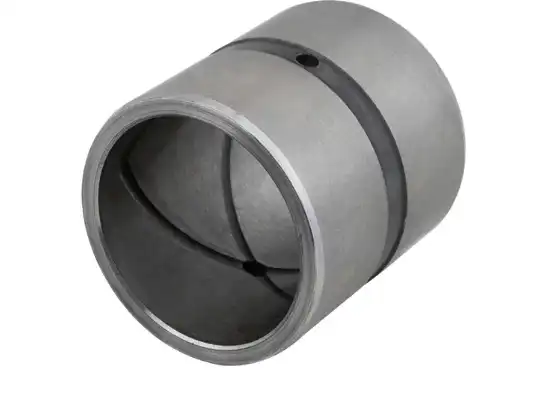
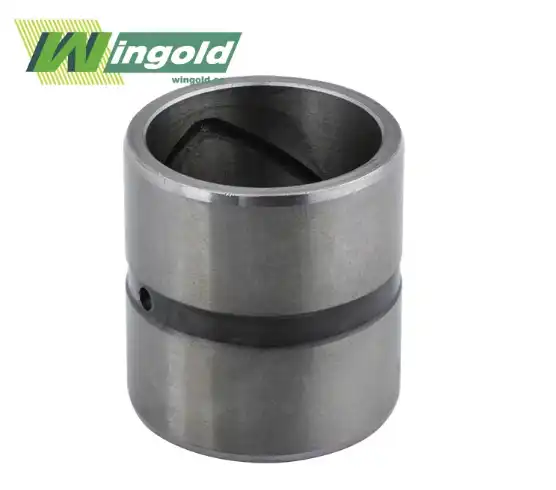
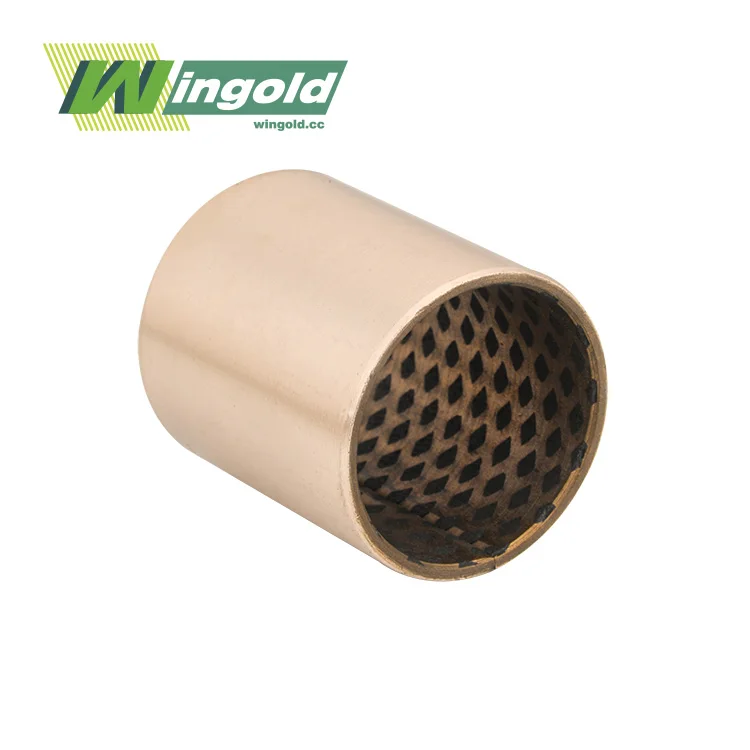
This way of thinking about building is shown by the WGB-150 steel sleeve. This part is made from GCr15 bearing-grade steel and goes through high-frequency cooling to create a harder wear layer that keeps the structure strong even when it is loaded and unloaded many times. Strategic oil lines cut into the work surface make tiny storage spaces that spread lubricant across contact areas. This lowers the friction coefficients even when border lubrication is present. This design is very important for port and forest machinery that gets dirty and wet easily, making it hard for regular oil systems to work.
Material Selection for Demanding Environments
To choose between material choices, you need to know how things work. GCr15 steel has great shear strength and thermal stability. Its hardness values stay between 58 and 62 HRC at temperatures up to 200°C. This chromium-bearing steel is better at resisting thermal melting than regular carbon steels. This makes it a good choice for heavy-duty applications like truck axle systems and hydraulic cylinder trunnions, which generate heat.
Bronze options are better at resisting corrosion in naval settings, but they can't hold as much weight as hardened thrust washers. Stainless steel types can be mixed with strong fluids chemically, but the surface needs to be treated carefully to get the same level of wear resistance. While composite polymer materials are lighter and don't carry electricity as poorly, their load rates are still much lower than those of metal materials. When procurement managers look at the total cost of ownership, they have to compare these trade-offs with the practical stresses. For example, a mine shovel bearing that supports 500 kN loads needs different material properties than a low-speed conveyor pivot. Our WGB150 line can be made in a variety of sizes to meet non-standard needs that make supply chain planners mad. These parts come in a range of inner sizes (20–200 mm) and thicknesses (1–10 mm), so they can be used in both repair projects and custom machinery designs without having to make expensive changes to the tools.
Comparing Hardened Thrust Washers with Other Bearing Solutions
Performance Metrics Across Bearing Technologies
Roller element bearings and plain brass bushings are often put up against thrust options by industrial buyers. Needle thrust bearings work great in high-speed situations where rotational speeds are higher than 1,000 RPM, but their complex cage systems can fail in dirty settings. A company that makes construction equipment that we work with moved from needle bearings to hardened thrust washers in the pivots of excavators' booms. This cut down on upkeep by 40% and made the machines more resistant to the rough dust that is common on demolition sites. Plain brass nuts are cheaper to buy at first, but they wear out faster when loaded and unloaded several times. Because they are made of softer materials, particles can get stuck in them and then act as abrasives against surfaces that they touch. Hardened thrust washers change this dynamic. Their high hardness stops particles from getting stuck, and the self-lubricating oil slot system moves dirt out of critical contact areas.
Cost-Effectiveness Beyond Purchase Price
Lifecycle cost analysis is helpful for procurement teams that have to balance tight budgets with dependability goals. A company that makes hydraulic pumps found that switching to stronger thrust components raised unit costs by 30% but increased the average number of hours between failures from 8,000 to 22,000 hours. Within two repair rounds, the investment was paid for by the lower costs of downtime and the need to keep more spare parts on hand. Temperature flexibility is what separates good options from great ones. Polymer-based thrust bearings break down quickly above 120°C, which means they can't be used in power production equipment where steam and waste gases raise the temperature of the air. Our GCr15 steel washers stay the same size and strength up to 200°C, so they will always work as expected in turbine thrust collars and gearbox parts that are heated and cooled many times.
Installation, Maintenance, and Lifespan Optimization of Hardened Thrust Washers
Proper Installation Protocols for Maximum Service Life
Whether a hardened washer lasts as long as it's supposed to or breaks before its time depends on how well it was installed. To start preparing the surface, the mating faces must be cleaned to get rid of rust, scale, and old oil leftovers that make the contact patterns uneven. Using flatness gauges to make sure that the housing sides are within a range of 0.05 mm stops pressure builds up in one area, which speeds up wear. When putting together the WGB-150 series, it's important to be very careful not to misalign it by more than 0.5 degrees, because that can cause edge loading that hurts the oil groove lubrication system.
When joined together, torque requirements are very important. When the washer is over-tightened, it is compressed past its elastic limit. This causes lasting deformation that changes the gaps that were intended. We suggest using torque wrenches that have been measured and tightening in steps that spread the clamping forces out equally. Maintenance teams that work on forestry equipment with articulated bearings say that failures happen 60% less often now that they use controlled fitting methods for our steel thrust sleeves.
Maintenance Best Practices and Inspection Schedules
Self-lubricating features cut down on upkeep needs but don't get rid of them completely. Every 2,000 to 3,000 hours of operation, based on the load, the oil groove and surface should be checked for damage. A close look can show early warning signs, such as coloring that means the part is getting too hot, material transfer that means the bearings aren't getting enough oil, or radial scratches that mean contamination is getting in. Setting standard measures of axial play and keeping track of small rises that show when replacements are due helps engineering managers who are in charge of logistics equipment fleets.
Environmental factors have a big effect on longevity. Chemicals that eat away at metal need to be checked more often, and uses with a lot of shaking can loosen retention hardware. Extreme temperatures can change the thickness of lubricant in oil holes. For example, in cold areas, you may need synthetic lubricants that can keep their flow properties below -20°C. If you change the bearing before it completely fails, you can avoid damage to the shafts and housings, which can cost more than ten times the value of the bearing itself.
Procurement Considerations and Market Insights
Sourcing Strategies for Industrial Components
When choosing a provider, you have to find the right balance between low prices, quality guarantee, and on-time delivery. Online business-to-business markets are convenient, but they make it harder to check that steel standards and heat treatment compliance are being followed. Direct connections with manufacturers give technical help during the development of specifications, which is very important when adapting standard goods to specific uses. By working with Wingold's technical team to find the best hardened thrust washer specs for a new turbine design, a power equipment OEM cut the time between engineering iterations from four months to six weeks. Custom orders add unknown wait times that change the schedule for production. Standard stock items from well-known companies like NSK and SKF usually ship within two weeks. However, non-standard shapes may need 6 to 8 weeks for tooling and production. To lower the risk, procurement managers keep a safety stock of key wear parts that are figured out by looking at how often they fail in the past and how important the equipment is.
Price Determinants and Quality Indicators
Specifications for materials like a steel bush are directly linked to how much they cost. GCr15 steel costs more than regular carbon steel because its chemical tolerances are tighter and it can be hardened more easily. Costs are also affected by the surface finish needed. For example, Ra values below 0.4 μm require precise grinding steps that take more time to complete. When buyers look at quotes, they should make sure that the prices include important heat treatment certifications and dimensional inspection reports. This is because quality issues after delivery can delay production plans. When you make a volume promise, you can get better prices. Both buyers and sellers benefit from annual framework deals. Buyers get price stability and priority placement during material shortages, and suppliers get more information about how to plan production. A company that makes mining equipment that we supply was able to negotiate 18% cost savings by putting all of its thrust washer purchases under one blanket purchase order that covered all of its expected three-year needs across a number of different machine types.
Future Trends and Innovations in Hardened Thrust Washer Technology
Advanced Materials and Surface Engineering
New developments in material science point to big gains in performance. Nanostructured coatings that combine the hardness of ceramics with the toughness of steel surfaces are being looked into by researchers. These coatings could make things last 200% longer in harsh settings. Self-lubricating composite layers with graphene particles have 30% lower friction coefficients than traditional designs that use oil. This means that less energy is used in high-duty cycle situations. With additive manufacturing, you can make designs in ways that aren't possible with standard cutting. Selective laser melting creates intricate oil circulation pathways inside the part that make the best use of lubricant distribution on uneven touch surfaces. At the moment, only aircraft and specialized machines can use these technologies because of how expensive they are to make. But within five years, economies of scale may make them available to everyone.
Smart Manufacturing and Predictive Maintenance Integration
With IoT-enabled state tracking, maintenance goes from being reactive to being proactive. Putting wireless sensors inside bearing systems lets you see changes in temperature, sound patterns, and axial movement in real time. Machine learning algorithms look at these streams of data to guess how long something will work before it breaks completely. They then schedule replacements for planned downtime instead of after a disaster. A European port operator tested smart hardened thrust washers in crane slewing rings. This cut down on unexpected maintenance by 55% and increased the life of parts by making the best use of greasing intervals.
Sustainability and Circular Economy Principles
Environmental laws are having a bigger effect on the requirements for purchases. Manufacturers who use closed-loop water systems for heat treatment and recycle grinding swarf to make new steel charges show they care about the environment. Wingold's production methods reduce waste by using precision blank optimization and induction hardening equipment that uses less energy. This is in line with corporate responsibility requirements from international buying organizations. Remanufacturing projects are good for both the economy and the earth. Worn hardened thrust washers with full base material can be regrinded and re-hardened for 40 to 50 percent of the cost of a new part. This keeps industrial trash out of landfills. Lifecycle studies show that refurbished bearings have 60% smaller carbon footprints than new ones, which supports the need for ESG reporting.
Conclusion
To choose the right thrust bearing options, you have to weigh technical performance against operating limitations and the total cost of ownership. Hardened thrust washers have been shown to be reliable in harsh industrial settings where rotational loads and contamination make it hard for regular bearing systems to work. The WGB-150 series and other products that follow the self-lubricating design theory are great for heavy machinery uses because they don't need to be serviced as often and can handle high temperatures. As the study of materials grows and smart manufacturing technologies get better, these important parts will keep changing to meet higher standards of performance and sustainability. When purchasing managers know how the qualities of materials, fitting methods, and operating conditions affect each other, they can make smart choices that increase the reliability of equipment while keeping costs low over its lifetime.
FAQ
Q1: What hardness level should I specify for heavy-load applications?
A: For uses with steady loads over 300 kN or dynamic shock loads, the target hardness should be between 58 and 62 HRC. This range has the best resistance to wear while still having a tough enough heart to keep it from breaking easily when hit. Lower hardness grades may speed up surface warping, while too much hardness makes it more likely that the surface will crack.
Q2: How do self-lubricating thrust washers function without external oil supply?
A: During operation, capillary action and rotational forces slowly release the oil that has been stored in machined oil grooves and holes. The WGB-150 design has lines that are placed in a way that evenly spreads lubricant across all contact surfaces, even when the machine is only running sometimes. This keeps protection films that keep metal from touching metal in hardened thrust washers.
Q3: What lead times should I expect for custom thrust washer orders?
A: Standard changes, like changing the width or thickness, usually take 4 to 6 weeks from the time the order is confirmed until it is delivered. Customizations that are very complicated and use unique materials or heat processes that aren't standard may add 8 to 10 weeks to the time frame. Giving full application specifications during the initial inquiry process helps makers like Wingold make more accurate production schedule estimates and spot early engineering problems.
Partner with Wingold for Reliable Thrust Bearing Solutions
Getting precision-engineered parts from companies that know how to work in industry settings is important for making sure that equipment works well. Wingold makes strong hardened thrust washers and has more than ten years of experience with sliding bearings. They can make solutions that are specific to your needs. Our WGB-150 line shows the technical precision behind every product, from choosing the GCr15 steel to high-frequency quenching and finishing the surface to Ra 0.2–0.8 μm. We keep flexible minimum order amounts and fast supply chains that let you buy in bulk. This way, you can avoid expensive inventory overstocks and make sure you have enough safety stock. Talk to our technical team at info@wingold.cc about your thrust bearing needs and find out how our factory-direct prices and quick prototyping can help you get your products to market faster.
References
1. Bhushan, B. (2013). Principles and Applications of Tribology, 2nd Edition. Wiley Publishers, New York.
2. American Society for Testing and Materials. (2019). ASTM E18-19: Standard Test Methods for Rockwell Hardness of Metallic Materials. ASTM International, West Conshohocken, PA.
3. Harris, T. A., & Kotzalas, M. N. (2006). Essential Concepts of Bearing Technology, 5th Edition. CRC Press, Boca Raton, FL.
4. ISO 3547-7:2016. Plain Bearings – Wrapped Bushes – Part 7: Checking the Outside Diameter. International Organization for Standardization, Geneva.
5. Neale, M. J. (2001). The Tribology Handbook, 2nd Edition. Butterworth-Heinemann, Oxford.
6. Society of Tribologists and Lubrication Engineers. (2017). Life Factors for Rolling Bearings – Engineering Design Guide. STLE Publications, Park Ridge, IL.
Learn about our latest products and discounts through SMS or email