- English
- French
- German
- Portuguese
- Spanish
- Russian
- Japanese
- Korean
- Arabic
- Greek
- German
- Turkish
- Italian
- Danish
- Romanian
- Indonesian
- Czech
- Afrikaans
- Swedish
- Polish
- Basque
- Catalan
- Esperanto
- Hindi
- Lao
- Albanian
- Amharic
- Armenian
- Azerbaijani
- Belarusian
- Bengali
- Bosnian
- Bulgarian
- Cebuano
- Chichewa
- Corsican
- Croatian
- Dutch
- Estonian
- Filipino
- Finnish
- Frisian
- Galician
- Georgian
- Gujarati
- Haitian
- Hausa
- Hawaiian
- Hebrew
- Hmong
- Hungarian
- Icelandic
- Igbo
- Javanese
- Kannada
- Kazakh
- Khmer
- Kurdish
- Kyrgyz
- Latin
- Latvian
- Lithuanian
- Luxembou..
- Macedonian
- Malagasy
- Malay
- Malayalam
- Maltese
- Maori
- Marathi
- Mongolian
- Burmese
- Nepali
- Norwegian
- Pashto
- Persian
- Punjabi
- Serbian
- Sesotho
- Sinhala
- Slovak
- Slovenian
- Somali
- Samoan
- Scots Gaelic
- Shona
- Sindhi
- Sundanese
- Swahili
- Tajik
- Tamil
- Telugu
- Thai
- Ukrainian
- Urdu
- Uzbek
- Vietnamese
- Welsh
- Xhosa
- Yiddish
- Yoruba
- Zulu
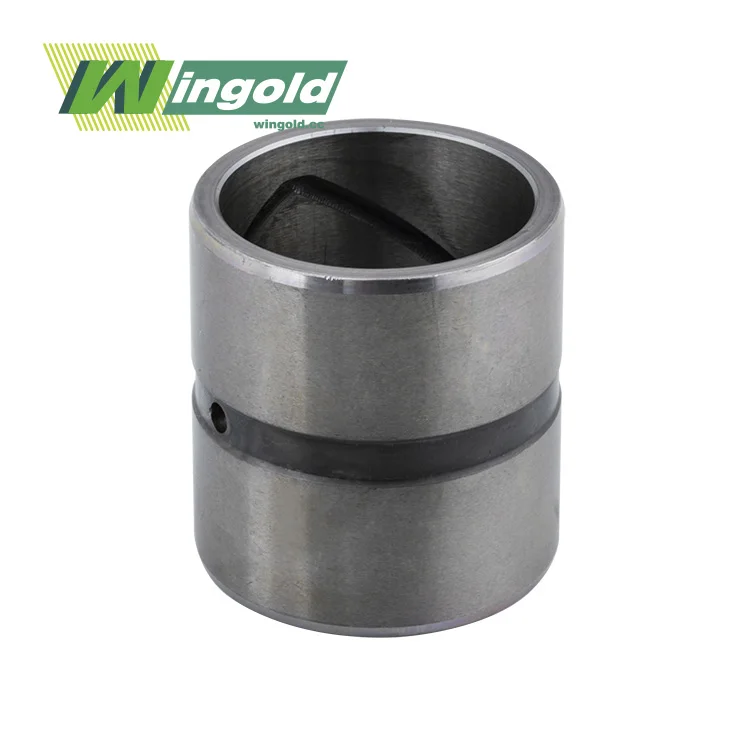
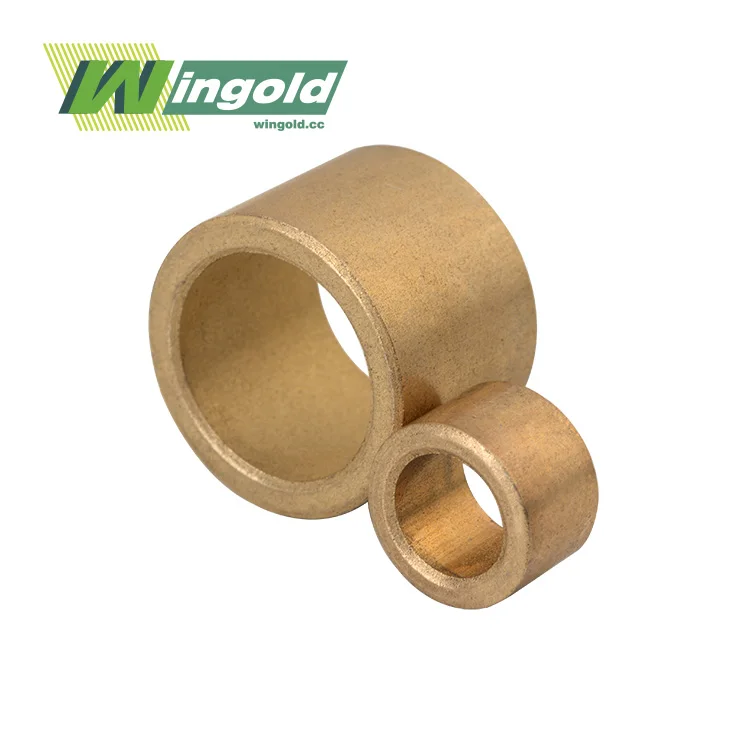
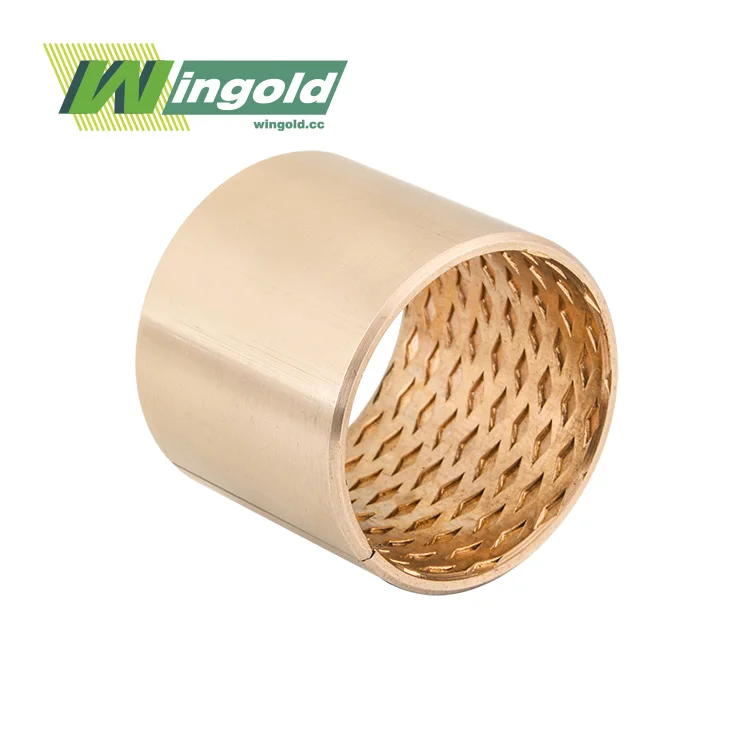
What is composite bushing?
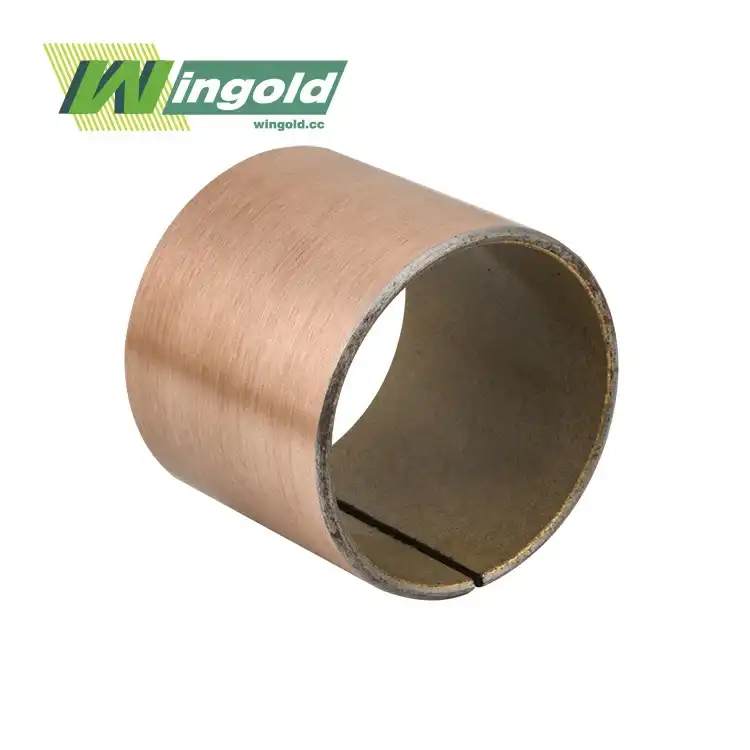
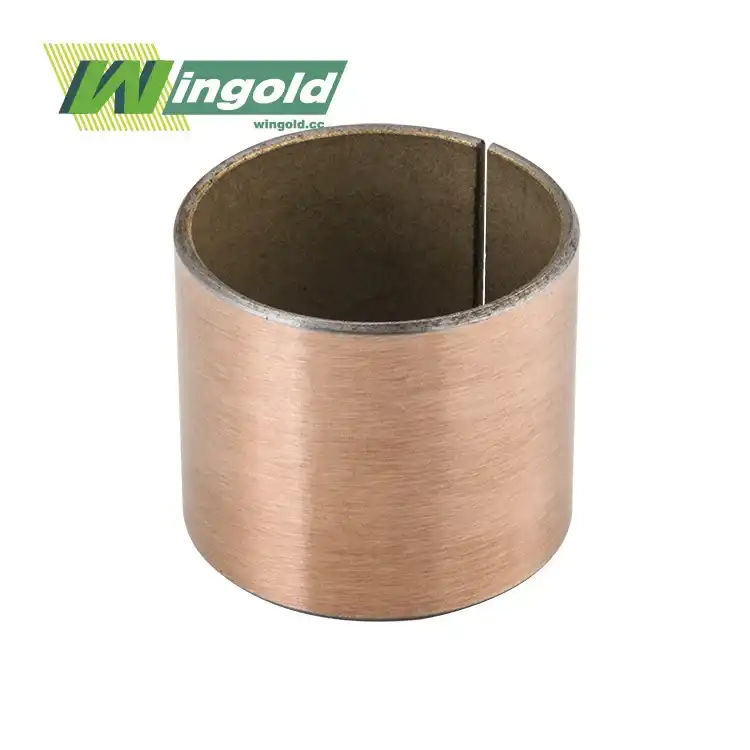
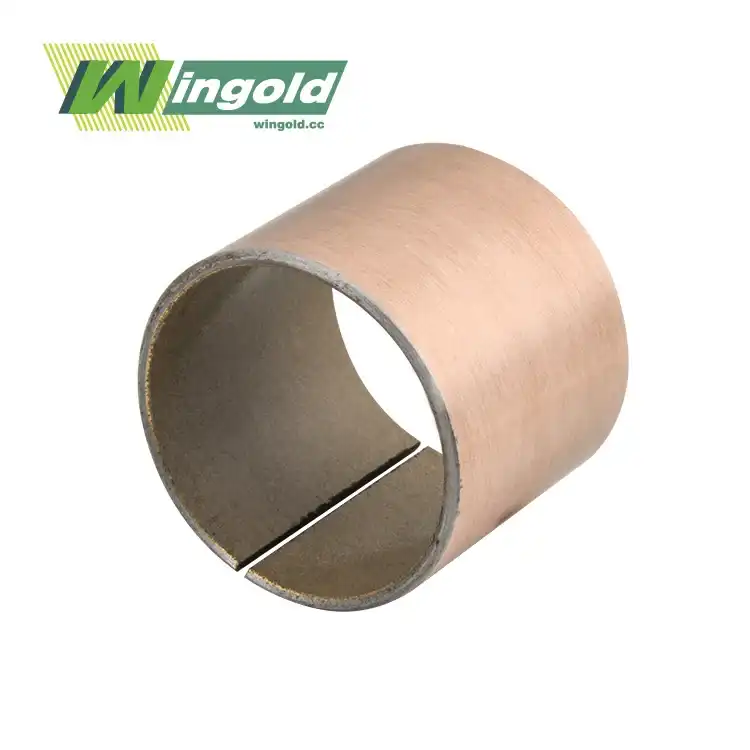
A worn-out nut is often the cause of a hydraulic cylinder stopping in the middle of its work or an expensive printing press stopping. One of the most effective ways for current engineers to deal with these friction-related problems is to use a composite bushing. A PTFE composite bushing, in particular, combines cutting-edge materials into a multi-layered structure that is made to function without any upkeep. At its heart, this part has a steel backing that keeps it structurally sound, a middle layer made of powdered bronze that bonds mechanically, and a top layer made of PTFE that reduces friction incredibly. This designed mixture meets important working needs in heavy machinery, car parts, and pneumatic systems where regular lubricated bearings fail all the time.
Comprehending PTFE Composite Bushings: Definition and Core Properties
The Precision Engineering Behind Composite Bushings
The technical structure of self-lubricating joints decides how well and reliably they work in harsh industrial settings. With its carefully designed three-layer structure, our WGB-1 oil-free oiled bearing is a great example of this level of accuracy. The steel plate base keeps the dimensions stable and spreads the load out, which is very important when the equipment is subjected to shock loads or stresses from being out of line.
The middle layer is made up of bronze powder that has been sintered into spheres. This makes a porous structure that physically connects to both the steel base and the top finish. This metal layer acts as a thermal carrier, removing frictional heat that would have damaged the polymer layer otherwise.
Material Properties That Solve Real Production Problems
The part's signature low-friction performance comes from the surface layer, which is a carefully made mix of polytetrafluoroethylene and lead. The friction values for these bearings are between 0.02 and 0.25, which is much lower than for regular bronze bearings. The lead content makes it easier to carry more weight and helps make a continuous transfer film on rods that fit together, which is important for reliable performance.
We've recorded working temperature ranges from -40°C to 150°C in the field. This means that these bearings can be used in both cold-weather mining equipment and machinery that works in hot climates. PTFE doesn't react with chemicals, so it works well with hydraulic fluids, coolants, and even harsh chemicals that are used in petroleum processing equipment, making it suitable for PTFE coated washers.
Dimensional Capabilities and Load Specifications
Precision in manufacturing has a direct effect on how long bearings last and how reliable equipment is. We can make things with inner diameters from 3 mm to 150 mm, outer diameters from 6 mm to 200 mm, lengths from 5 mm to 200 mm, and flange configurations up to 250 mm diameter. Everything from tiny solenoid valves to big pivot points for building equipment fits within these size groups. It can hold up to 500 kN of weight, so it can be used in places where regular polymer bearings would bend or break. This load tolerance comes from the fact that the composite structure can spread stress across several layers of material instead of just depending on one base.
Key Benefits and Typical Uses of PTFE Composite Bushings in B2B Applications
Operational Advantages That Reduce Total Cost of Ownership
Because PTFE composite bushings don't need to be maintained, they immediately lead to less downtime and lower labor costs. Unlike brass bushings that are soaked in oil and need to be re-oiled every so often, these parts work well for their entire service life without any extra fluids. This feature is especially useful in textile equipment where oil movement can ruin the quality of fabrics and in food processing equipment, where lubricant pollution can put the safety of the product at risk. We have proof that moving to self-lubricating joints got rid of the need for maintenance stops every three months, which saved factories up to forty hours a year per machine line.
Noise reduction is another real benefit that is often not understood until it is experienced. Because the PTFE layer is damping, it takes in shocks that would normally pass through metal-to-metal contact. Manufacturers of elevators say that adding polymer bushings to guide systems has cut noise levels by 8 to 12 decibels, which is a big improvement for customer comfort. When static friction is higher than dynamic friction, there is no stick-slip phenomenon. This means that motion starts smoothly, which is important for precise placing in robotic systems and automation equipment.
Industry-Specific Applications and Performance Requirements
Heavy machinery workers face special problems because when their machines break down, they lose a lot of money. These bearings are used by companies that make construction tools in boom pivot points, bucket links, and hydraulic cylinder rod guides. When a part has both a high load capacity and corrosion protection, it lasts longer, even when it's subject to mud, salt spray, and temperature changes. Wear resistance is also helpful for mining equipment that has to deal with rough dust and constant shaking loads.
For use in cars and industrial vehicles, bushings need to be able to handle millions of job cycles. We sell parts for diesel fuel pumps, suspension control arm bushings, and shock absorber kits. Composite bushings are perfect for these uses because they can handle swaying motion without letting the oil film break down. Extreme conditions can happen with metallurgical equipment, such as high temperatures, metal particles, and uneven loading patterns. These bearings are important for keeping perfect alignment in steam engine linkages and rolling mill adjustment systems, even when the temperatures change.
To keep cutting accurate, machine tool makers put a high value on low friction and stable dimensions. Linear slide systems, rotary table indexing devices, and automatic tool changes all use composite bushings in CNC equipment. The constant friction coefficient makes sure that the servo motor power needs are always met, which improves positioning accuracy and saves energy. Offshore engineering and construction use the corrosion protection when their equipment works in saltwater, where regular bearings rust in just a few months.
Comparing PTFE Composite Bushings with Alternative Materials
Performance Characteristics Against Traditional Solutions
Bronze bearings have been used successfully in industry for decades, but they need to be oiled regularly and can only handle small amounts of displacement. When lubrication stops working, either because of poor upkeep or contamination, bronze bushings seize up quickly and damage the shafts that they are connected to. PTFE composite bushing get rid of this weakness and offer better protection to corrosion. Bronze also has higher friction coefficients (usually between 0.1 and 0.30 when lubricant is applied to the border), which means it uses more energy and makes more heat.
Selection Criteria Based on Operating Conditions
To choose the right bushing material, you need to look at certain practical factors. High-speed uses (moving speeds above 2 m/s) produce a lot of heat from friction. The metal layer between the polymers in the PTFE composite bushing better moves heat away from the friction contact than solid polymers do, which stops thermal failure. When heavy loads are put on a machine at low speed, like in building equipment, the PTFE layer can create transfer films that lower friction, even when metal surfaces are close to touching.
As much as mechanical loads affect the choice of material, environmental factors also play a role. Chemical exposure needs to be carefully thought out. PTFE is resistant to most acids and solvents, but the steel backing may need to be protected with a covering in very acidic places. The soft PTFE layer traps foreign particles instead of rubbing against surfaces, which is good for PTFE composite bushings when they are contaminated with dust and particles. Extreme temperatures limit the types of materials that can be used. PTFE composite bushing work well in a wider range of temperatures than rubber ones, which harden or soften when they get cold or hot.
Cost-Benefit Analysis for Procurement Decisions
PTFE composite bushing usually cost 20–40% more than metal options when you first buy them, but when you add up all the costs of owning them, they always come out ahead. When you get rid of greasing systems, you no longer have to pay for pumps, reservoirs, or oil. Maintenance labor prices go down a lot when repair intervals are longer. When downtime costs thousands of dollars an hour in production settings, higher component prices are justified because they lead to higher equipment uptime, which is often the biggest financial gain, especially when using a PTFE plain bearing.
Customization options have a big impact on buying methods. Standard brass bushings don't let you change the dimensions much, but companies that make PTFE composite bushing, like Wingold, let you change a lot of things. Non-standard shapes, unique mounting features, and material changes to meet specific PV (pressure-velocity) needs allow engineers to build the best equipment instead of having to settle for parts that are available.
Installation and Maintenance Guide for PTFE Composite Bushings
Proper Installation Techniques to Maximize Service Life
How the housing is prepared has a direct effect on how well and how long the bearings last. The hole has to meet certain tolerances, usually H7 for interference fits that keep the bearing in place without putting too much stress on it. It's important to have a smooth surface; rough cutting marks can cause stress to build up and crack when loads are applied and removed repeatedly. A bore finish of Ra 1.6 μm or better is what we suggest. Chamfers at the openings to the bores keep the outer circle of the bearing from being shaved during press-fitting, which could damage the interference fit.
When press-fitting, you have to use measured force so that the part doesn't distort. When it comes to control, hydraulic presses are better than hammer-driven arbors, which could damage the bearing structure when they hit something. Heating the housing to make the hole bigger makes installation easier, but the temperature needs to be kept under control because too high of a temperature can damage the PTFE layer before the installation is even done. Cooling the bearing can lower the press forces that are needed, but because of condensation issues, it needs to be installed right away after being taken out of the fridge.
Shaft Preparation and Clearance Specifications
The quality of the mating shaft has a big impact on how long a bearing lasts, as well as the bearing itself. To keep the surface from wearing down during the transfer film formation process, it should be at least HRC 50. Softer shafts wear out faster, which increases gaps and lets things get out of line, which speeds up bearing failure. Surface finish standards are the same as housing requirements. Smooth surfaces help the transfer film spread out evenly and lessen initial break-in wear.
To figure out running clearances, you have to carefully balance temperature expansion, load deflection, and the width of the oil film that you need. This is because even in "oil-free" situations, small amounts of moisture can cause micro-hydrodynamic effects. Not enough clearance leads to binding during heat growth, while too much clearance lets edges load, which lowers the load capacity. Tolerances for shaft diameters of h8 or h9 usually work well with housing bores of H7, but sometimes tighter control is needed.
Maintenance Protocols and Inspection Intervals
Self-lubricating bearings make maintenance plans a lot easier, but they still need to be inspected every so often. Visual inspection during routine upkeep can find early signs of wear before a catastrophic failure. Surface darkening from overheating, material transfer onto shafts, or strange wear patterns are all signs that something is wrong with the working conditions that needs to be fixed. For lubricated bearings, measuring the oil gives information about the state, but for PTFE composite bushings, tracking is done by measuring and looking at the bearings.
Cleaning, strong chemicals that break down PTFE must not be used. Mild soaps and water are all that's needed to get rid of dirt and other things that have built up. Compressed air does a good job of clearing particles from the shoulders of flanged bearings, where they could build up and stop heat expansion. Wire brushing or sanding are rough ways to clean that will damage the important PTFE top layer, so they should never be used. Environmental stress management is the process of keeping bearings safe from things that are too hot, chemicals splashing, or impact loads that weren't thought of during specification.
Procurement Strategies and Choosing Reliable PTFE Composite Bushing Suppliers
Evaluating Supplier Capabilities and Certifications
Quality assurance starts with making sure that the seller is certified and has the ability to make the product. Systematic quality management is shown by ISO 9001 certification, while industry-specific certifications, such as IATF 16949 for car suppliers, show skill in the field. A review of a company's manufacturing capabilities should look at how advanced its equipment is. For example, CNC machine centers make sure that measurements are accurate, and centrifugal casting lines make sure that the material qualities in the bronze interlayer stay the same. It is very important to be able to test things. Suppliers who have their own friction coefficient testing and rapid life testing tools can back up performance claims instead of just using material data sheets.
Competent providers are different from simple parts distributors because they can offer technical help. Engineers who know about tribology can help choose bearings, look at PV values, and suggest materials that will work best in certain situations. Failure analysis services can help figure out why something is wearing out too quickly, figuring out if the problem is caused by bad fitting, mistakes in the specifications, or working conditions that are too high for the design parameters. By stopping mistakes from happening again, this collaborative method lowers the total cost of ownership.
Pricing Dynamics and Order Flexibility
Costs for projects are greatly affected by volume pricing, which usually breaks down at 100, 500, and 1,000 pieces, especially for PTFE coated washers. With factory-direct sourcing, you don't have to pay markups to distributors, and you can get access to technical tools. Costs for customization depend on how complicated the job is. For example, non-standard measurements can make prices 15–30% higher than usual, and using special materials or finishes that aren't available anywhere else raises costs even more. Lead time talks balance the costs of keeping inventory with the extra money that is charged for quick orders. Setting up framework agreements with production plans based on forecasts is the best way to get the best prices and availability.
Minimum order amounts make it hard for small users and prototype developers to make progress. Wingold solves this problem by letting customers order in smaller amounts, which lets them test the idea before committing to large production runs. This method lowers the financial risk when trying out tactics for replacing imported goods or checking out new sellers. When engineers use sample programs, they can check the fit, measure the real sizes, and do preliminary wear tests before making big purchases.
Global Sourcing Considerations and Supply Chain Integration
Geographic buying choices weigh the benefits of lower costs against the complexity of the supply chain. Manufacturing skills have grown around the world, and now you can get good items from many places. Lead times depend on the shipping method and where the product is located; air freight cuts down on travel time but greatly increases the cost of operations. Shipping in containers is still a cheap way to move large amounts of goods, but recent problems in the supply chain have shown how vulnerable they are to port congestion and changes in carrier schedules.
For important uses, stable suppliers and the chance to build long-term partnerships are more important than small price differences. Established producers that have been in business for more than ten years show that they are financially stable and have consistent quality systems. Wingold has worked in this field for more than ten years and has a lot of scientific knowledge. This gives us buying security because we can keep making things even when the market is down. Our yearly capacity of 10,000 tons makes sure that we can grow with customer plans from prototypes to full production numbers.
Conclusion
PTFE composite bushings are designed answers to problems with friction and wear that happen in many industry areas. The multi-layer construction of steel, bronze, and PTFE makes the bearings operate without any upkeep, last longer, and cost less to run. These benefits make them worth considering for any sliding bearing application. The best results are achieved when the right material is chosen based on load conditions, weather factors, and performance needs. As much as the part itself, how well it is installed and how well the seller works with the manufacturer affect how well it works in the real world. If procurement workers understand these technical and business factors, their companies will be better prepared to get reliable tools at a lower total cost of ownership.
FAQ
What advantages do composite bushings offer over traditional bronze bearings?
PTFE composite bushing don't need a cleaning system, which lowers upkeep costs and keeps sensitive areas from getting dirty. They have lower friction coefficients (0.02-0.25 vs. 0.15-0.30 for copper), which means they use less energy and make less heat. In marine and chemical settings, corrosion protection is better than bronze's. The ability to lubricate itself keeps the bearings from seizing up when the lubrication fails, which would kill metal bearings in minutes.
Can PTFE composite bushings handle high-temperature operations?
Our WGB-1 PTFE composite bushing work consistently in most commercial temperature ranges, from -40°C to 150°C. Throughout this range, the PTFE-lead surface mixture keeps its stable contact properties. The brass barrier helps heat escape from applications that are getting close to the upper limit. For continuous use above 150°C, special formulas or different bearing technologies are needed.
What lifespan can be expected under heavy loads?
How long a service lasts depends on the PV (pressure-velocity) numbers and how it is used. Bearings that are properly defined and used in situations that stay within the design parameters usually last between 5 and 10 years of steady use. Heavy building equipment that works in dirty places may need to be serviced every two to three years, which is still a lot longer than greased bearings would last in the same situations. Regular inspections and following the fitting instructions will make something last longer.
Partner With Wingold for Your Composite Bushing Requirements
Wingold Bearing offers engineered self-lubricating options with full technical help and the ability to make things in a variety of ways. As a company that makes PTFE composite bushings and has more than ten years of experience developing materials and improving production, we can make bearing solutions that are perfect for your needs. Our factory-direct price cuts out the middleman, and our efficient production methods mean that we can quickly go from making prototypes to mass production.
We keep a large stock of standard setups and can fully customize them to fit non-standard measurements and special material needs. Our research team can help you choose the right bearings, figure out why they failed, and provide on-site support to make sure your equipment works at its best. Our open ordering fits your buying strategy, whether you need small amounts for testing or long-term deals for large amounts. You can talk to our technical team about your bearing needs, ask for samples, or get full technical datasheets by emailing info@wingold.cc. We promise to provide dependability that keeps your tools going.
References
1. Bhushan, B. (2013). Principles and Applications of Tribology, Second Edition. John Wiley & Sons, New York.
2. Neale, M.J. (Editor) (1995). The Tribology Handbook, Second Edition. Butterworth-Heinemann, Oxford.
3. Stachowiak, G.W. and Batchelor, A.W. (2014). Engineering Tribology, Fourth Edition. Elsevier, Amsterdam.
4. Friedrich, K. and Schlarb, A.K. (2008). Tribology of Polymeric Nanocomposites: Friction and Wear of Bulk Materials and Coatings. Elsevier Science, Oxford.
5. Hutchings, I.M. and Shipway, P. (2017). Tribology: Friction and Wear of Engineering Materials, Second Edition. Butterworth-Heinemann, Oxford.
6. Blanchet, T.A. and Kennedy, F.E. (1992). Sliding Wear Mechanism of Polytetrafluoroethylene (PTFE) and PTFE Composites. Wear, Volume 153, Issue 1, Pages 229-243.
Learn about our latest products and discounts through SMS or email