- English
- French
- German
- Portuguese
- Spanish
- Russian
- Japanese
- Korean
- Arabic
- Greek
- German
- Turkish
- Italian
- Danish
- Romanian
- Indonesian
- Czech
- Afrikaans
- Swedish
- Polish
- Basque
- Catalan
- Esperanto
- Hindi
- Lao
- Albanian
- Amharic
- Armenian
- Azerbaijani
- Belarusian
- Bengali
- Bosnian
- Bulgarian
- Cebuano
- Chichewa
- Corsican
- Croatian
- Dutch
- Estonian
- Filipino
- Finnish
- Frisian
- Galician
- Georgian
- Gujarati
- Haitian
- Hausa
- Hawaiian
- Hebrew
- Hmong
- Hungarian
- Icelandic
- Igbo
- Javanese
- Kannada
- Kazakh
- Khmer
- Kurdish
- Kyrgyz
- Latin
- Latvian
- Lithuanian
- Luxembou..
- Macedonian
- Malagasy
- Malay
- Malayalam
- Maltese
- Maori
- Marathi
- Mongolian
- Burmese
- Nepali
- Norwegian
- Pashto
- Persian
- Punjabi
- Serbian
- Sesotho
- Sinhala
- Slovak
- Slovenian
- Somali
- Samoan
- Scots Gaelic
- Shona
- Sindhi
- Sundanese
- Swahili
- Tajik
- Tamil
- Telugu
- Thai
- Ukrainian
- Urdu
- Uzbek
- Vietnamese
- Welsh
- Xhosa
- Yiddish
- Yoruba
- Zulu
Thrust Washers: What They Are and How They Work
Thrust washers are the hidden stars of mechanical systems. They keep axial loads in check and reduce friction between moving and still parts. At their heart, these disc-shaped parts stop unwanted movement along shafts and give them a strong surface for wear. Hardened thrust washers are the next step forward in this technology. They are made with strict heat treatment methods that make the surface harder than 58 HRC. Because of this change, they can avoid being brinelled, scored, or galled under very high pressure. These parts support planetary gears in automatic transmissions and control hydraulic thrust in mining equipment. They solve problems like premature failure and too much axial play in industrial assemblies by balancing performance needs with operational longevity.

Understanding Hardened Thrust Washers
The Fundamental Role in Load Management
Thrust washers work on a simple but important idea: they spread out rotational forces over a larger surface area, keeping more expensive parts from wearing out too quickly. When thrust forces are generated by spinning shafts, these flat bearing surfaces take the load and keep the right distance between the moving parts. The washer's shape—usually a flat circular ring—makes a flat contact area that keeps metals from damaging each other while the machine is running.
What Sets Hardened Variants Apart?
The way that normal and hardened thrust washers are made is different because of how they are made. Standard washers made of mild steel or metals that haven't been strengthened may work for light-duty tasks, but they break down quickly when they're put under heavy loads or rotate quickly. Hardened thrust washers go through a lot of heat treatments that change the structure of their material in basic ways. In through-hardening, the whole part is heated to a critical temperature and then quickly cooled, making the whole thing the same hardness. Case-hardening techniques, such as carburizing, add carbon to the top layer of metal. This makes the shell more durable while keeping the body flexible so it can handle shock loads.
Material Selection and Performance Impact
A lot of high-performance thrust washers, like our WGB-150 line, are made from GCr15 bearing steel. This chromium-rich metal keeps its strength very well and doesn't wear down easily. The cost-effectiveness and fitness for use are directly affected by the choice of base material. High-carbon spring steels, such as SAE 1074, work well for mild loads. Bearing-grade steels, on the other hand, can handle the harsh conditions found in power generation systems and tools used in metalworking. Advanced copper alloys and hybrid materials are used for specific tasks where it's important to avoid corrosion or touch between metals that are not the same.
Heat Treatment Methods That Matter
We use an exact method called high-frequency induction hardening to make WGB-150. This method carefully hardens the bearing surface, making a protected layer with a hardness of 58 to 62 HRC while keeping the core tough. In this process, the part is put under electromagnetic induction, which quickly heats the top layer and then immediately cools it down. This method lets you better control the hardening depth and keeps bending to a minimum, so you can keep the tight specs needed for a good assembly fit. Carburizing makes the case deeper, which is good for parts that get worn out from rolling contact. This makes the parts last longer in transmission uses where needle rollers or ball bearings ride directly on the washer surface.
Advantages of Hardened Thrust Washers Over Regular Types
When you use hardened washers instead of normal ones, you can see right away how much better they work in practical situations. The main benefit is that it doesn't wear down easily; areas that have been strengthened can take millions of load cycles without losing much material. For building managers who keep track of machine uptime, this means shorter repair intervals and a lower total cost of ownership.
Performance Comparison Across Material Types
When loaded, plain steel washers quickly bend, leaving bigger gaps that cause shaking and misalignment. Bronze washers can lubricate themselves, but they can't hold a lot of weight, which is needed for big machines. Hardened steel thrust washers offer a great balance: they can withstand axial forces of more than 500 kN while staying stable in their dimensions. The surface finish quality, which is usually Ra 0.2 to 0.8 μm for precision-ground versions, lowers the power needed to start up and the friction that happens during use. This smooth surface makes it possible for border lubrication, in which oil films keep metals from touching directly, even when lubrication stops for a short time.
Standards and Tolerances That Define Quality
For engineering precision, it's important to follow the worldwide rules that govern how accurate measurements are and what materials can do. ISO 4383 sets the standards for plain bearings and thrust washers. It does this by describing the accuracy classes for the inner diameter, the outside diameter, and the thickness. ASTM B22 talks about bronze metals that are used in bearings, which is important to know when looking at other materials. DIN guidelines spell out the requirements for surface roughness and the ways to test hardness.
Putting these standards in purchase orders helps procurement managers set clear quality standards that make it easier to compare suppliers. Our production methods follow these guidelines, which makes sure that they work with parts from around the world and lowers the risks of integration.
Maintenance Economics and Downtime Reduction
Hardened parts have a direct effect on practical cost because they last longer. The cost of equipment downtime varies by business, but when loaders are not being used, mines can lose $50,000 per hour. Hardened thrust washers keep particles from getting inside and damaging softer materials. This is especially useful in dirty places like building sites and places where farm equipment is used. Getting rid of the need to repair parts often cuts down on the costs of keeping extra parts in stock and the number of hours needed to do preventative maintenance.
Applications and Design Considerations for Hardened Thrust Washers
Industrial Sectors Relying on Hardened Technology
When working with port machinery, parts are constantly hit by shocks and are exposed to saltwater, which eats away at metal. Thrust washers are used in slewing gears and hydraulic cylinders in container handling equipment. The WGB-150's oil groove design sends grease to important surfaces. Forest machinery has to deal with sawdust that is rough and big changes in temperature throughout the year. Our hardened thrust washers keep working well from -40°C to 200°C, which means they can handle the heat expansion cycles that break cheaper parts.
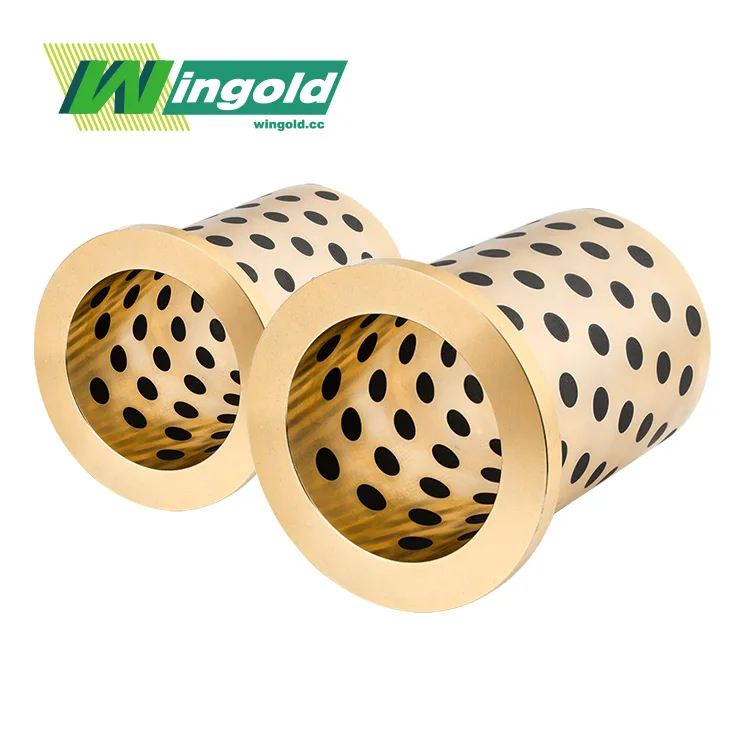
In engineering machines like hydraulic excavators, thrust washers support the places where the boom can move. These parts are what hold up the kingpin assemblies in truck axles and control the side forces that come from turning while also holding the weight of the goods. Logistics equipment, such as automated guided vehicles, needs to work without any upkeep. To meet this need, hardened thrust washers with oil-impregnated designs are used, which means that sealed units don't need to be oiled on a regular basis.
Critical Design Specifications
The success or failure of bearing setups depends on how well the dimensions are measured. When the inside width isn't right, the shaft won't fit right—if it's too loose, the fretting will wear out and the joint will be damaged. To keep things from turning while they're working, the outside width must match the housing bores within certain limits. The thickness has a direct effect on how the load is distributed and needs to be managed to keep the right distance between components. Our sizes range from 20 mm to 200 mm for the inner diameter and 40 mm to 300 mm for the outer diameter. The thicknesses available range from 1 mm to 10 mm to suit a wide range of mechanical designs.
To prove hardness, you need to use the right testing methods. Rockwell C scale testing is a quick way to check, but case-hardened parts need microhardness analysis at different levels to make sure they have the right case depth. Profilometers are used to measure the surface finish and make sure that the Ra values meet the requirements that affect the friction coefficients and the formation of oil films.
Maintenance Practices That Extend Service Life
When you do regular inspections, you can spot early warning signs of problems before they get really bad. If something is discolored because it's too hot, it means that it needs more oil or is too loaded. Brinelling patterns, which are lasting marks made by roller contact, show that the load limit has been reached. If metal chips off the surface, this is a sign that the wear limit has been reached or that the lubrication has broken down.
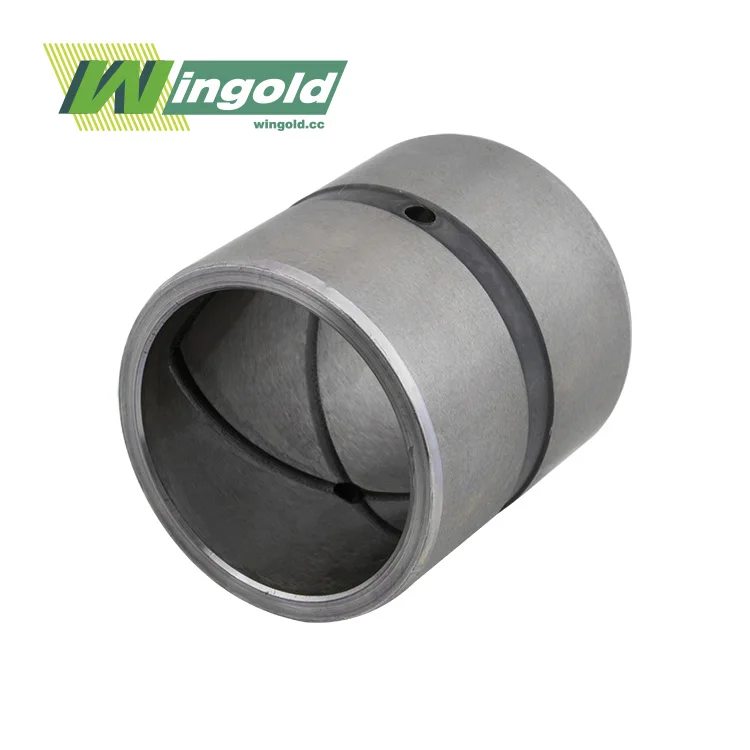
Managing oil correctly is very important. WGB-150 washers have oil grooves and holes that help with hydraulic lubrication by spreading oil across the bearing surface. Radial groove patterns work well for face-to-face friction, while spiral patterns help oil flow continuously while the bearing is turning. Controlling contamination with proper seals increases the life of parts by stopping gritty particles from getting inside and speeding up wear.
How to Choose and Procure the Right Hardened Thrust Washers?
Evaluating Technical Requirements
Figuring out the load ability is the first step in making the right choice, especially when selecting a hardened bearing. Find out the maximum axial force that the system can handle, including shock loads during starting or emergency stops. Compare this to what the maker says—our WGB-150 series can handle up to 500 kN, making it good for heavy-duty hydraulic uses. The environment affects the choice of material. For example, coats may be needed in acidic environments, and materials that don't soften at high temperatures are needed for high-temperature operations.
Brand Comparison and Quality Indicators
Bearing companies with a lot of experience, like SKF and Timken, offer a wide range of products and offer a lot of application tech support. Their high price is due to decades of study into metals and world distribution networks. NSK and KOYO are good options, and their products are especially strong for use in cars. INA is an expert in needle roller bearing parts, such as precision-ground thrust washers. McGill and Browning are going after industrial sales outlets that use standard sizes that are easy to find.
Strategic Procurement Channels
When working with a direct maker, it's easier to handle large-scale projects and unique ideas. Our engineering team offers one-on-one expert help for the whole lifecycle of a product, from the original selection process to failure analysis in the event of a problem. Communication with the factory directly shortens lead times. Standard WGB-150 setups ship within 10 business days, and custom orders get priority ordering because they can produce more than 10,000 tons per year.
Industrial wholesalers work with people who need standard sizes right away. Their main selling point is that they have local merchandise and set payment terms. Prices are usually based on distribution margins, though. Online business-to-business (B2B) sites like Alibaba make it easier to find suppliers, but quality claims and certifications need to be carefully checked. Requesting material certificates and hardness test results makes sure that all the rules are followed before making orders for production.
Structures that use volume prices encourage smart buying. Annual framework deals lock in good rates and make sure that supplies don't run out. Our flexible minimum order requirements let you do prototyping without having to keep a lot of goods on hand. You can buy sample amounts to make sure they work before committing to bulk sales. This method cuts down on technical risk while keeping costs low.
Conclusion
When it comes to keeping machines reliable and lowering costs, hardened thrust washers are a good investment. Specialized heat treatment methods improve the metal's properties so that it can hold up under high loads while still being true to its original dimensions. Our WGB-150 line is an example of this technology. It uses GCr15 bearing steel and high-frequency induction hardening to make wear surfaces that protect expensive parts in a wide range of industries.
The right choice and purchase of these parts has a direct effect on repair budgets and equipment downtime, whether they are used to control hydraulic thrust in port machinery or to support articulated joints in building equipment. Procurement experts can make choices that improve both short-term performance and long-term cost-effectiveness in tough operational settings when they know the technical specs, application requirements, and supplier capabilities.
FAQ
What determines the typical service life of hardened thrust washers?
Service life varies on a number of factors that affect each other, such as the amount of load applied compared to the stated capacity, how well the bearings are oiled, the amount of contamination, and the working temperature. When used in clean, well-oiled settings with the right cleaners, they usually last longer than 50,000 hours. Overloading shortens life by a factor of ten, and doubling the load can cut life in half. Extreme temperatures speed up wear by breaking down lubricants or weakening materials.
Can thrust washers be customized for specialized applications?
Of course. We make sizes that aren't in normal listings, like non-circular profiles for house shapes that aren't round. Bronze composites and Babbitt metal are two special materials that can be used in situations where inserted particles need to be able to bend or shape. Different lubrication systems can use different oil groove patterns. Designs that are circular, spiral, or circumferential can best distribute oil based on the speed of movement and the load on the face.
How do I verify compatibility with existing machinery?
The standard is the accurate measurement of the current part. Use precise tools or micrometers to measure the inner diameter, outer diameter, and thickness. Take pictures of the installation position and any oil holes to make sure that the new parts fit exactly like the old ones. Check the equipment instructions for load limits and temperature ranges, then compare these to the thrust washer numbers to make sure there are enough capacity margins.
Partner with Wingold for Reliable Hardened Thrust Washer Solutions
Wingold is ready to help you with your bearing problems by engineering solutions that fit your needs. As a producer of hardened thrust washers, we have more than ten years of experience in the bearing business and high-tech production tools, such as CNC machining centers and centrifugal casting lines. Our WGB-150 line has been used successfully in port machinery, industrial tools, and hydraulic systems that need to be reliable.
Our method is unique because we can work with you in a variety of ways, from making prototypes to test design ideas to supporting high-volume production runs with a 10,000-ton annual capacity. During the decision process, technical engineers help with applications and make sure that the dimensions and performance standards match the needs of your machinery. Direct access to the factory cuts out the costs of middlemen and shortens wait times that can throw off project plans.
Get in touch with our team at info@wingold.cc to talk about your unique needs. We can provide solutions that improve machine reliability while keeping total cost of ownership low, whether you need standard setups with fast shipping or custom designs that solve specific mechanical problems.
References
1. Budynas, Richard G., and J. Keith Nisbett. Shigley's Mechanical Engineering Design, 11th Edition. McGraw-Hill Education, 2019.
2. Harris, Tedric A., and Michael N. Kotzalas. Essential Concepts of Bearing Technology, 5th Edition. CRC Press, 2006.
3. American Society for Testing and Materials. ASTM B22-19: Standard Specification for Bronze Castings for Bridges and Turntables. ASTM International, 2019.
4. International Organization for Standardization. ISO 4383:1991: Plain Bearings - Sintered Metal Plain Bearing Bushes - Dimensions and Tolerances. ISO Standards, 1991.
5. Neale, M.J., editor. The Tribology Handbook, 2nd Edition. Butterworth-Heinemann, 1995.
6. Society of Tribologists and Lubrication Engineers. Friction, Lubrication, and Wear Technology: ASM Handbook Volume 18. ASM International, 2017.
Learn about our latest products and discounts through SMS or email