- English
- French
- German
- Portuguese
- Spanish
- Russian
- Japanese
- Korean
- Arabic
- Greek
- German
- Turkish
- Italian
- Danish
- Romanian
- Indonesian
- Czech
- Afrikaans
- Swedish
- Polish
- Basque
- Catalan
- Esperanto
- Hindi
- Lao
- Albanian
- Amharic
- Armenian
- Azerbaijani
- Belarusian
- Bengali
- Bosnian
- Bulgarian
- Cebuano
- Chichewa
- Corsican
- Croatian
- Dutch
- Estonian
- Filipino
- Finnish
- Frisian
- Galician
- Georgian
- Gujarati
- Haitian
- Hausa
- Hawaiian
- Hebrew
- Hmong
- Hungarian
- Icelandic
- Igbo
- Javanese
- Kannada
- Kazakh
- Khmer
- Kurdish
- Kyrgyz
- Latin
- Latvian
- Lithuanian
- Luxembou..
- Macedonian
- Malagasy
- Malay
- Malayalam
- Maltese
- Maori
- Marathi
- Mongolian
- Burmese
- Nepali
- Norwegian
- Pashto
- Persian
- Punjabi
- Serbian
- Sesotho
- Sinhala
- Slovak
- Slovenian
- Somali
- Samoan
- Scots Gaelic
- Shona
- Sindhi
- Sundanese
- Swahili
- Tajik
- Tamil
- Telugu
- Thai
- Ukrainian
- Urdu
- Uzbek
- Vietnamese
- Welsh
- Xhosa
- Yiddish
- Yoruba
- Zulu
What you need to know about PTFE plain bearings?
Choosing the right bearing option for heavy machinery or high-demand industrial systems can have a big effect on how long the equipment lasts and how much it costs to run overall. PTFE plain bearings use polytetrafluoroethylene's great tribological qualities along with a strong metal backing to make self-lubricating parts that don't need any upkeep. These bearings don't need to be oiled or greased all the time, they produce less heat through friction, and they work consistently in temperatures ranging from very cold to almost 280°C. Their mixed structure, which includes a steel backing, a sintered bronze interlayer, and a PTFE sliding surface, solves important operational problems like dirty environments, high-load, low-speed situations, and installation spots where regular lubrication systems aren't practical or are too expensive.

Understanding PTFE Plain Bearings: Basics and Benefits
The Three-Layer Composite Structure
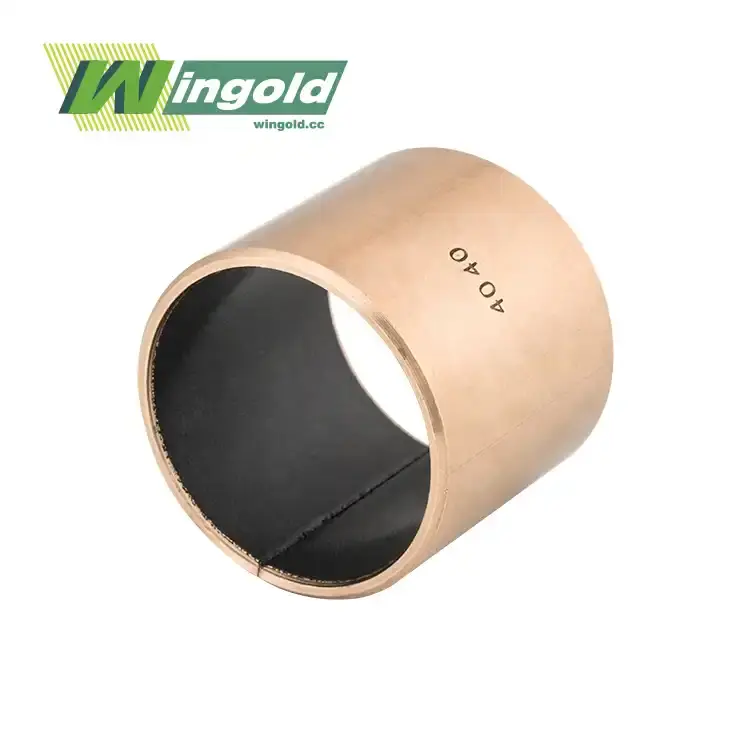
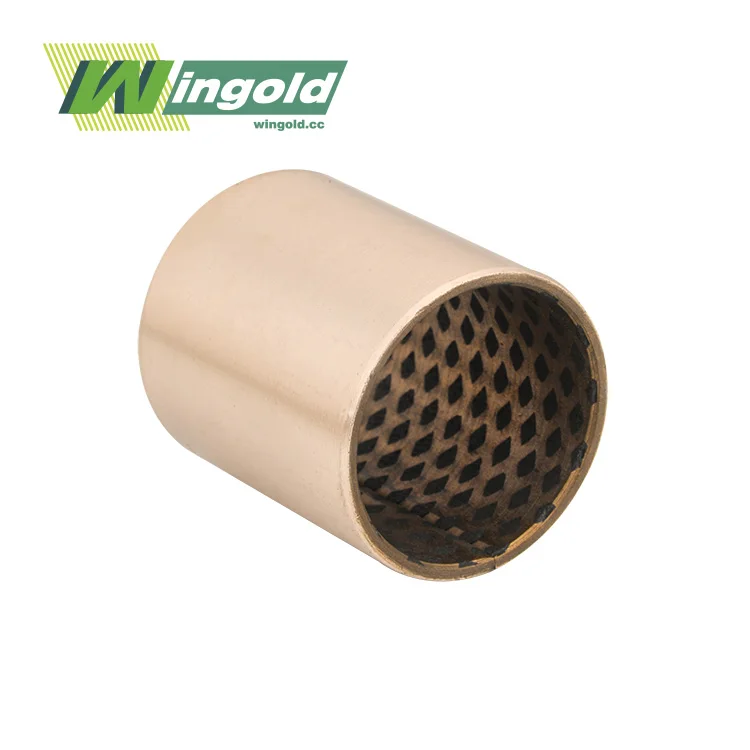
Modern self-lubricating bearings have a three-layer structure that is carefully designed to increase mechanical strength while reducing friction. The steel backing layer gives the structure strength and supports radial loads during operation. This keeps the bearing's shape when it's pressed into housings. The wall thickness of this core layer is usually between 0.5 mm and 3 mm, but it depends on the needs of the product.
The middle layer is made of porous sintered bronze that has two jobs to do in the bearing system. This bronze layer forms a mechanical connection between the steel backing and the polymer layer on top of it. It also helps heat escape from the moving contact. With its network of micro-channels, the porous structure improves mechanical coupling and helps the bearing work in border lubrication conditions during the first run-in periods.
The bearing's low-friction properties come from the PTFE sliding layer on the outside. During use, this polymer surface passes tiny particles to the connecting shaft, making a film of lubrication that lasts for a long time and lowers the coefficient of friction to between 0.02 and 0.08. This transfer film system works even when there are no external lubricants available. This makes these bearings perfect for machines used in food processing, pharmaceuticals, and other places where traditional lubrication methods can't be used because of contamination issues.
Maintenance-Free Operation in Demanding Environments
More and more, industrial sites are under pressure to cut back on repair plans without affecting the reliability of their equipment, and this trend also drives the use of PTFE shim washers.
This problem is directly solved by oilless bearing technology, which gets rid of the need for regular lubrication periods that require upkeep work and pose the risk of contamination. This is especially helpful for chemical processing plants because PTFE is naturally resistant to harsh media. This means that bearings don't break down when they are exposed to solvents, acids, and acidic compounds, which would quickly destroy bronze or babbitt bearings.
When room is limited, the thin-walled design theory behind these parts makes them easier to install. Composite PTFE plain bearings need less radial room than needle roller bearings or standard sleeve bearings, but they can hold the same amount of weight. In car suspension systems, where space constraints limit the size of parts, and in hydraulic cylinders, where rod gland groups need to have small cross-sections, this compactness is useful.
Extreme temperatures that are hard for most bearing materials don't affect PTFE composites when they are properly defined. It is still possible to use the device in cryogenic conditions (down to -195°C) and in constant temperatures close to 280°C. Because they can handle a wide range of temperatures, these bearings can be used in power generation equipment where steam engine links get hot, as well as in mining equipment that works in harsh conditions.
Application Versatility Across Industrial Sectors
More and more, construction equipment makers are using self-lubricating bearings in the joints of excavators' booms. This is because heavy loads and repeated oscillations would quickly wear out grease from regular bushings. Stick-slip resistance built into PTFE-lined bearings makes sure smooth movement even after long periods of rest. This keeps operators from getting tired and improves control precision during delicate grading tasks.
Bearings in metallurgical working lines are exposed to rough particles and high shock loads that would quickly damage sealed rolling element bearings. In continuous casting machines and rolling mill stands, plain bearing kits can work in dirty places and still keep their ability to lubricate themselves. Because there aren't any rolling parts, the severe failure mode that comes with ball or roller spalling isn't present. This makes planning upkeep easier.
Another high-volume use where maintenance-free running really pays off is in commercial car chassis components. Getting rid of grease fittings and the service intervals that go with them is good for truck suspension bushings, steering linkage joints, and cab mounting points. Fleet managers say that the total cost of ownership goes down when they order cars with composite plain bearings in the frame hard points.
Technical Specifications and Performance Metrics
Load Capacity and PV Factor Considerations
When engineering teams look at different bearing choices, they need to know how specific load, sliding velocity, and bearing duration are related. The PV factor, which is found by multiplying pressure (load per unit predicted area) by velocity, is a single way to figure out if an application is within safe working limits. Good composite bearings can usually handle static loads of up to 250 N/mm² and dynamic loads of up to 140 N/mm³. The highest PV limits for dry running are around 3.6 N/mm²·m/s.
Application engineers need to make sure that the estimated bearing loads include the right amount of safety factors to account for shocks and displacement. Boom pivots on construction equipment need lower load ratings than steady-state spinning machinery because they are loaded and unloaded dynamically during digging cycles. A finite element study of the stresses in the housing can help keep bearings from breaking because the housing deflection puts loads on the bearing edges instead of spreading them out over the whole expected area.
Dimensional Tolerances and Interference Fit Requirements
To make sure the bearings work right after installation, the procurement specs must include information about their dimensional limits. The interference fit between the bearing and the case is directly affected by changes in wall thickness. This, in turn, affects how heat moves and how well the bearing stays in place under load. Tolerance classes are set by manufacturing standards like ISO 3547. For most industrial uses, the C3 and C4 grades are the best mix between being easy to put together and being stable while still working.
The finish and shape of the housing bore have a big effect on how well the bearing works and how long it lasts. Surface roughness values for bearing bores should be between Ra 1.6 and 3.2 micrometers, and they should be held to the same standards for roundness and cylinder shape as the bearing's outer diameter. Chamfers at the entrances to the bores make installing the bearing easier and protect the PTFE surface from damage during press-fitting.
Mating shaft specs are also very important for meeting design life standards. When the surface hardness is higher than HRC 30 (about HB 200), shaft wear that would cause clearance and vibration doesn't happen. For shafts that run against PTFE plain bearings, the surface finish needs to be Ra 0.3 to 0.5 micrometers. Stainless steel shafts should be hard chrome plated to make them more resistant to wear.
Installation Guidelines for Optimal Performance
When you install something correctly, you can keep it from failing too soon and make sure it works the way it was meant to. Fixtures that spread force evenly across the bearing's outer diameter should be used to press it into its case at a controlled rate. When you use impact installation methods, the PTFE layer could separate from the metal base, which would lead to internal problems that would spread during use.
Bearings are made to run dry, but adding extra oil during the run-in time can make them last longer in many situations. Putting a thin layer of suitable oil or grease on the shaft and bearing surface before putting them together helps the PTFE transfer film form and lowers the amount of break-in wear. This method works especially well in heavy-duty situations where border lubrication helps the self-lubricating system during start-up transitions.
Temperature issues during fitting can change the end clearances and how well the bearings work. Different bearing and housing materials have different thermal expansion factors, which means that the spacing changes as the temperature range changes. To keep things from sticking together at very high or very low temperatures, applications that go through big changes in temperature need clearance estimates that take these differences in growth into account.
PTFE Plain Bearings vs. Alternative Bearing Materials: A Comparative Analysis
Performance Comparison with Traditional Bronze Bearings
Choosing between standard bronze bushings and composite self-lubricating bearings relies on how the parts will be used and how they will be maintained. Bearings made of sintered bronze that have been soaked in oil work well in situations where they get enough oil and don't have to carry too much weight. Bronze bearings, on the other hand, need to be lubricated at first and then re-lubricated every so often to keep the oil film that keeps the metals from touching.
It is better to use PTFE plain bearings in situations where greasing is hard to do or not desired. Getting rid of liquid oils that could contaminate products is good for machines used in food processing, textiles, and medicine production. When properly run-in, oil-lubricated bronze bearings have a higher coefficient of friction than properly run-in composite bearings, even when the load changes. This means that a smaller drive motor is needed and less heat is produced.
Chemical resistance is another important thing to think about when choosing a material. When bronze bearings are exposed to acidic or alkaline process fluids, they erode. This causes the gap to grow, and the bearings need to be replaced eventually. Because PTFE is chemically inert, composite bearings can work in corrosive environments where bronze parts would break quickly. This makes them the best choice for chemical processing equipment and naval uses at sea.
Evaluating Alternatives: Nylon and Polymer Bearings
For high-volume production needs with modest performance requirements, injection-molded polymer bearings are a cost-effective option. When there isn't much change in temperature, nylon and acetal bearings work well for light loads. Heavy industrial gear, on the other hand, needs materials that can handle a wide range of temperatures and loads, along with components like PTFE coated washers.
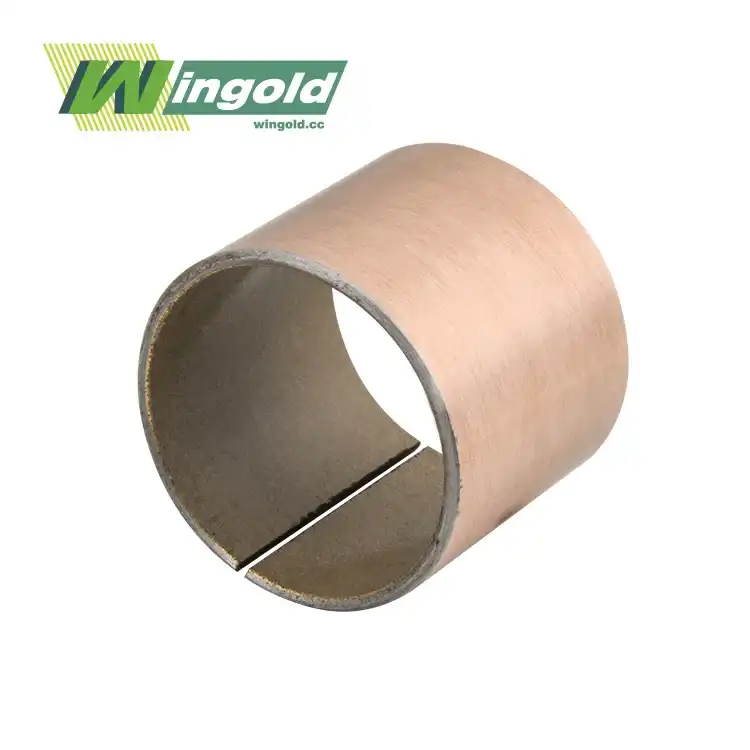
Composite PTFE bearings are a good compromise between cheap polymer bearings and pricey rolling element sets when it comes to performance. The metal backing gives the bearings structural support that pure polymer bearings can't do. This lets them be used in situations where the loads are higher than what injection-molded parts can handle. Because of this, composite bearings can be used in heavy-duty applications like building, mining, and metal processing machines, where loads and shocks are too much for pure polymer solutions.
Metal-backed composite bearings are different from pure polymer options because they are more stable in terms of size when they are loaded. Thermoplastic bearings creep when they are loaded for a long time, which causes the space to slowly grow and causes machinery to vibrate. The steel backing in composite bearings stops this gradual deformation, so the clearances stay the same over the life of the bearing.
Cost-Effectiveness and Total Ownership Analysis
When making purchases, people are paying more attention to the total cost of ownership than just the original buy price. Composite plain bearings usually cost more per unit than simple bronze bushings, but they save a lot of money because they don't need as much upkeep and last longer between service visits. Facilities that don't have a lot of repair staff or that use tools in remote areas get the most out of maintenance-free bearing options.
The costs of downtime caused by replacing bearings are often many times higher than the cost of the part. In businesses with continuous processes, production machinery brings in thousands of dollars an hour; unexpected stops for bearing service have a direct effect on profits. Self-lubricating bearings lower the risk of failure by getting rid of the failure modes related to greasing that cause a lot of bearing problems in industrial machines.
Procurement Guide: How to Source and Buy PTFE Plain Bearings?
Evaluating Supplier Capabilities and Certifications
B2B procurement teams should look at possible bearing providers in more than one way, not just the price per unit. The ability of a provider to make things determines whether they can offer both standard store items and custom-engineered solutions for non-standard uses. Modern manufacturing facilities at Wingold include CNC machining centers and centrifugal casting production lines that make it possible to make a lot of PTFE plain bearings quickly and in different shapes.
Certifications for quality management systems show that a provider is reliable and that the process is being controlled. ISO 9001 approval shows a dedication to consistent quality, while industry-specific certifications, like IATF 16949 for car suppliers, show that manufacturing processes are even stricter. Another important thing to look at is the testing skills of the provider. Companies that do their own friction coefficient testing, accelerated life testing, and material makeup analysis can give engineers data that helps them make decisions.
It's common for technical help to be just as useful as the product itself. Application engineering teams at suppliers help procurement workers with things like choosing the right materials, making sure they meet size requirements, and figuring out how long they should last. This consultative method cuts down on specification mistakes that cause early fails and expensive redesigns.
Understanding Pricing Structures and Order Quantities
Pricing for bearings depends a lot on the type of material used, how complicated the dimensions are, and how many are ordered. Standard stock items in popular sizes have the lowest per-unit costs. Custom designs, on the other hand, cost more because of engineering and tooling costs that procurement teams should add to the total cost of the project. At Wingold, we can handle smaller minimum order amounts for custom designs, starting at 100 pieces. This gives us more freedom in trying products and keeping track of our inventory.
Low prices for big orders and long-term pledges are rewarded with volume discounts. A lot of the time, annual framework deals get better prices than spot purchases and make sure that production processes can keep getting what they need. When negotiating with suppliers, purchasing managers should talk about volume discount structures because set number breaks can save a lot of money.
Lead time affects both project plans and the cost of keeping supplies on hand. Standard bearings with established production runs usually ship within days. Custom-engineered solutions, on the other hand, may need a few weeks to make the tools and check the first product. The ability to speed up production for pressing needs shows that the provider is flexible, and it helps with unplanned maintenance situations where equipment downtime puts financial pressure on the business.
Customization Options for Unique Applications
For many industrial uses, bearing sizes or material mixes that aren't available in normal catalogs are needed. Full-service bearing makers can customize their products, while dealers who only sell catalog items can't. Wingold's engineering team works with customers to create bearing solutions that are specifically designed for their needs. This could include non-standard combinations of bore and outer diameter, special PTFE compound formulas for harsh chemical environments, or bearings that have flanges and fastening features built right in.
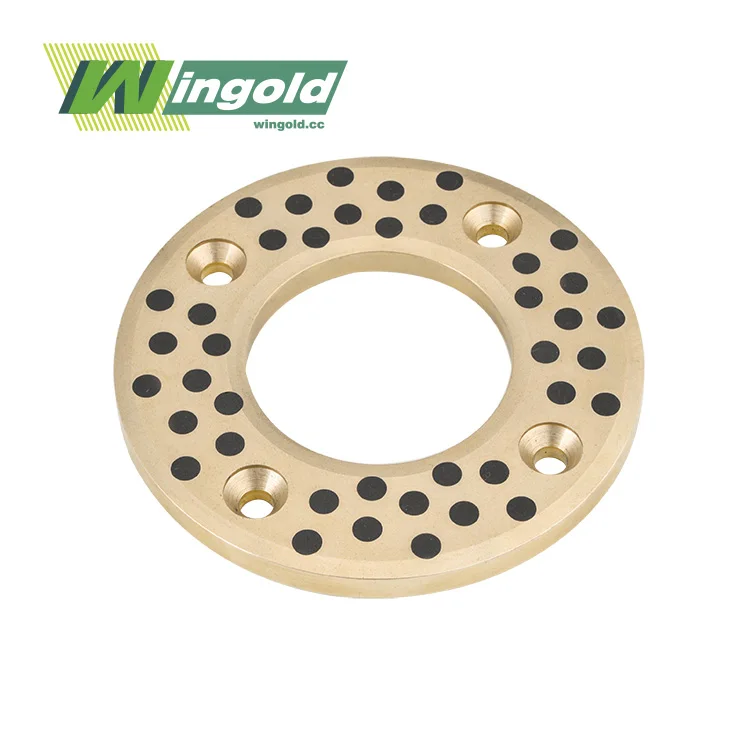
Different mechanical setups and fitting needs can be met by the variety of bearing types that are available. Flanged bushings make it easier to place the bearings axially during assembly and stop the bearings from moving when thrust loads are applied. In spinning parts, thrust washers handle axial pressure. Sleeve bearings have a simple circular shape that works well for simple tasks. Split bearings, on the other hand, let you install them without taking shafts off of equipment frames.
PTFE compounds that aren't made of normal materials can be used in more situations. Bronze-backed bearings that use modified PTFE compounds with fillers like carbon fiber, glass fiber, or molybdenum disulfide can provide better wear resistance or heat conductivity depending on the working conditions. When protecting against rust is very important, stainless steel backing is used instead of carbon steel in salty places.
Conclusion
PTFE plain bearings are an old technology that is still being used to solve difficult industrial bearing problems because they are self-lubricating, chemically resistant, and don't need any upkeep. The three-layer composite structure has performance benefits that directly address common practical pain points. For example, it doesn't need to be oiled as often, it works reliably in dirty settings, and it performs the same way at all temperatures. It's helpful for procurement workers to know the technical details that determine which bearings to choose. These details include PV factor limits, dimensional tolerances, and installation standards that make sure the design performance levels are met.
FAQ
What service life should I expect from PTFE plain bearings in my application?
How long a bearing lasts is mostly based on how close the working PV factor is to the material's maximum limit. Applications that use less than 50% of their full PV capacity usually have service lives measured in years. Applications that are getting close to their PV limits, on the other hand, may need to be replaced within months. Extremes in temperature, levels of contamination, and misalignment can all affect wear rates, and these should all be taken into account when choosing PTFE plain bearings.
Can these bearings function in applications with extreme temperature swings?
Composite PTFE bearings can work in temperatures ranging from -200°C to +280°C, which means they can be used in both cold environments and machines that work at high temperatures. But changing temperatures can change gaps because bearing and housing materials expand and contract at different rates. Engineering formulas should be used to make sure that the gaps stay within acceptable ranges at all temperatures.
How do I determine the correct interference fit for bearing installation?
The recommended interference fits depend on the working temperature range, the thickness of the bearing wall, and the material of the housing. As a general rule, interferences should be between 0.2% and 0.5% of the width of the housing hole for steel housings. To keep the bearing from turning when it's under load, aluminum and other low-modulus housing materials need more interference. Support from the supplier's tech team helps improve fit standards for certain uses.
What maintenance procedures extend bearing service life?
Even though it's meant to work without any upkeep, a regular visual check can find problems before they become too big to fix. By looking for signs of shaft wear, strange noises, or greater clearance, you can change bearings before they fail, during planned maintenance windows, instead of having to wait until they fail unexpectedly. Keeping the surface finish and stiffness of the shaft in good shape stops fast wear that shortens the life of the bearing.
Partner with Wingold for Reliable PTFE Plain Bearing Solutions
To start meeting your unique bearing needs, you should get in touch with an experienced PTFE plain bearing manufacturer who knows the practical issues your industry faces. Wingold brings more than 20 years of experience with sliding bearings to every job, blending advanced manufacturing skills with quick technical help. Our engineering team gives application-specific advice on choosing the right material, making the best use of space, and figuring out how long something should last so that you can make an informed purchase choice.
We keep a large stock of standard bearings, such as flanged bushings, sleeve bearings, thrust washers, and slide pads with inner diameters ranging from 3 mm to 300 mm. According to ISO 3547 standards, custom solutions go through the same strict quality control as stock items. This includes a full study of the materials used and a check of the sizes. Our low factory-direct prices don't include markups for distributors, and our flexible minimum order amounts, which start at 100 pieces, allow for both testing prototypes and mass production. Email our team at info@wingold.cc to talk about your bearing needs and get full technical datasheets that are made just for you.
References
1. Wieleba, W. (2015). Tribological Behavior of Polymer Composites with PTFE Under Dry Friction Conditions. Journal of Friction and Wear, 36(2), 114-121.
2. Khare, H.S., & Burris, D.L. (2013). Surface and Subsurface Contributions of Oxidation and Moisture to Room Temperature Friction of Molybdenum Disulfide. Tribology Letters, 53(1), 329-336.
3. Lancaster, J.K. (1973). Dry Bearings: A Survey of Materials and Factors Affecting Their Performance. Tribology International, 6(6), 219-251.
4. Friedrich, K., & Schlarb, A.K. (2008). Tribology of Polymeric Nanocomposites: Friction and Wear of Bulk Materials and Coatings. Elsevier Science Publishers.
5. Blanchet, T.A., & Kennedy, F.E. (1992). Sliding Wear Mechanism of Polytetrafluoroethylene (PTFE) and PTFE Composites. Wear, 153(1), 229-243.
6. Nunez, E.E., & Polycarpou, A.A. (2015). The Effect of Surface Roughness on the Transfer of Polymer Films Under Unlubricated Testing Conditions. Wear, 326-327, 74-83.
Learn about our latest products and discounts through SMS or email