- English
- French
- German
- Portuguese
- Spanish
- Russian
- Japanese
- Korean
- Arabic
- Greek
- German
- Turkish
- Italian
- Danish
- Romanian
- Indonesian
- Czech
- Afrikaans
- Swedish
- Polish
- Basque
- Catalan
- Esperanto
- Hindi
- Lao
- Albanian
- Amharic
- Armenian
- Azerbaijani
- Belarusian
- Bengali
- Bosnian
- Bulgarian
- Cebuano
- Chichewa
- Corsican
- Croatian
- Dutch
- Estonian
- Filipino
- Finnish
- Frisian
- Galician
- Georgian
- Gujarati
- Haitian
- Hausa
- Hawaiian
- Hebrew
- Hmong
- Hungarian
- Icelandic
- Igbo
- Javanese
- Kannada
- Kazakh
- Khmer
- Kurdish
- Kyrgyz
- Latin
- Latvian
- Lithuanian
- Luxembou..
- Macedonian
- Malagasy
- Malay
- Malayalam
- Maltese
- Maori
- Marathi
- Mongolian
- Burmese
- Nepali
- Norwegian
- Pashto
- Persian
- Punjabi
- Serbian
- Sesotho
- Sinhala
- Slovak
- Slovenian
- Somali
- Samoan
- Scots Gaelic
- Shona
- Sindhi
- Sundanese
- Swahili
- Tajik
- Tamil
- Telugu
- Thai
- Ukrainian
- Urdu
- Uzbek
- Vietnamese
- Welsh
- Xhosa
- Yiddish
- Yoruba
- Zulu
Comprehensive Guide to Lubrication and Maintenance of Bronze Bushings
Bronze bushings are necessary for a lot of different types of machinery to work smoothly in the workplace, from heavy mining equipment to precise hydraulic systems. Depending on how well bronze bushing lubrication is applied, your equipment will either work reliably for years or break down early, costing you thousands of dollars in downtime and replacement parts. Professionals in technical decision-making, purchasing, and maintenance need to know all about this guide's important parts of lubrication and maintenance in order to get the most out of their equipment, make it last longer, and lower their total cost of ownership across all of their operations.
Understanding Bronze Bushing Lubrication Basics
Bronze bushings work like plain bearings, letting housings that aren't moving slide against shafts that are moving or oscillating. Instead of rolling element bearings, these parts use controlled friction to keep the metals from touching. This causes them to wear out quickly, get too hot, and finally seize up.
What Makes Bronze Bushing Lubrication Critical?
A thin film is put between the bronze surface and the shaft that fits into it by the lubrication system. So, the two metal surfaces don't touch each other directly. The coefficient of friction goes up a lot if you don't use the right kind of lubrication. This makes too much heat that can get hot enough to cause galling or adhesive wear.
Not enough lubrication can lead to "stick-slip," a condition where the shaft sticks and then suddenly releases, sending shock loads that damage nearby parts. This can happen in heavy-load situations like those found in construction and metallurgical equipment. If you put the right amount of oil on bronze bushings, they can have friction coefficients as low as 0.08 to 0.15. When they aren't well oiled, they can have 0.30 or higher. Because of this difference, less energy is used, temperatures are lowered, and parts last longer—in the best cases, up to 50,000 hours or more.
Common Industrial Applications Requiring Specialized Lubrication
Bronze bushings are used in industrial equipment where traditional bearings wouldn't work because of heavy loads, corrosive environments, or limited access for maintenance. In excavators and other mining equipment, they have to deal with high shock loads and rough dust. Marine environments can damage bushings, so they need to be made of Nickel Aluminum Bronze or another alloy that doesn't rust, and they need to be lubricated in a way that doesn't get wet. Full hydrodynamic lubrication films are needed for high-speed hydraulic pumps. On the other hand, self-lubricating designs that keep the product clean work better for stamping dies and injection molding equipment.
Types of Lubricants and Their Appropriate Applications
The type of lubricant used, maintenance requirements, and operating environment all play important roles in selecting the right solution, especially when evaluating the Best Bronze For Bushing applications. Grease lubricants are great for systems that move or installations that are hard to get to for re-lubrication because they are simple to use and don't move. Oil lubrication cools things down better and works well in situations with high speed and continuous rotation so that hydrodynamic films can form naturally.
Synthetic lubricants are better than petroleum-based ones in harsh conditions because they can work in temperatures as low as -40°C and as high as 200°C. When used in food processing or clean rooms, there is no chance of contamination at all because solid lubricants are built into the bronze matrix. Graphite plugs or MoS2 inserts are good for dry lubrication in places where regular lubricants would wash away or break down, like vacuums, high-temperature furnaces, and water.
Warning Signs of Lubrication Failure
Before something really bad happens, people who work with equipment should keep an eye out for a few signs that the lubrication isn't good enough. If you hear strange noises like squeaking, grinding, or knocking, it means that the metal-to-metal contact boundary is oiled. Either infrared scanning or simple touch tests will show that the operating temperature is high.
This means that friction isn't getting rid of enough heat. When there are episodes of overheating, the shafts will turn different colors or turn blue. Most of the time, condition monitoring systems find that full failure happens before the vibration amplitude goes up. These are early warning signs that something is wrong. If you fix them right away by adding more lubricant or redesigning the system, you can avoid costly shutdowns and damage to other connected equipment.
Comprehensive Methods and Intervals for Lubricating Bronze Bushings
To plan the best lubrication methods and schedules, you need to know both how to use lubricants technically and how they work with your equipment and the space where they are used.
Step-by-Step Application Techniques for Optimal Results
The area around the bushings needs to be cleaned well before lubricant is put on correctly. This gets rid of old grease, dirt, and wear items that could get into the new lubricant and make it less effective. Use clean shop towels and the right solvents to get rid of the dirt that has built up on the grease fittings, grooves, and other nearby surfaces. Check the bushing for cracks, wear, or changes in size before going any further.
If you use a grease gun with a pressure gauge to put grease through fittings, make sure the pressure stays the same and isn't too high, as that could damage seals or push dirt into the bearing interface. Slowly add lubricant until the edges of the bushings have clean, new grease on them. In other words, all the holes inside are filled. Check the oil levels and condition visually for systems that use oil to lubricate them. If the oil looks milky, it means there is water in it, and if you see metal particles, it means the system is wearing out too quickly.
Defining Optimal Lubrication Intervals Based on Operating Conditions
Instead of simple schedules, the amount of times that lubrication needs to be done depends on many things that work together. Heavy loads that stay on machinery for a long time use up lubricant more quickly than light loads which cause more frictional heat. Lubricants break down more quickly in very hot or cold temperatures. If the temperature goes up by 15°C above normal, the lubricant will only last half as long. Oil that is used at high speeds is pushed away from important surfaces by centrifugal forces, so it needs to be changed more often.
Environments that are dirty release rough particles that wear down things, so they need to be cleaned and oiled more often. In real life, bushings that are used for medium-duty work need to be oiled again every 500 to 1000 hours. If you work with dusty, heavy equipment on a construction site, you might need to service it every 250 hours or less. Boat parts that get wet a lot need to be checked every day and oiled once a week. But indoor machinery that isn't overloaded and is kept clean might not need to be serviced more than three times a year.
Industry-Specific Lubrication Practices and Standards
It takes decades of experience to work in different fields, so each has its own unique way of doing things. A lot of places that make cars use predictive maintenance programs that use thermal imaging and vibration analysis to figure out when to lubricate things based on how they are working instead of set times. Time-based preventive maintenance is often used by heavy machinery operators in mining and construction. This is done to match shift changes or daily checks before work starts.
Petrochemical plants have strict lubrication rules that are written down in maintenance management systems for equipment that is important for safety. Manufacturers of machine tools specify the types and amounts of lubricant that should be used in their technical documentation. Users must follow these instructions in order to keep their warranty valid. The Society of Tribologists and Lubrication Engineers makes rules for the business world that tell people how to do things correctly. A lot of testing is also used to make detailed lubrication charts that show exact points, frequencies, and product suggestions.
Selecting the Best Lubricant for Bronze Bushings: A B2B Procurement Perspective
How much bearing lubricants and parts cost and how reliable the equipment is over time depend on the choices you make when you buy them. This strategy compares the price of the item being bought right now to its total cost of ownership, which includes the cost of maintenance labor, the cost of downtime, and the number of times parts need to be replaced.
Key Evaluation Criteria for Lubricant Selection
When you use your equipment in a wide range of temperatures, temperature resilience is one of the most important specs. It makes sure that the lubricant keeps the right viscosity and protective film strength. You can tell if the lubricant can keep the hydrodynamic or boundary lubrication films that you need in your specific pressure conditions by how much weight it can hold. When it comes to outdoor gear, marine uses, and things that need to be washed down, water resistance is very important.
Environmental rules about what can be thrown away, how quickly it breaks down, and how toxic it is are becoming more and more important when businesses decide what to buy, especially those that are near waterways or in environmentally sensitive areas. Following the OEM's instructions helps protect warranties and reduces worries about liability. Industry certifications, like the ISO 6743-9 classification, give you a way to compare prices and see how well different products work. When the new materials can be used with the old ones, chemical reactions that could harm seals, paint, or composite parts in the system are stopped.
Grease Versus Oil: Comparing Performance Characteristics
Because it is semi-solid and stays in place even when there is vibration, gravity, or intermittent operation, grease is a great way to lubricate things when it is hard to get to another lubricant. As the thickener is put together, it creates a reservoir that slowly releases base oil onto the bearing surfaces through heat and mechanical work. Grease is also great as a seal because it keeps dirt and other things out of the bearing interface. Oil lubrication is better when the machine needs to run all the time and heat removal is more important than grease's ability to do that.
It is the job of circulation oil systems to get rid of frictional heat, filter out wear debris, and add additives back in. It is better to use oil at high speeds because it forms hydrodynamic wedges between surfaces and has less friction inside. Oil systems also let you keep an eye on their health from afar by analyzing them on a regular basis. This finds wear metals, contamination, and degradation products long before they start to work less well.
Building Reliable Supplier Relationships for Consistent Quality
Having a steady supply of lubricant, access to technical support, and consistent product quality are all guaranteed when you work with reputable lubricant makers and distributors. During production, leading suppliers have strict quality control measures in place. They also give customers detailed technical data sheets with confirmed performance characteristics and application engineering support to help them choose the best products. Certified distributors store the lubricant in the right way, keep track of each lot so that quality checks can be done, and make sure there is enough on hand so that the supply doesn't stop.
Procurement strategies that focus only on the lowest price often fail in industrial environments. Wingold addresses this by partnering only with trusted lubricant suppliers and offering durable cast bronze bushings and self-lubricating bronze bushing options, which help reduce long-term maintenance costs and improve operational reliability.
Practical Procurement Strategies for Cost-Efficiency
Bulk purchasing programs take advantage of discounts for buying in bulk and keep costs low by managing inventory through deals with vendors. It's easier to keep track of inventory and less likely to make mistakes when you use the same kinds of lubricants for more than one thing. Agreements that last for a long time keep prices stable and make sure that supplies are given first when there are shortages in the whole industry. There are thorough qualification processes that are done on a supplier's manufacturing skills, quality systems, and financial stability before they are allowed to work with you. This lowers the chance of problems with quality or suppliers that could shut down business.
Avoiding Common Lubrication Mistakes and Extending Bronze Bushing Lifespan
There are times when even maintenance teams with a lot of experience do things wrong that damage bearings and shorten the life of parts. Companies can avoid these mistakes and make sure things run smoothly by putting in place safety measures and standard procedures.
The Dangers of Over-Lubrication and Under-Lubrication
It might seem safe, but putting too much oil on something can really hurt it. When the shaft turns, too much grease in enclosed housings makes hydraulic resistance. This makes more heat and uses more power than it needs to. Churning turns extra grease into foam that can't hold as much weight when done quickly. When housings are too full, they create too much pressure inside, which damages seals and lets oil and dirt escape. Extra grease also makes it hard for heat to leave the bearing area properly.
When there isn't enough oil in the system, protective films break down and metals touch each other. This is called boundary lubrication. This leads to too much friction, heat, and faster wear, which ends in disaster very quickly. Studies show that parts that aren't properly maintained can lose up to 90% of their life compared to parts that are properly oiled.
Consequences of Incorrect Lubricant Selection
If you use lubricants that don't work well together, different types of failure can happen depending on the mismatch. When a lubricant is at its working temperature, it needs to have enough viscosity to keep its film thickness thick enough. This is what lets the surfaces touch. When viscosity is too high, friction inside the fluid increases. This wastes energy and makes heat. When the film is put under pressure, the load-carrying additives must be correct or the film will break. If the thickeners are not compatible, the film may melt or harden depending on the temperature. When you mix greases that don't go well with each other, chemical reactions can happen that break down the structure of the thickener. At this point, the lubricant is either a liquid or a solid that does not work.
Environmental Contamination Control
There are several ways that bronze surfaces break down when they get wet: lubricants get emulsified, additives are used up, and the surfaces are corroded. Particles that are rough and dirty work like grinding wheels that quickly wear down the bushing and shaft surfaces. They also make the lubricant break down faster. Using the right sealing systems, vent plugs that let air flow but filter out particles, and expansion reservoirs to keep the pressure inside slightly positive can all help keep contaminants out.
Data-Backed Insights on Optimal Maintenance Practices
Tribology institutes have conducted studies showing that bronze bushings with proper bronze bushing lubrication can last more than 50,000 hours under light-load operating conditions. Comparative field studies have shown that equipment that lubricates its bearings according to the manufacturer's schedules has 70% fewer failures than equipment that doesn't follow its maintenance plans or doesn't do so consistently. Depending on the business and the size of it, unplanned downtime can cost anywhere from $5,000 to $50,000 per hour. This is on top of how much it costs to add new parts. Putting in place regular lubrication programs usually pays for itself three to five times over because parts last longer and break less often.
Self-Lubricating Solutions for Challenging Environments
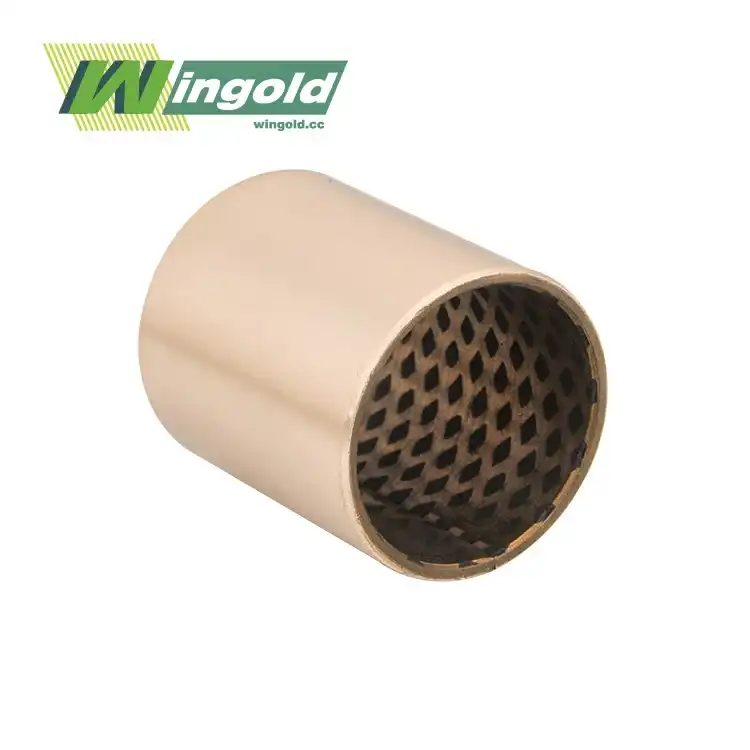
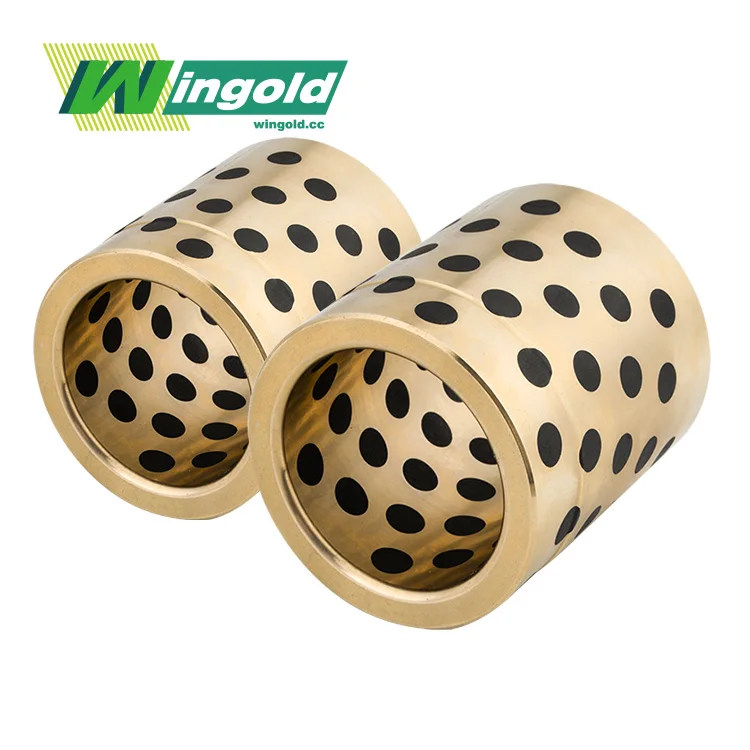
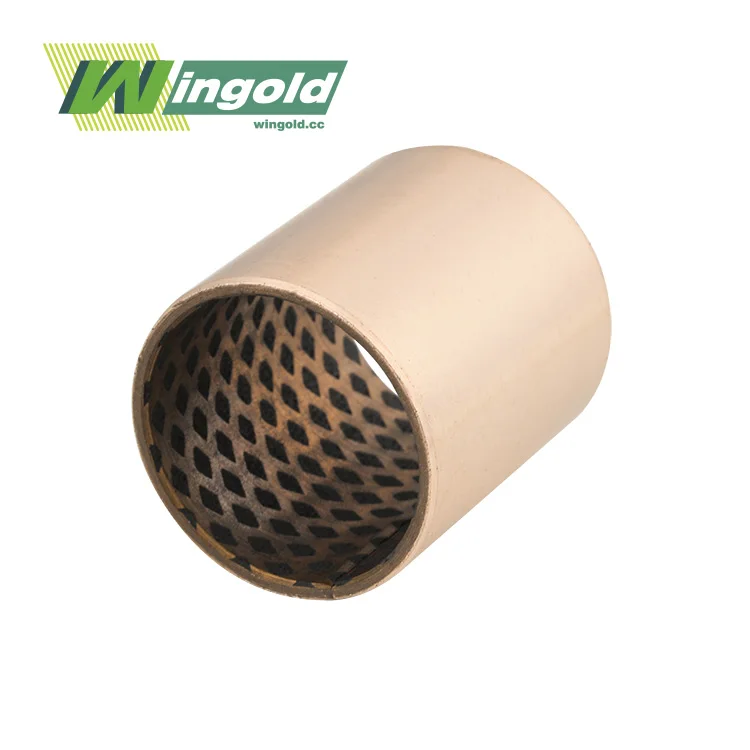
Due to their engineered solid lubrication, Wingold's bronze bushings don't need to be oiled and can handle the toughest maintenance situations. Our high-density copper alloy bushings have oil grooves that are precisely machined to look like diamonds or hemispheres. These grooves hold lubricant and spread it evenly across the bearing surfaces while the bushings are in use. The built-in graphite plugs get a little bigger when there is frictional heat. There is often no need for outside lubrication systems when this is done because it makes continuous transfer films.
In a lot of tough industries, these cutting-edge designs are very helpful. The base made of high-density bronze can hold more weight than a regular cast bronze bushing, and it can handle pressures above 50 MPa if the installation is done right. Things that are resistant to wear last longer than usual, which cuts down on the number of replacements that need to be made and the costs of having to shut down. Because of the small size, equipment designers can make machines that are smaller and lighter overall. This gives them an edge in markets where space is limited, like mobile equipment and installations. Self-lubricating bushings get rid of the need for maintenance access points for a lot of businesses. This makes it easier to design tools and makes sure they work well in tough to reach places.
Conclusion
Bronze bushing lubrication that is well-oiled and in good shape have a direct effect on how reliable equipment is, how well it works, and the total cost of ownership across all industrial processes. Businesses can get the most out of their lubrication if they follow simple rules, do regular maintenance, buy the right products, and don't make common mistakes. They can make their parts last longer and have less unplanned downtime this way. New technologies for self-lubricating bearings are great for tough situations where regular lubrication doesn't work. When you buy high-quality parts and good ways to lubricate them, the equipment will last longer, need less maintenance, and be more reliable when you use it.
FAQ
How Often Should Bronze Bushings Be Lubricated in Heavy Machinery?
Heavy equipment that works in rough conditions typically needs bronze bushing lubrication every 250 to 500 hours of operation, though the exact frequency depends on the load, speed, temperature, and contamination level. The companies that make equipment give detailed maintenance plans that are based on tests. These should be the place to begin. If you check the condition of something using vibration analysis, thermal imaging, or oil analysis, you can switch from set intervals to predictive maintenance. This plans service based on when it's needed, not when it's convenient.
Can I Substitute Oil for Grease in Bronze Bushing Applications?
There are a lot of things you need to think about before switching from grease to oil. In situations with high speed or temperature, oil cools and cleans better than grease, but grease doesn't stay put well when moving back and forth or standing upright. So that the oil stays inside, the bushing housing needs to be well sealed. When it gets hot, the oil needs to be able to expand. When you switch lubricants, you may need to do a full cleaning to get rid of any leftover residues that don't work with the new one. Before making any changes, you should read the manual for the equipment and talk to the people who make the lubricant.
What Signs Indicate Bronze Bushings Need Immediate Lubrication?
Strange noise is the most obvious sign that something is wrong. If you hear squeaking, squealing, or grinding sounds, it means the lubrication films aren't good enough. If you scan for infrared or feel high temperatures, it means there is too much friction because there isn't enough oil. If sensors pick up on more vibrations or the machine starts to shake more, it means that problems are beginning to form. Any of these signs needs to be checked out and fixed right away to keep the whole thing from breaking down and damaging other connected parts.
Partner with Wingold for Superior Bronze Bushing Solutions and Expert Lubrication Support
Wingold can fix all of your bronze bushing lubrication problems and is an expert engineer in sliding bearing technology with more than ten years of experience. Being a dependable company that makes and sells things, we know how important it is to use the right oil on heavy machinery, metallurgical equipment, marine uses, and industrial manufacturing processes to keep them running smoothly. Our self-lubricating bronze bushings don't need as much maintenance because they have new solid lubrication technology built right into the high-density copper alloy matrices. You will get one-on-one technical help from our engineering team throughout the whole procurement process. They will help you choose the best bearing materials, lubricants, and maintenance schedules for your specific operating conditions.
Wingold has the skills and products to help you improve your operations, whether you need help picking the right lubricants for your current bronze bushings or you want to learn more about options that oil themselves and save you money on maintenance. Contact our technical staff at info@wingold.cc to talk about your bronze bushing needs and find out how our services can lower your total cost of ownership while also getting your gear to work better. For prototypes, our ordering system can handle small amounts, and for production, it can handle large amounts. This is possible because we can make things quickly and ship them all over the world, which lowers the risks in the supply chain.
References
1. Hutchings, Ian and Philip Shipway. Tribology: Friction and Wear of Engineering Materials. Butterworth-Heinemann, 2017.
2. American Society for Metals. ASM Handbook Volume 18: Friction, Lubrication, and Wear Technology. ASM International, 1992.
3. Society of Tribologists and Lubrication Engineers. STLE Handbook of Lubrication and Tribology Volume II: Theory and Design. CRC Press, 2012.
4. Neale, Michael J. The Tribology Handbook. Butterworth-Heinemann, 1995.
5. Booser, E. Richard. Tribology Data Handbook: An Excellent Friction, Lubrication, and Wear Resource. CRC Press, 1997.
6. Machinery Lubrication Magazine. Best Practices in Lubrication: A Practical Guide for Maintenance Professionals. Noria Corporation, 2015.
Learn about our latest products and discounts through SMS or email